Musk says Ukraine broke Starlink terms with drone strikes; Kyiv says it's impossible
Elon Musk said a 'loophole' letting Ukraine use Starlink for offensive drone strikes was closed. Ukrainian officials say whitelists, geofencing and speed limits already made that impossible.
At a glance
- On Saturday, October 24, Elon Musk said Ukraine's military 'violated Starlink terms of service' by using the commercial network for offensive drone strikes, and that the 'loophole was closed last week'.
- Ukrainian officials say commercial Starlink is geofenced off inside Russia, cut out above about 70–90 km/h, and that drones in motion use only Starshield, the military version.
- A speed cap on terminals in Ukraine, disclosed by President Zelensky on October 17, grounded interceptor drones; officials say normal speeds were restored on October 24.
- Musk says changes to Starshield are controlled by the US government; Washington has denied ordering the throttling.
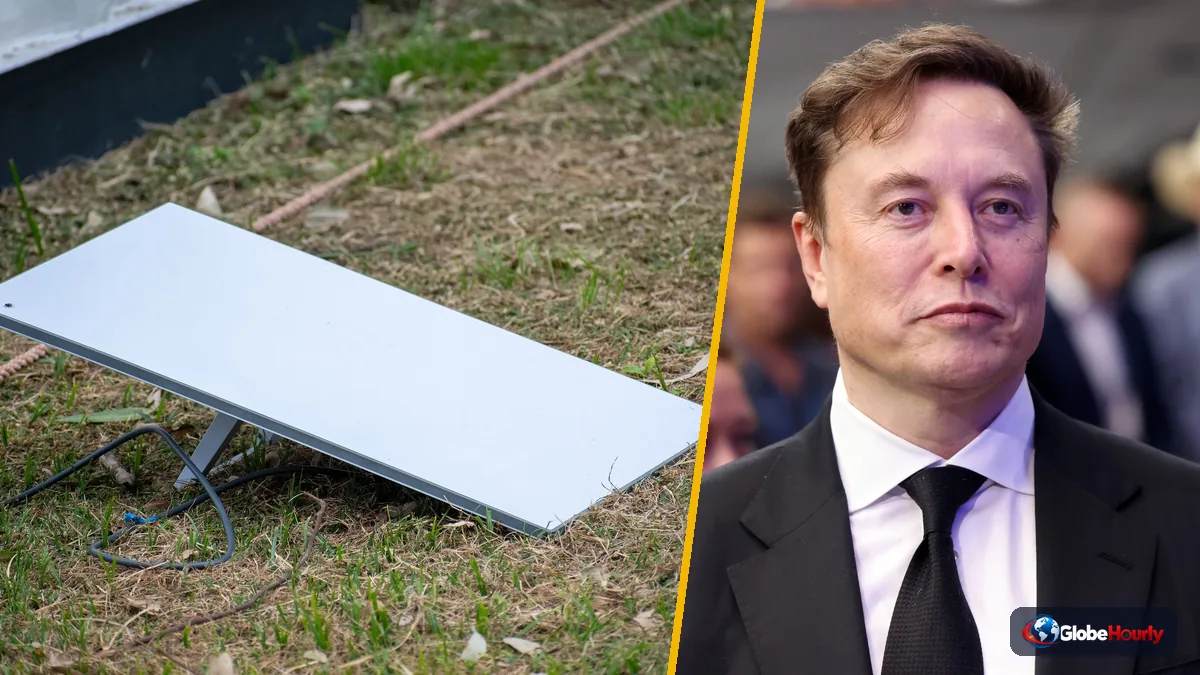
SpaceX chief Elon Musk said on Saturday, October 24, that Ukraine's military broke Starlink's terms of service by using the commercial satellite network for offensive drone strikes, and that the "loophole" was closed last week. Ukrainian officials rejected the claim on Sunday, saying restrictions in place since early 2026 make it physically impossible to guide such strikes over commercial Starlink. The row follows weeks of disrupted connectivity that grounded Ukrainian interceptor drones.
What Musk said
Writing on X, Musk drew a line between commercial Starlink and Starshield, the military version of the network that he said is controlled by the US government. Commercial connectivity, he said, was never permitted for lethal offensive operations. He acknowledged that SpaceX had throttled Starlink in Ukraine and argued that Starlink is the only communications network that resists Russian jamming, adding that cutting it off would cause an immediate collapse of the front line — which he described as a fact, not a threat.
Starlink's published terms say the service is not designed or intended for use with weapons.
Kyiv's answer
| Ukrainian claim | Who said it |
|---|---|
| Since February 2026, terminals used on the move must be on a special whitelist linked to Starshield; all satellite-guided drone missions run on Starshield | Serhii Sternenko, volunteer and former defence ministry adviser |
| Terminals in Ukraine and occupied areas cut out automatically at 70–90 km/h | Serhii Beskrestnov, presidential adviser on defence technology |
| Commercial Starlink is geofenced and switched off across Russia | Serhii Beskrestnov |
"It's very strange that Elon Musk doesn't know about the restrictions on Starlink's operation in Ukraine," Beskrestnov wrote, adding that Ukraine is "physically unable" to use commercial Starlink for deep or medium-range strikes.
Background: the speed cap
On October 17, President Volodymyr Zelensky revealed that satellite terminals in Ukraine had been limited to about 161 km/h (100 mph). The cap cut telemetry links to fast-moving drones and grounded the domestic interceptors Ukraine uses against Russian Shahed attack drones, which fly at more than 400 km/h. Commanders reported lost drones and disrupted missions, and air defences were weakened during daily Russian attacks. Ukrainian engineers found the same equipment worked normally above 180 km/h in neighbouring EU countries, suggesting the limit applied only inside Ukraine.
US Secretary of State Marco Rubio denied any White House role in the throttling, and President Donald Trump has said he did not make the call. Ukrainian defence officials said on October 24 that Starlink and Starshield speeds had returned to pre-restriction levels, though Beskrestnov said some caps were still being recorded.
Reactions and wider tensions
The dispute adds to strain between Kyiv and Washington, already tested by reports of a US deal to import Russian diesel. At the same time, diplomacy is moving: Russia agreed last week to resume three-way talks with the US and Ukraine next month, and on Friday the two sides agreed a local ceasefire around the occupied town of Oleshky in Kherson region.
Zelensky said on Sunday that Russia had fired about 1,600 guided bombs, 48 missiles and nearly 2,300 attack drones at Ukraine over the past week, hitting nine regions, and repeated his call for faster deliveries of interceptors.
Why it matters
Starlink has become the backbone of Ukraine's battlefield communications, from front-line units to drone crews. The episode shows how much power a single private company holds over a country's defence, and why governments in Europe and Asia are investing in their own satellite networks. It is also a reminder for countries such as Pakistan, which has been drawing up rules for satellite internet providers, of the security questions that come with relying on a foreign-owned network.
What happens next
Ukraine is expected to press for written guarantees that Starshield service will not be throttled again, while three-way peace talks are due to resume next month. Any further changes to Starlink's rules for Ukraine would be announced by SpaceX or the US government.
Questions people are asking
What did Elon Musk say about Ukraine and Starlink?
Musk said on October 24, 2026 that Ukraine's military broke Starlink's terms of service by using commercial terminals for offensive drone strikes, and that SpaceX closed that loophole the previous week. He said commercial Starlink was never allowed for lethal offensive operations.
What is the difference between Starlink and Starshield?
Starlink is SpaceX's commercial satellite internet service. Starshield is a separate military version of the network used under US government arrangements, which Ukraine says carries its drone missions.
Is Starlink working in Ukraine now?
Yes. Ukrainian defence officials said on October 24 that Starlink and Starshield speeds had returned to the levels before the restrictions, although one adviser said some speed limits remain.