Arunachal Siang dam protest turns violent: offices torched, 40 police hurt
Protesters against India's planned 11,200 MW Siang Upper dam near the China border set fire to government offices and police vehicles in Arunachal Pradesh. About 40 police were injured; the chief minister appealed for dialogue.
At a glance
- Protests against the planned 11,200-megawatt Siang Upper Multipurpose Project (SUMP) in Arunachal Pradesh turned violent on Friday, October 23, 2026, after a 12-hour shutdown called by local groups.
- Officials said protesters set fire to government offices and police vehicles, damaged a police station, vandalised offices of state hydropower company NHPC and ransacked the homes of several elected representatives.
- About 40 police personnel were injured by stones and police fired tear gas; earlier in the day at least four women protesters were taken to hospital after clashes at the Dite-Dime bridge near Geku.
- Chief Minister Pema Khandu condemned the violence and appealed for dialogue. Protesters demand the release of 10 detained activists, an end to survey work and the withdrawal of central forces.
- India says the dam is needed to counter China's huge upstream hydropower project in Tibet; opponents fear up to 27 villages of the Adi community could be displaced.
Protests against India's planned 11,200-megawatt Siang Upper Multipurpose Project in Arunachal Pradesh, near the disputed border with China, turned violent on Friday, October 23, 2026, when demonstrators set fire to government offices and police vehicles, officials said. About 40 police personnel were injured by thrown stones and police used tear gas to disperse crowds, while Chief Minister Pema Khandu condemned the violence and urged protesters to talk instead.
What happened
The unrest followed a 12-hour bandh (shutdown) called by local groups across Siang, Upper Siang and parts of East Siang districts. Early on Friday, around 150 to 200 demonstrators from Geku and Komkar villages gathered at the Dite-Dime bridge near Geku. Officials said security forces fired tear gas when protesters tried to break through barricades; at least four women were taken to hospital, and one local report put the number of injured protesters at seven.
Tension grew through the day, and by Friday evening hundreds of protesters were on the streets of Pasighat, the East Siang district headquarters. Officials said crowds set fire to government offices and police vehicles, damaged a police station, vandalised offices of the state-run hydropower company NHPC and ransacked the homes of several elected representatives.
| Siang dam protests | Details |
|---|---|
| Date | Friday, October 23, 2026 (12-hour bandh) |
| Area | Siang, Upper Siang and East Siang districts, Arunachal Pradesh |
| Police injured | About 40, hit by stones |
| Protesters hospitalised | At least 4 women (one report: 7 injured) |
| Damage | Government offices and police vehicles burned; police station damaged; NHPC offices vandalised |
| Project | Siang Upper Multipurpose Project, 11,200 MW, planned by NHPC |
| Villages at risk | Up to 27, mainly of the Adi community |
The bandh was organised by groups including Adi Bane Kebang United, the SUMP Affected Area Youth Association, the Siang Indigenous Farmers' Forum youth wing and the Adi Galo Welfare Society. Their demands are:
- the immediate release of 10 detained activists;
- reinstatement of suspended village headmen (gaon buras);
- withdrawal of the project's pre-feasibility studies and survey work;
- removal of paramilitary and central forces deployed in the area.
Protesters also accused police of using excessive force, saying officers broke vehicle windscreens and fired tear gas at peaceful demonstrators. Officials said some protesters carried machetes, sticks and slingshots and violated prohibitory orders, and that legal action had been started.
Background: India's answer to China's mega-dam
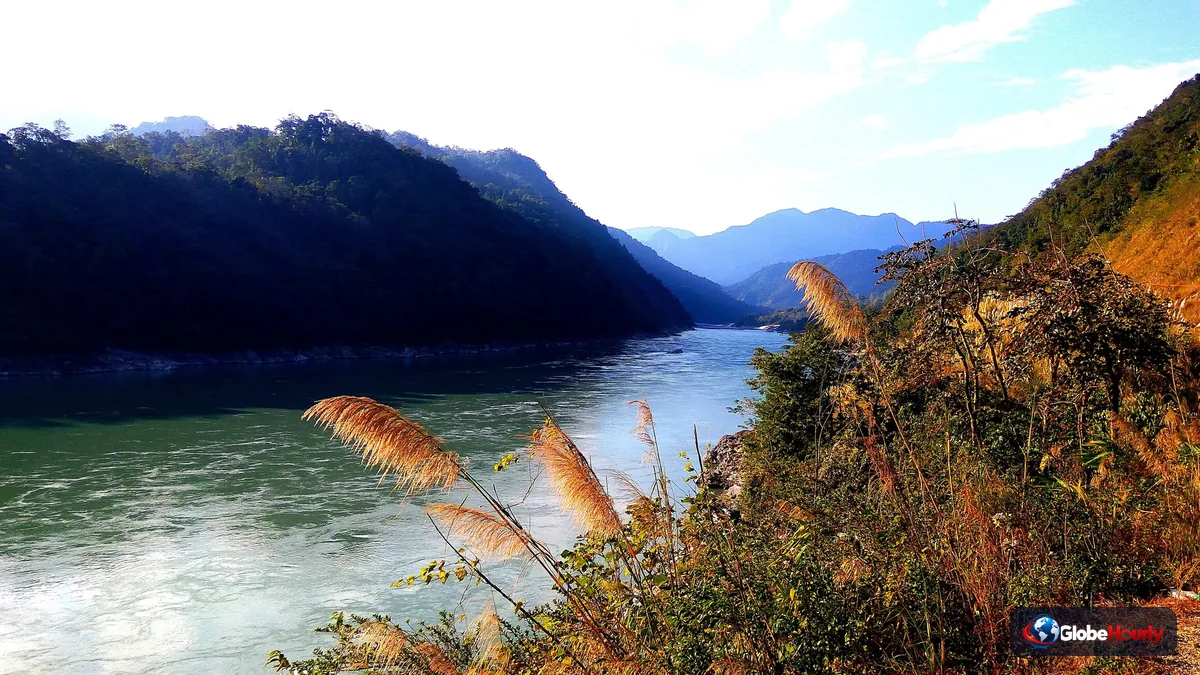
The Siang river is the name of the Brahmaputra as it enters India from Tibet, where it is called the Yarlung Tsangpo. China is building a huge hydropower scheme on that river, estimated at about $167 billion, which is expected to become the largest in the world. New Delhi fears Beijing could one day control or disrupt flows downstream, affecting farms and cities in north-east India and Bangladesh. China says its project will have no negative impact downstream.
India's response is the Siang Upper project, which would be the country's largest hydropower plant by far. Its main purpose is strategic: a giant reservoir to store water and keep flows steady into the Brahmaputra. China also claims Arunachal Pradesh as "southern Tibet", which India rejects, and troops from both countries patrol the disputed Himalayan frontier.
Opposition has grown for more than a year. The Adi community, whose villages line the Siang valley, fears losing ancestral land, forests and farms. Earlier protests included the burning of a hanging bridge and repeated demands for central forces to leave.
Reactions
Khandu condemned the violence. "Question us, have dialogue with us, instead of violence," he told reporters on Saturday. The state government says the surveys only test whether the project is viable and do not mean construction has been approved, and argues the dam is vital to protect the region's water security.
Why it matters
The clashes show how hard it will be for India to build a strategic project in a remote border area without local consent. Large dams in the Himalayas raise concerns about earthquakes, landslides, floods and the loss of indigenous land. The water dispute with China also matters for all of South Asia: the Brahmaputra feeds millions of people in Assam and Bangladesh, and rivalry over Himalayan rivers is a growing source of tension in a region that includes Pakistan's own disputes over the Indus waters.
What happens next
Police are expected to investigate the arson and attacks on officials' homes, and more arrests are possible. Protest groups say they will continue until the detained activists are freed and survey work stops. Talks between community leaders, the state government and the centre are being urged on both sides, but no date has been announced.
Questions people are asking
Why are people protesting against the Siang dam in Arunachal Pradesh?
Local communities, mainly from the Adi tribe, fear the 11,200 MW Siang Upper Multipurpose Project would flood ancestral land and displace up to 27 villages, and damage the Siang valley's ecology. They want survey and pre-feasibility work stopped and central security forces withdrawn.
What is the Siang Upper Multipurpose Project?
It is a proposed 11,200-megawatt hydropower and water-storage project on the Siang river (the upper Brahmaputra) planned by state-run NHPC. It would be India's largest hydropower project, and New Delhi says its reservoir would protect water flows against China's mega-dam upstream in Tibet.
What is China's dam near Arunachal Pradesh?
China is building a hydropower scheme on the Yarlung Tsangpo river in Tibet, upstream of India, estimated to cost about $167 billion and expected to be the world's largest. India fears it could affect water flows downstream; Beijing says it will have no negative impact.