France protests: 135 arrested as 70,000 police deploy, Lyon teargas
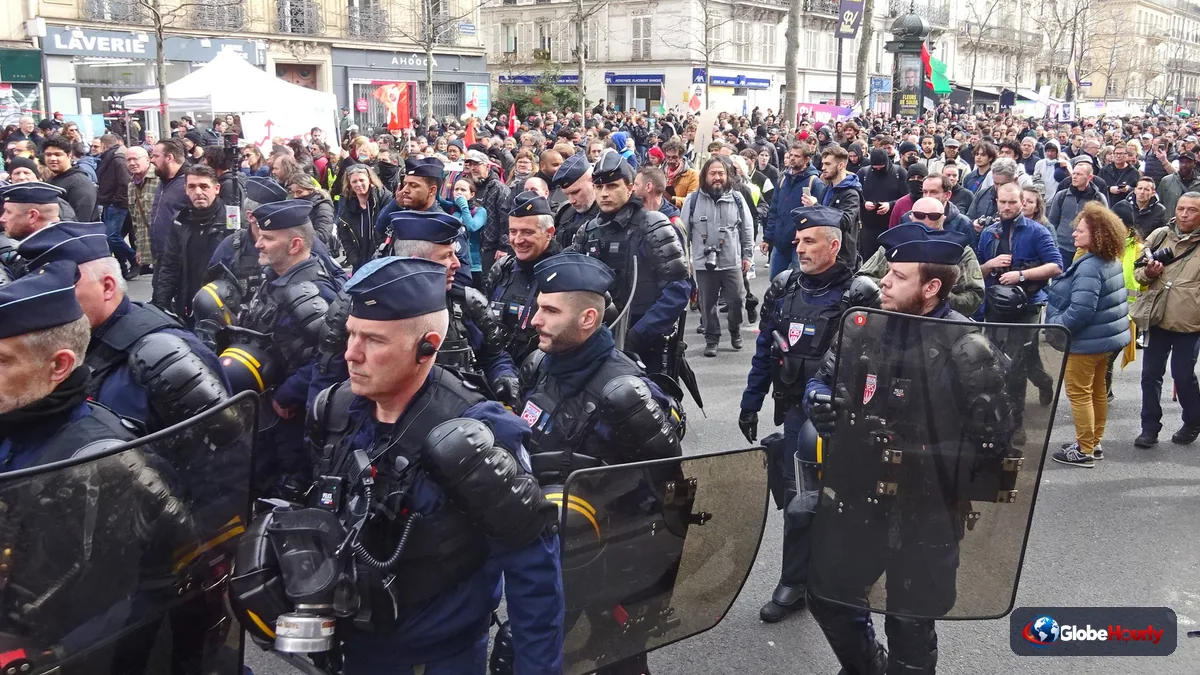
France staged a second Saturday of nationwide protests over schools and living costs under heavy security. Police made 135 arrests by early afternoon, fired teargas in Lyon and moved the main Paris march to the city's edge.
At a glance
- Interior Minister Laurent Nuñez said police had arrested 135 people and seized weapons by early afternoon on Saturday, October 24, 2026, on the sidelines of protests across France.
- Up to 70,000 police and gendarmes were deployed, backed by helicopters, armoured vehicles and water cannon. The Louvre and Orsay museums closed for the day.
- Police fired teargas at about 150 people in Lyon, where all protests were banned. In Paris, the main union march was moved from Bastille to a route on the city's south-eastern edge.
- In Orléans, about 11,000 people marched against the National Rally's party congress, where Marine Le Pen is opening her presidential campaign.
- Yellow vests called new protests and a sit-in outside parliament for October 31. Unions are planning a national day of action on November 5.
French police arrested 135 people on Saturday, October 24, 2026, as hundreds of protests over schools, wages and the cost of living took place across France under one of the biggest security operations in years. Interior Minister Laurent Nuñez said the arrests were made and weapons seized "on the sidelines" of the marches by early afternoon. Up to 70,000 police and gendarmes were on duty after last weekend's rallies turned into rioting and looting.
What happened on Saturday
The day began with yellow vest groups announcing more than 700 actions around the country, from roundabouts and petrol stations to railway stations and the gates of oil depots. Students, trade unions and left-wing groups also held marches.
The government had promised a "massive" security operation. Helicopters, armoured vehicles and water cannon were deployed, some towns imposed local curfews, and several cities banned protests outright. Soldiers from the Sentinelle anti-terror force were posted near the Arc de Triomphe. The Louvre and the Orsay Museum stayed closed all day, many shopkeepers boarded up their windows, and the Art Basel fair cancelled its weekend programme in Paris.
| Saturday, October 24 | Key facts |
|---|---|
| Police and gendarmes deployed | Up to 70,000 |
| Arrests (early afternoon) | 135, with weapons seized (interior minister) |
| Actions announced by yellow vests | More than 700 |
| Lyon | All protests banned; teargas fired at about 150 people |
| Paris | Union march moved from Bastille–Nation to Porte d'Italie–Porte de Vincennes, now set for 7pm |
| Orléans | About 11,000 marchers against the National Rally congress (prefecture, by noon) |
| Previous Saturday (October 17) | More than 500,000 marchers; about 3,000 shops damaged or looted |
In Lyon, where the city had banned all protests for the day, police used teargas on Saturday morning to disperse about 150 people gathered in a prohibited area. Rallies were also banned by local authorities in other cities, including Nice and Montpellier, while marches went ahead in Paris and Marseille.
In Paris, the prefecture forced the main union march away from its traditional Bastille-to-Nation route to a new path between Porte d'Italie and Porte de Vincennes on the city's south-eastern edge, and moved its start from 1pm to 7pm. Police warned that people gathering at Bastille could be fined 135 euros. Organisers at first said they would keep their original route, calling the new one "imposed", but later agreed to the prefecture's plan. The UNEF student union said dozens of its activists were surrounded by riot police in the capital, searched and fined before they could reach the metro.
The march in Orléans
About 11,000 people marched in Orléans by midday, according to the local prefecture, against the congress of Marine Le Pen's National Rally (RN). Students, unions, left-wing party leaders and human rights campaigners joined the march, chanting against both Le Pen and President Emmanuel Macron. The two-day congress is the RN's first big campaign event before the presidential election due in about six months, and is expected to re-elect Jordan Bardella as party leader.
Background: how the protests grew
The movement began more than a month ago over staff shortages at a high school south-east of Paris. It spread to schools and universities across the country, with students demanding more teachers, repairs to buildings, 250,000 extra higher-education places, an end to the Parcoursup admissions system, an extra 200 euros a month in student grants and a rent freeze in public student housing.
Yellow vests, trade unions and other groups then joined in, adding anger over wages, pensions, fuel prices and the cost of living late in Macron's second term. On Saturday, October 17, more than half a million people marched; that evening, groups of rioters looted and damaged about 3,000 shops. Nuñez later admitted that police had lost control in some cities and offered to resign, but Macron refused.
On Thursday, October 22, Macron said "illegitimate" protests would be banned and blamed "seditious" ultra-left groups for the riots. On Friday he held a defence council and met student representatives, who said he promised to overhaul university admissions but urged students to keep protesting until concrete measures are announced.
Reactions
The government says the bans and the heavy police presence are needed to protect city centres, shops and public buildings. Nuñez had warned that calls for violence and looting were spreading online.
Unions and opposition parties said the bans attacked the right to protest. A CGT union official said the late route change in Paris was "impossible to secure". Jean-Luc Mélenchon of La France insoumise accused the authorities of trying to disrupt the marches, and Greens leader Marine Tondelier warned of possible clashes at Bastille. Amnesty International criticised what it called an escalation in security measures and serious violations of the right to demonstrate.
Why it matters
France is entering a presidential election season with Macron's popularity at its lowest since he took office in 2017. A protest movement that joins students, unions and yellow vests is a serious test for the government, and for businesses and tourism in Paris after a week of closures and looting. The wave of unrest is also being watched across Europe, where cost-of-living anger is driving protests in several countries.
What happens next
The main Paris march was due to start at 7pm local time, and more arrests were likely during the evening. Students say they will keep protesting. Yellow vests have called protests and a sit-in outside parliament and city halls for Saturday, October 31, and trade unions are preparing a national day of action on Thursday, November 5. Any new measures for schools and universities promised by Macron are expected to be watched closely by student unions.
Questions people are asking
Why are people protesting in France?
The movement began more than a month ago with students protesting about teacher shortages, school conditions and university admissions. It has grown to include yellow vests, trade unions and other groups angry about living costs, wages, pensions and fuel prices.
How many people were arrested in France on October 24?
Interior Minister Laurent Nuñez said 135 people had been arrested and various weapons seized by early afternoon on Saturday, October 24, 2026. The figure was expected to rise as marches went on into the evening.
When is the next protest in France?
Yellow vests have called protests and a sit-in outside parliament and city halls for Saturday, October 31. Trade unions are planning a national day of action on Thursday, November 5.