IRGC says two tankers exploded on mines in Hormuz, one a supertanker, as Brent slips to about $112 on third day of Doha talks
Iran's IRGC says two tankers hit mines on an 'unauthorized route' in Hormuz. There is no independent confirmation, and Brent fell 1.3% as Doha talks continued.
At a glance
- Iran's Revolutionary Guard Navy said on Sunday that two oil tankers exploded after hitting mines on an 'unauthorized route' through Hormuz. No independent confirmation or ship names were available.
- Separately, the UK Maritime Trade Operations centre reported a tanker hit by an unknown projectile earlier on Sunday.
- Brent fell $1.51, or 1.33%, to $111.92 a barrel in early Asian trade on Monday as a third day of Iran-Qatar talks in Doha continued. WTI was about $102.34.
- President Trump said the war would end 'very soon' but gave no timetable.
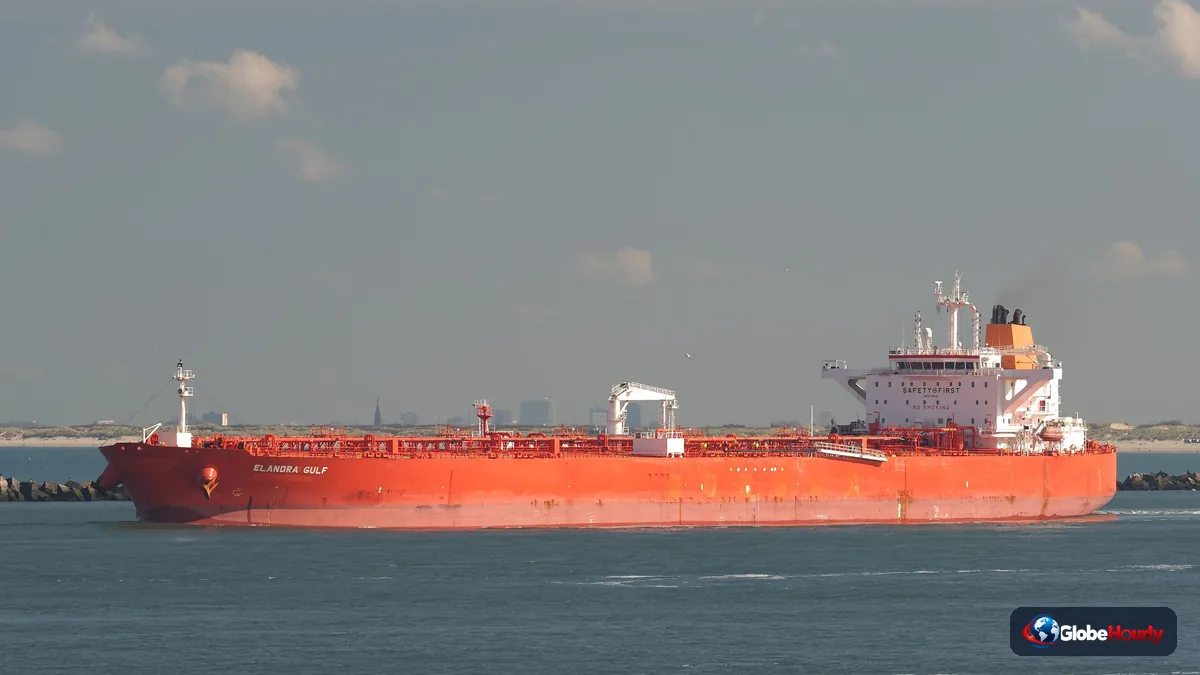
Iran's Revolutionary Guard Navy said on Sunday, November 1, 2026, that two oil tankers exploded after striking mines while using an "unauthorized route" through the Strait of Hormuz, and that one of them was a supertanker. The claim was carried by Iranian state media. No ship names or casualty figures have been given, and no independent body had confirmed the incident at the time of publication.
Oil markets shrugged it off. Brent crude fell $1.51, or 1.33%, to $111.92 a barrel in early Asian trade on Monday as traders focused on a third day of talks between Iran and Qatar in Doha.
What is claimed, and what is confirmed
| Report | Source | Status |
|---|---|---|
| Two tankers exploded on mines, one a supertanker | IRGC Navy, through Iranian state media | Iranian claim only; no vessel named |
| Tanker hit by unknown projectile on Sunday | UK Maritime Trade Operations | Reported by the monitoring centre |
| Brent $111.92, WTI about $102.34 | Market prices, early Monday in Asia | Confirmed |
The two reports may or may not describe connected events. Neither the IRGC nor the UK centre has linked them publicly.
The IRGC's wording matters. Iran has imposed its own restrictions on ships crossing the strait and has attacked vessels it says break them. Calling a route "unauthorized" is a way of putting the blame on the ships, and it doubles as a warning to any owner thinking of testing a passage outside Iran's approved lanes. Tehran made a similar claim about tankers hitting mines last month, when it said three vessels were struck near Khasab.
Shipping attacks had already been climbing. Maritime monitors counted more than 30 incidents in the strait in October alone, the worst month of the war so far.
Why oil fell anyway
Diplomacy is doing more to move the price than the latest explosions. The Doha talks are aimed at ending the US-Israeli war with Iran, and could lead to the strait reopening. Foreign Minister Abbas Araghchi has said Hormuz could reopen within two days under a plan worked out with Qatar, on conditions that include action by the US.
President Donald Trump said the war would end "very soon" but gave no timeline, and called the rise in oil prices a small price to pay for security. OPEC+ left its December output targets unchanged on Sunday.
Traders have seen hopes of a deal fade several times this year. Prices remain far above where they were before the war began.
What it means at the pump
For countries that buy most of their oil through Hormuz, a dollar or two on Brent does not change much. Pakistan, India and other South Asian importers set their fuel prices largely from a global benchmark that is still above $110, plus higher shipping and insurance costs for anything sailing through the Gulf. Pakistan's next fortnightly petrol price review falls in mid-November, and any change will depend on how the market moves between now and then.
Airlines and shipping companies face the same bill. Ticket prices and freight rates on Gulf routes have stayed high, and a settlement is the only thing likely to bring them down quickly.
The next signs to watch are any statement from Doha on the third day of talks, and whether ship owners or insurers name the vessels the IRGC says were hit. Any maritime advisory confirming a mine strike would also raise the risk for ships still waiting to cross.