Spain's transport minister Óscar Puente resigns after Urda high-speed crash killed 69, the second deadly rail disaster in nine months
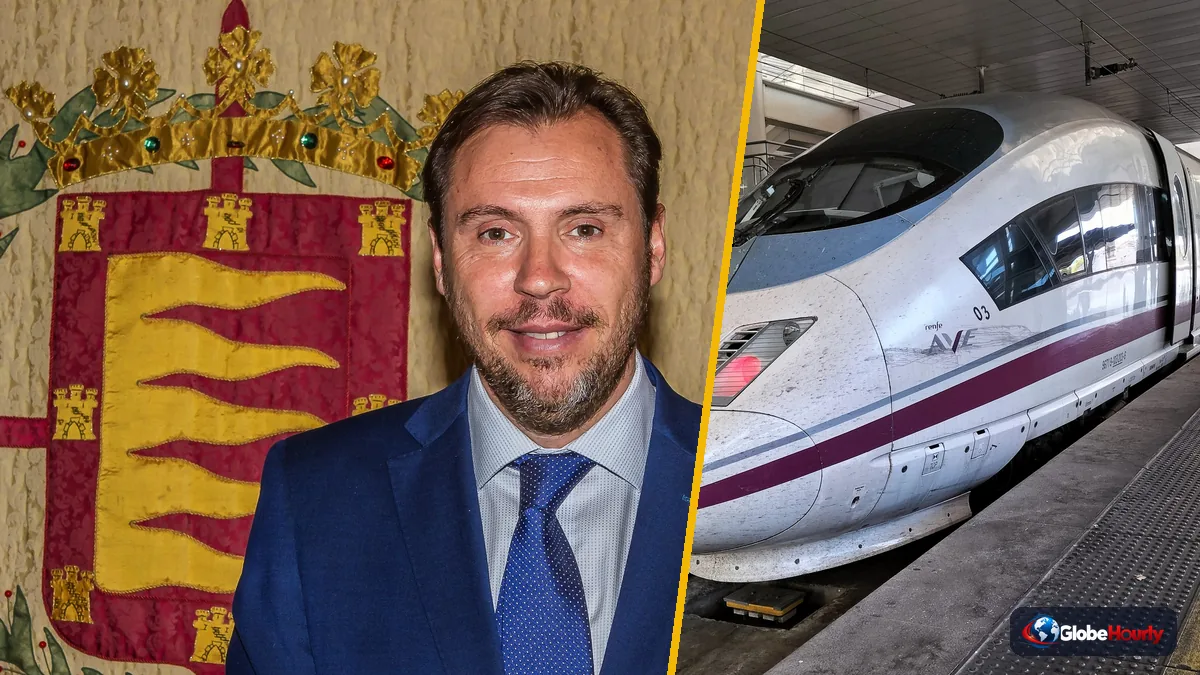
Óscar Puente quit as Spain's transport minister six days after the Urda crash killed 69, saying no minister could survive two such disasters in a year.
At a glance
- Óscar Puente resigned as Spain's transport minister on Tuesday, November 3, before Congress's standing committee, six days after a high-speed collision near Urda, Toledo, killed 69 people.
- He said a transport minister in a country like Spain cannot remain in office after two accidents this serious in less than a year; a derailment at Adamuz, Córdoba, killed 46 in January.
- At Urda, a Renfe train was cleared by central controllers to continue at more than 160 km/h after a key safety communication system failed, and ran into a stationary Iryo train.
- All 69 victims, including 15 foreign nationals, have been identified. Families of those killed will receive €216,000 each, and the Madrid–Seville line stays closed pending court approval for repairs.
- Puente also withdrew as the Socialist candidate in Valladolid for the November 29 general election.
Óscar Puente has resigned as Spain's transport minister, six days after two high-speed trains collided near the village of Urda in Toledo province and killed 69 people. He announced his decision on Tuesday, November 3, at the end of a long appearance he had requested before the Permanent Deputation of Congress, the committee that stands in for parliament while it is dissolved ahead of the November 29 election.
"A transport minister in a country like Spain cannot remain in office after two accidents of this seriousness in less than a year," Puente said. In January, a derailment at Adamuz, in Córdoba province on the same Madrid–Seville corridor, killed 46 people.
A U-turn within a week
Puente had insisted until the last moment that he would stay. On October 30 he said his way of taking responsibility was to remain in the post, and government sources were still saying on Tuesday morning that he would not quit. In the committee, he said he had in fact decided to resign straight after the crash but had kept it private.
He went further than leaving the ministry. Puente also withdrew as the Socialist Party's lead candidate in Valladolid, the city where he was mayor, for the general election in just under four weeks, ending his political career for now. The government must name an interim minister to run the department until a new cabinet is formed.
How the Urda collision happened
The crash happened on October 28 about 150 km south of Madrid. A train run by the state operator Renfe struck an Iryo train that had stopped on the line.
What investigators have pieced together so far points at the control room rather than the trains. The communication system that feeds the line's automatic safety system, known as LZB, had stopped working. Controllers at the infrastructure manager Adif's centre in Madrid then authorised the Renfe AVE to carry on at more than 160 km/h, although the Iryo train was standing on the track ahead. Puente called that chain of decisions "inexplicable" but defended the reliability of the LZB system itself.
A criminal investigation is under way into how the clearance was given.
Two crashes, 115 dead
| Adamuz (Córdoba) | Urda (Toledo) | |
|---|---|---|
| Date | January 18, 2026 | October 28, 2026 |
| Line | Madrid–Seville high-speed | Madrid–Seville high-speed |
| Trains involved | Renfe and Iryo | Renfe and Iryo |
| Deaths | 46 | 69 |
| Status | Under investigation | Criminal and technical inquiry |
Together the two crashes killed 115 people, the worst toll on Spain's railways since the Santiago de Compostela derailment in 2013. Until this year, Spain's high-speed network, one of the largest in the world, had not had a fatal crash in more than three decades of service.
All 69 victims at Urda have been identified, and their families or consulates informed. Fifteen of them were foreign nationals, including two Australians. The remains of 59 people had been returned to relatives by Wednesday, and the search at the site has been closed with the toll unchanged.
Compensation and the closed line
The government confirmed on Tuesday that Urda victims will be compensated on the same scale used after Adamuz: €216,000 for the family of each person killed and between €2,400 and €84,000 for injured survivors, depending on their injuries. Prime Minister Pedro Sánchez has also announced a €30 million aid package.
The Madrid–Seville line, one of Spain's busiest, remains shut while a court decides whether reconstruction work at the crash site can begin. Puente estimated that services could restart within ten days of that approval. Before leaving, he announced faster installation of the European ERTMS signalling system, better working conditions in control centres and a real-time digital model of the national rail network.
Reaction in Madrid
Sánchez praised Puente on X, saying he had stepped aside out of respect for the victims. The opposition People's Party welcomed the resignation but said it had come "116 deaths late"; its spokesperson Ester Muñoz said a transport minister's job was to prevent fatal accidents, not explain them. The Basque party EH Bildu, which had not called for his resignation, warned against blaming individuals before the investigation is finished.
The resignation removes one of the government's most combative figures weeks before voters go to the polls on November 29. The interim minister's first decision will be when to reopen the Madrid–Seville line once the court rules.