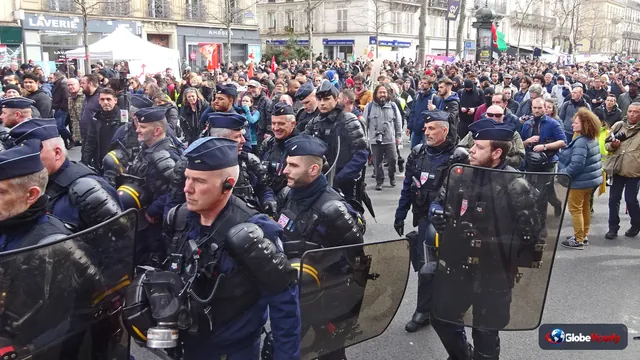
Durban mob of 50 beats foreign national to death during anti-migrant march
A man believed to be a foreign national was beaten to death by about 50 people during a march in central Durban, police said, as anti-migrant tension grips South Africa's port city with soldiers still on patrol.
At a glance
- A man believed to be a foreign national, in his late 30s or early 40s, was beaten to death by a crowd of about 50 people on Dr Pixley kaSeme Street in Durban's city centre on Thursday, October 22, 2026.
- KwaZulu-Natal police say two men broke away from a marching group and approached him before the crowd attacked; a murder case has been opened and no arrests have yet been made.
- Soldiers have been deployed in Durban since October 10, after two days of rioting in which at least 14 vehicles were burned and foreign-owned shops looted; the deployment runs to October 31.
- The anti-immigration group March and March has threatened a citywide shutdown of Durban on November 10.
A man believed to be a foreign national was beaten to death by a crowd of about 50 people during a march through central Durban, South Africa, on Thursday, October 22, 2026, police said. The killing on Dr Pixley kaSeme Street came as anti-migrant tension in the port city remains high, two weeks after soldiers were sent in to stop rioting and looting aimed at foreign-owned businesses.
What happened
According to KwaZulu-Natal police spokesperson Colonel Robert Netshiunda, two men broke away from a group that was marching through the central business district and approached a man standing at the roadside. A crowd of about 50 people then attacked him, and he was declared dead at the scene.
Police said the victim appeared to be in his late 30s or early 40s. They have not released his name or nationality and said the motive was not yet known. A murder case has been opened, and police said they were following several leads and using investigative tools to identify suspects. No arrests had been announced by Friday. Police also urged the public not to share unverified information about the incident on social media.
| Item | Detail |
|---|---|
| Date | Thursday, October 22, 2026 |
| Place | Dr Pixley kaSeme Street, Durban CBD, KwaZulu-Natal |
| Victim | Man in late 30s or early 40s, believed to be a foreign national |
| Attackers | Crowd of about 50 people |
| Police action | Murder case opened; no arrests yet |
| Army deployment in Durban | Since October 10, scheduled until October 31 |
| Shutdown threat | November 10 (March and March) |
The day before, the anti-immigration group March and March held a vehicle motorcade through Durban that began at the Berea Centre, an area where many foreign nationals live and work, and a separate assault was reported on the sidelines of that procession.
Background
Durban has been the centre of a wave of anti-migrant unrest this year. March and March began weekly protests demanding that undocumented migrants leave South Africa. Its leader, Jacinta Ngobese-Zuma, has said the group is not xenophobic and targets only people who entered the country illegally.
The latest surge followed a Constitutional Court ruling that asylum seekers cannot be refused the application process only because they entered the country illegally. A Home Affairs directive implementing the ruling brought crowds to refugee offices and was later withdrawn after protests turned violent in Durban and in Johannesburg's Soweto township.
Earlier this month, two days of rioting in Durban saw at least 14 vehicles burned and foreign-owned shops looted. Police made 19 arrests. At the request of KwaZulu-Natal Premier Thamsanqa Ntuli, the South African National Defence Force was deployed to the city on October 10, with the deployment due to run until October 31.
South Africa has about 2.4 million foreign nationals in a population of around 62 million, according to official figures, and unemployment is above 30%. Competition for jobs, housing and small businesses has fuelled repeated outbreaks of violence against migrants since 2008. Nigeria, Mozambique, Malawi and other governments say some of their citizens have been killed in attacks this year, while South African authorities dispute some of these claims and attribute some deaths to crime. Tens of thousands of migrants have left the country in recent months.
Reactions
President Cyril Ramaphosa has condemned the violence against foreign nationals, while acknowledging that weak border controls allow undocumented migrants to remain in the country. Rights groups have called for swift arrests and warned that public marches targeting migrants risk further killings.
Why it matters
The killing is the most serious incident in Durban since troops arrived and shows that the army presence has not ended the danger to migrants on the city's streets. South Africa is home to large communities from Zimbabwe, Mozambique, Malawi, Nigeria, Ethiopia, Somalia, Bangladesh and Pakistan, many of whom run small shops — businesses that have often been targeted in past waves of unrest. Pakistani and Bangladeshi traders in KwaZulu-Natal have previously reported looting of their stores during riots.
What happens next
Police are seeking the suspects and are expected to give updates on arrests. The army deployment in Durban is due to end on October 31 unless extended. March and March has threatened a citywide shutdown on November 10, citing the government's handling of asylum applications, raising concerns about further confrontations.
Questions people are asking
What happened in Durban on October 22, 2026?
A man believed to be a foreign national was beaten to death by a crowd of about 50 people during a march through Durban's central business district on October 22, 2026. Police opened a murder case and are looking for suspects.
Why are there anti-migrant protests in South Africa?
Protests grew this year over illegal immigration, high unemployment above 30%, and a court ruling that asylum seekers cannot be refused the application process only because they entered illegally. A group called March and March has led weekly protests demanding that undocumented migrants leave.
Is the army deployed in Durban?
Yes. The South African National Defence Force was deployed to Durban on October 10, 2026 at the request of KwaZulu-Natal Premier Thamsanqa Ntuli after two days of rioting and looting, and the deployment is set to run until October 31.