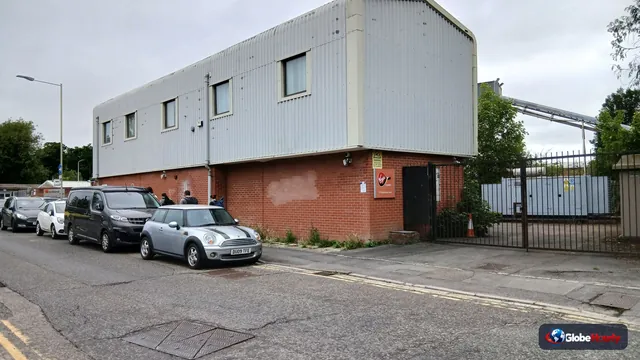
NASA's four-person Mars simulation crew walks out after 378 days inside a 1,700-square-foot habitat in Houston
Four volunteers left NASA's 3D-printed mock Mars base in Houston after 378 days, with message delays up to 44 minutes and a two-week communications blackout.
At a glance
- Ross Elder, Ellen Ellis, Matthew Montgomery and James Spicer left NASA's simulated Mars habitat on Saturday, October 31, 2026, after 378 days.
- They lived in a 3D-printed, 1,700-square-foot unit inside a hangar at Johnson Space Center in Houston, in the second CHAPEA mission.
- Messages took up to 44 minutes each way, and for two weeks the crew had no outside contact, simulating a solar blackout.
- NASA's next analog, combining Moon and Mars work, will start no earlier than August 2027.
Four NASA volunteers walked out of a simulated Mars base in Houston on Saturday, October 31, 2026, after 378 days sealed inside. Commander Ross Elder, medical officer Ellen Ellis, science officer Matthew Montgomery and flight engineer James Spicer had not been outdoors, or seen anyone but each other, since October 19 last year.
They were the second crew of NASA's Crew Health and Performance Exploration Analog, or CHAPEA, which tests how people cope with the conditions of a long Mars mission without leaving Earth. Families and friends met them at Johnson Space Center.
Life in a space the size of a three-bedroom house
The habitat is a 3D-printed, 1,700-square-foot unit built inside a hangar on the Johnson grounds. Inside, the crew grew crops, maintained their own equipment, exercised, tested robotics and carried out simulated Mars surface operations, leaving for those through an airlock into a mock outdoor area.
Johnson Space Center Director Vanessa Wyche said the crew had managed on limited resources while keeping the habitat running.
| CHAPEA Mission 2 | Detail |
|---|---|
| Entered | October 19, 2025 |
| Exited | October 31, 2026 |
| Duration | 378 days |
| Crew | Ross Elder, Ellen Ellis, Matthew Montgomery, James Spicer |
| Living space | 1,700 square feet, 3D-printed |
| Message delay | 26 to 44 minutes each way |
| Longest silence | About two weeks without outside contact |
Emails 44 minutes away, and a two-week silence
The hardest conditions to build into the experiment were also the simplest. Because Mars can be some 140 million miles away, every message into the habitat was delayed by between 26 and 44 minutes, and any reply took just as long to return. Email was the crew's only link to friends and family. Spicer said he received more than 4,000 of them during the mission.
At one stage, contact stopped altogether. For about two weeks the crew heard nothing from outside, to reproduce the blackout that would occur when the sun sits between Earth and Mars and blocks radio signals.
Suzanne Bell, a co-investigator on the project, described the mission as a form of sensory deprivation: no trip outdoors in 378 days, and no faces but three others. Elder joked that the crew's knowledge of current events might be slightly behind.
He was more serious about the goal, saying the risks of Mars are great but that putting humans there is "not only achievable, but rather inevitable".
How this crew compares with the first
This was the second full run of the same experiment, which lets researchers compare two sets of people under similar conditions.
| Mission 1 | Mission 2 | |
|---|---|---|
| Dates | June 25, 2023 – July 6, 2024 | October 19, 2025 – October 31, 2026 |
| Duration | 378 days | 378 days |
| Crew size | 4 | 4 |
| Commander | Kelly Haston | Ross Elder |
| Location | Johnson Space Center, Houston | Johnson Space Center, Houston |
Why spend a year pretending
No one will reach Mars soon, but a crewed trip would be measured in years, far beyond the months astronauts usually spend on the International Space Station. A real crew could not be resupplied, and could not ask mission control for quick advice. Studies of this kind show how people perform when food, water and equipment are rationed, and how their health, mood and teamwork change over time.
NASA says the data will also feed into near-term planning, including food system design for its lunar missions.
The next step is already open for applicants. NASA's Moon and Mars Exploration Analog, a further year-long stay combining elements of CHAPEA with other simulations, will begin no earlier than August 2027.
Questions people are asking
What is NASA's CHAPEA mission?
CHAPEA, the Crew Health and Performance Exploration Analog, puts volunteers in a mock Mars base in Houston for about a year. NASA studies how isolation, limited resources and communication delays affect people and their work.
How long did the CHAPEA crew stay inside the habitat?
The second crew stayed 378 days, from October 19, 2025, to October 31, 2026. The first crew also spent 378 days inside, from June 25, 2023, to July 6, 2024.