Syria in talks to join Makkah defence pact with Saudi Arabia, Türkiye and Pakistan, foreign minister says
Syria's foreign minister confirmed talks on joining the pact that treats an attack on one member as an attack on all, as Saudi Arabia fights the Houthis.
At a glance
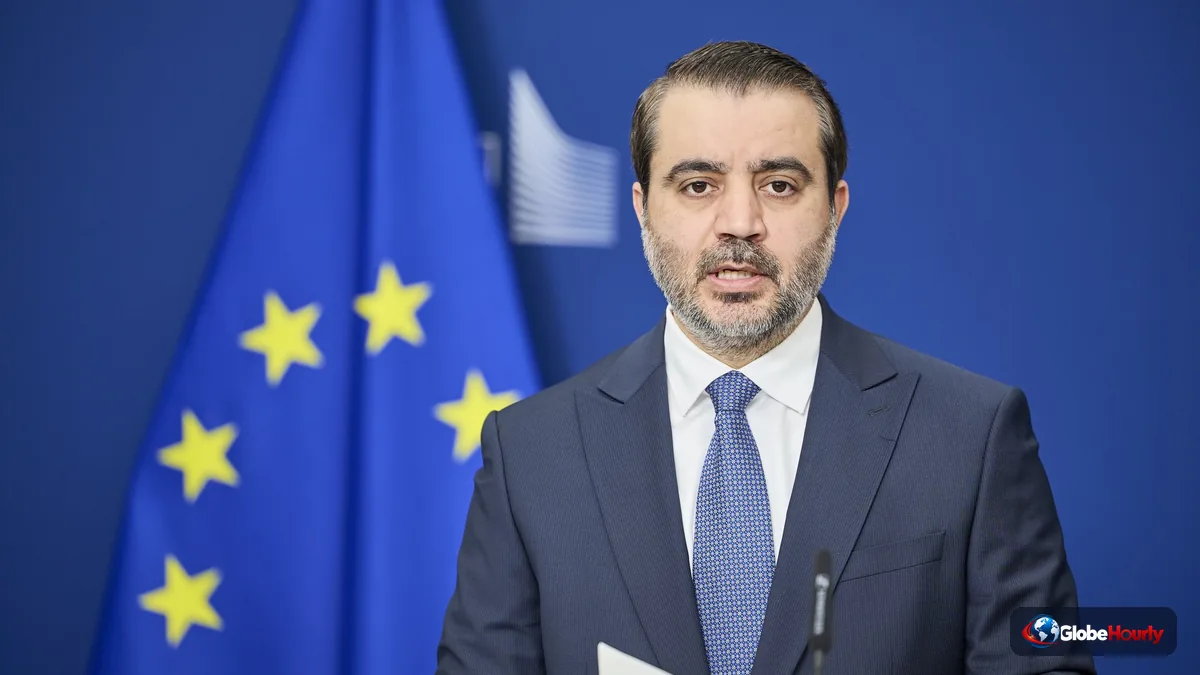
- Syrian Foreign Minister Asaad al-Shibani said at the Manama Dialogue on Saturday, October 31, that there are negotiations on Syria joining the Makkah Joint Defence Agreement.
- The pact, signed in August by Saudi Arabia, Türkiye and Pakistan, treats an attack on one member as an attack on all.
- A move would widen an alliance whose main partner, Saudi Arabia, is fighting Iran-backed Houthis in Yemen. Experts say the pact is not currently being used in that war.
- Damascus denies that Riyadh asked it to send ground troops to Yemen, and no decision on membership has been announced.
Syria is negotiating to join the Makkah Joint Defence Agreement, the mutual defence pact between Saudi Arabia, Türkiye and Pakistan, Foreign Minister Asaad al-Shibani said at the Manama Dialogue in Bahrain on Saturday, October 31, 2026. No decision has been announced, but his remarks are the clearest public statement yet that Damascus is considering a place in an alliance under which an attack on one member counts as an attack on all.
Shibani said that with or without the pact, Syria considers itself "part of the security of this region" and would stand by any organisation protecting it.
What membership would commit Syria to
The pact is young. It was signed in August, two months before the Iran-backed Houthis launched deadly attacks on Saudi airports.
| Makkah Joint Defence Agreement | Status |
|---|---|
| Members | Saudi Arabia, Türkiye, Pakistan |
| Signed | August 2026 |
| Core clause | An attack on one member is an attack on all |
| Ratification | Completed by Pakistan and Saudi Arabia; Türkiye's parliament was still to vote at last report |
| Use in the Yemen war | Not currently invoked, experts say |
| Syria | In negotiations; no decision |
Experts have said the pact matters more for long-term regional security than for the current fighting in Yemen. Türkiye and Pakistan have pledged support for Riyadh, but Turkish officials have said this would not extend to sending troops to Yemen.
The ground-troops question Damascus keeps denying
The reason this matters now is the war on Saudi Arabia's southern border. Since the Houthi attacks, Riyadh has been looking for wider international backing, and President Ahmad al-Sharaa visited the kingdom on October 6 to meet Crown Prince Mohammed bin Salman.
A US official has said Saudi Arabia asked Syria to send forces against the Houthis. Damascus has denied this, and Syria's presidential media adviser called the report untrue. People familiar with the discussions said in early October that Syria was carefully considering some form of military assistance to Riyadh.
Syria's own position is delicate. Its new government is still rebuilding after years of civil war, and in August it said that reconstruction and economic cooperation remained its priority while it studied membership. Shibani has also stressed Syria's "very special" relationship with Türkiye, a member that already works closely with Damascus on military and economic matters.
What it would mean for Pakistan
Pakistan would become a treaty partner of a fourth state, in one of the most unstable parts of the Middle East. Under the pact's terms, Syria's security would in principle become a concern of Islamabad's, though much would depend on what kind of membership or cooperation is agreed, and whether it carries the full mutual defence clause.
The stakes are real at home. Pakistan's foreign policy is already stretched: it is one of the main mediators between the US and Iran, is in a tense border confrontation with the Afghan Taliban, and has publicly confirmed that its obligations to Saudi Arabia stand. Millions of Pakistanis also live and work in the Gulf, which makes the security of Saudi Arabia a household issue.
There is also the Iran angle. Representatives of the three member states recently travelled to Tehran to try to reduce tensions, seeking a further communication channel alongside the mediation by Pakistan and Qatar. Adding Syria, whose new leaders replaced Tehran's former ally Bashar al-Assad, could complicate that effort.
Open questions before any signature
Key details have not been made public, including whether Syria would be a full member or a looser partner, whether all three existing members have agreed to admit it, and whether Türkiye's own ratification must be completed first.
None of the four governments has given a timetable. Further signals are most likely from Riyadh, Ankara or Damascus as the Yemen war and the US-Iran standoff develop this week.
Questions people are asking
What is the Makkah defence pact?
The Makkah Joint Defence Agreement is a mutual defence pact signed in August 2026 by Saudi Arabia, Türkiye and Pakistan. It treats an attack on one member as an attack on all of them.
Is Syria joining the Makkah pact?
Not yet. Foreign Minister Asaad al-Shibani said negotiations are under way, and that Syria sees Gulf security as part of its own, but no membership decision has been announced.