North Korea fires about 10 ballistic missiles from Wonsan into the sea
North Korea launched around 10 short-range ballistic missiles from the Wonsan area on Thursday, flying about 250 km into the sea, as tensions on the Korean border rise; Japan protested.
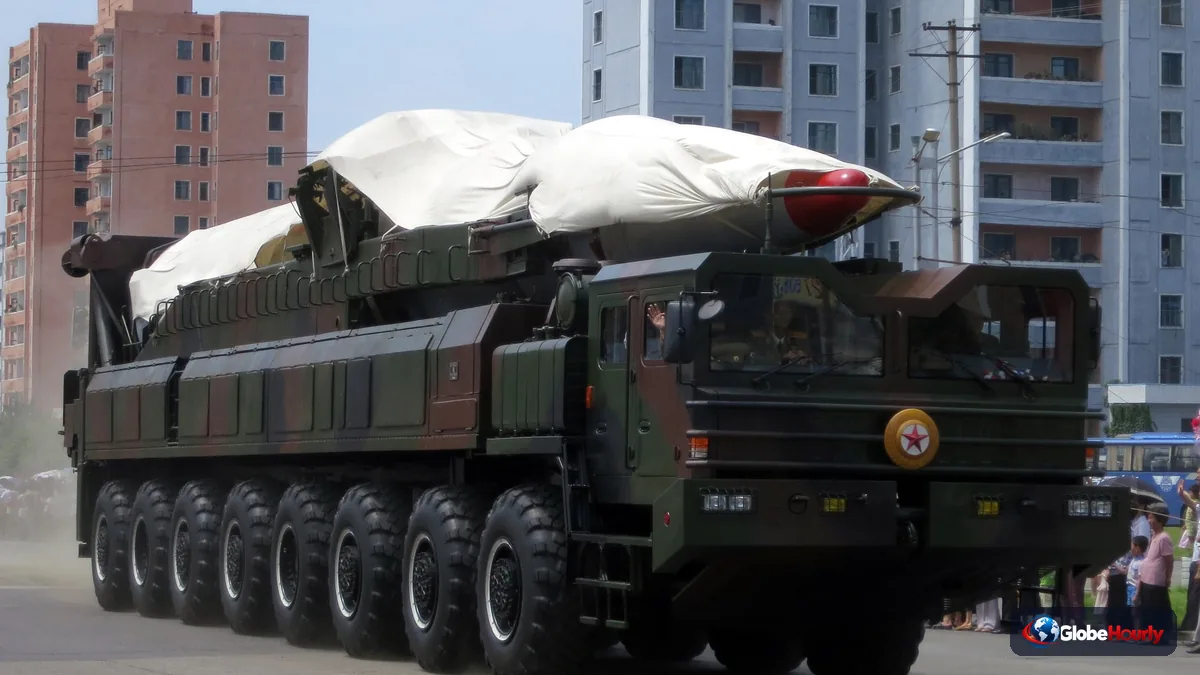
At a glance
- North Korea fired around 10 short-range ballistic missiles from the Wonsan area towards the sea off its east coast at about 12:30 p.m. local time on Thursday, October 29, 2026 (8:30 a.m. PKT), South Korea's Joint Chiefs of Staff said.
- The missiles flew about 250 km and fell outside Japan's exclusive economic zone; no damage to ships or aircraft was reported.
- Japan's Chief Cabinet Secretary Minoru Kihara said the launches violated UN Security Council resolutions; Tokyo protested through its embassy in Beijing.
- It was the North's first ballistic launch since October 12 and its more than tenth missile test this year, coming amid border tension and days after Kim Jong Un's visit to China.
North Korea fired around 10 short-range ballistic missiles towards the sea off its east coast on Thursday, October 29, 2026, South Korea's military said, in one of its largest salvos of the year. The missiles were launched from the Wonsan area at about 12:30 p.m. local time (8:30 a.m. Pakistan time) and flew about 250 km before falling into the sea, outside Japan's exclusive economic zone.
What happened
South Korea's Joint Chiefs of Staff (JCS) said it detected the launches from around Wonsan, in Kangwon Province, heading into the East Sea, also known as the Sea of Japan. The JCS said it had strengthened surveillance and readiness for possible further launches and was sharing information closely with the United States and Japan. Seoul held an emergency security meeting.
Japan's defence ministry and coast guard said the objects appeared to be ballistic missiles that had already fallen into the sea. No damage to aircraft or ships was confirmed.
| Detail | Figure |
|---|---|
| Date and time | Thursday, October 29, 2026, about 12:30 p.m. local (8:30 a.m. PKT) |
| Launch area | Wonsan, Kangwon Province, east coast |
| Number | About 10 short-range ballistic missiles (some counts higher) |
| Distance flown | About 250 km |
| Landing area | East Sea / Sea of Japan, outside Japan's EEZ |
| Previous ballistic launch | October 12, 2026 |
| Tests this year | More than 10 occasions |
South Korean officials said the missiles may have been fired from several types of launcher, possibly including 600 mm multiple rocket launchers that the North classes as tactical nuclear-capable weapons. The military was still analysing the exact types and did not rule out a mixed drill involving cruise missiles, drones or rocket artillery.
Background
The launch was North Korea's first ballistic missile firing since October 12. Tension on the heavily fortified border has risen since a mine blast last month wounded South Korean soldiers. In recent days Pyongyang threatened to restart front-line propaganda loudspeaker broadcasts and to deploy new weapons along the border.
The salvo also came days after leader Kim Jong Un made a surprise weekend visit to China, North Korea's main ally and trading partner. North Korea has tested missiles on more than 10 occasions in 2026, continuing to expand its arsenal despite UN Security Council resolutions that ban it from any ballistic missile activity.
Reactions
Japan's Chief Cabinet Secretary Minoru Kihara told reporters in Tokyo that the launches violated UN Security Council resolutions and posed a serious problem for public safety. Japan lodged a protest with North Korea through its embassy in Beijing. Prime Minister Sanae Takaichi ordered ministries to gather information and confirm the safety of ships and aircraft.
South Korea condemned the launch and said it would respond firmly to any provocation, in coordination with Washington and Tokyo. North Korea's state media had not commented on the launch by Thursday evening.
Why it matters
A salvo of around 10 missiles at once is designed to show the North can overwhelm missile defences, and short-range systems of this kind are aimed at targets in South Korea, including US bases. Each launch raises the risk of miscalculation on a border where tension is already high, and it adds to uncertainty for shipping and air traffic in North-East Asia, a key region for the world's trade in electronics, cars and ships.
What happens next
The US, South Korea and Japan are likely to hold calls on a joint response and could seek a UN Security Council discussion, though Russia and China have blocked new sanctions in recent years. North Korean state media usually publishes details of a test, sometimes with photos, the following morning. South Korea's military will watch for further launches and for any move on the loudspeaker threat along the border.
Questions people are asking
How many missiles did North Korea fire on October 29, 2026?
South Korea's military said North Korea fired around 10 short-range ballistic missiles from the Wonsan area; some counts put the number slightly higher. They flew about 250 km into the sea off the east coast.
Did North Korea's missiles land near Japan?
No. Japan's government said none of the missiles landed inside its exclusive economic zone and there was no damage to aircraft or ships, but it protested the launches as violations of UN Security Council resolutions.
Why is North Korea firing missiles now?
Pyongyang has not explained the launch. It follows weeks of tension on the inter-Korean border, including a mine blast that wounded South Korean soldiers and the North's threat to resume loudspeaker broadcasts, and comes days after Kim Jong Un visited China.