Pakistan Railways declares emergency until Dec 31 after 55+ train accidents
Railways Minister Hanif Abbasi has put Pakistan Railways under a three-month operational emergency, cancelling officers' leave, after more than 55 passenger and freight train accidents since January.
At a glance
- Pakistan Railways is under a three-month operational emergency from October 24 to December 31, 2026, ordered by Railways Minister Hanif Abbasi.
- The move follows more than 55 accidents and derailments of passenger and freight trains since January 1, including the Rehman Baba Express derailment near Multan on October 13 that killed at least four people.
- All leave except medical leave is suspended, field officers must work weekends and inspect operations on site, and officers travelling for duty must go by train.
- Chief civil and mechanical engineers must send daily reports to the ministry, and the head of safety must give daily updates.
- Worn-out track, defective coaches and wagons, manual points, human error and poor maintenance were named as the main causes.
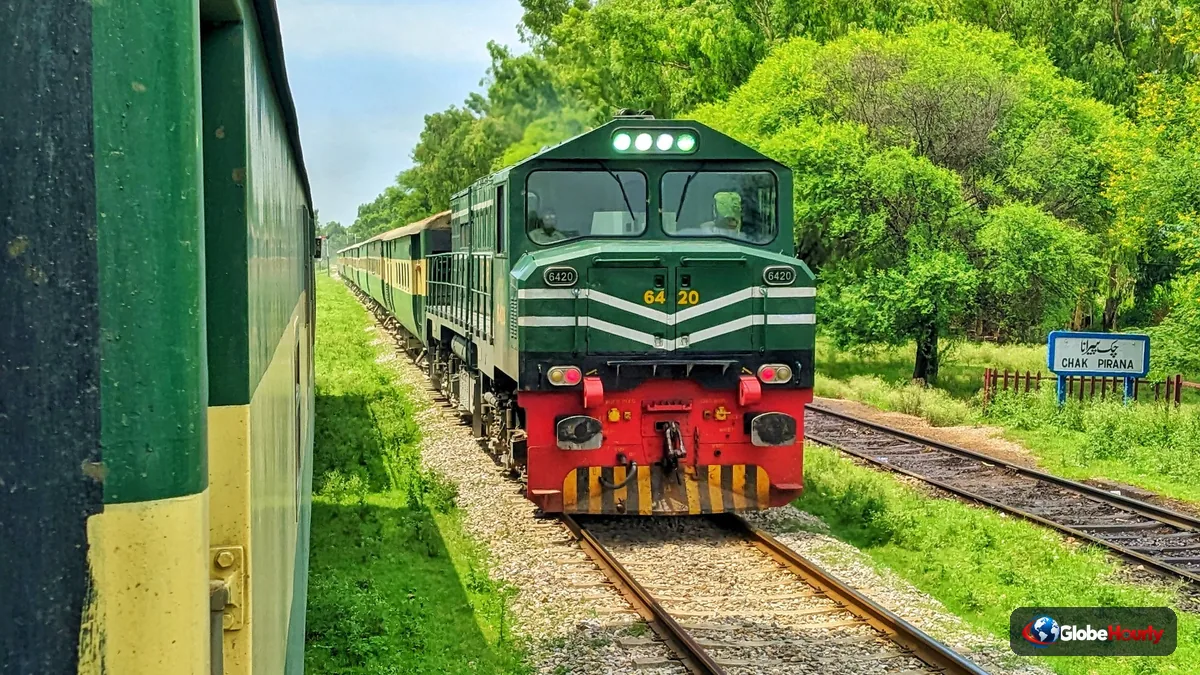
Pakistan Railways has declared a three-month operational emergency across the network after more than 55 passenger and freight train accidents and derailments since January 1, 2026. Railways Minister Hanif Abbasi ordered the measure, which took effect on Saturday, October 24, and runs until December 31. Officers' leave has been cancelled and engineers must report daily to the ministry. The aim is to fix the track, rolling stock and signalling faults behind the rise in crashes.
What the emergency means
The emergency does not stop any train services. Instead, it puts the railway's staff on a crisis footing. Abbasi said it will stay in place until faults in passenger coaches, freight wagons, locomotives, signalling systems and other infrastructure have been dealt with.
| Measure | What it requires |
|---|---|
| Duration | October 24 – December 31, 2026 (about three months) |
| Leave | All leave suspended except medical leave |
| Weekends and holidays | Cancelled for field officers, including senior officials |
| Field checks | Officers must inspect train operations on site, including on Sundays |
| Official travel | Officers going to other cities on duty must travel by train |
| Reporting | Chief civil and chief mechanical engineers send daily progress reports to the ministry |
| Safety | Head of the safety department gives daily updates |
On Sunday, the first full day of the emergency, field officers visited stations, yards and sections of track to check train operations and safety arrangements.
Why it was declared
Railway records show more than 55 accidents and derailments involving passenger and freight trains since the start of the year. In July alone there were seven. The Sukkur, Karachi and Multan divisions have been hit hardest. Freight trains have come off the rails near Khanpur, Khairpur and Kotri, and the Pakistan Express derailed near Kharian.
The most serious recent crash came on October 13. All 14 carriages of the Karachi-to-Peshawar Rehman Baba Express left the track at about 5:15 am near Sher Shah station outside Multan, and several overturned. Officials confirmed at least four deaths, and rescue officials put the toll at five. Dozens of passengers were injured and taken to Nishtar Hospital in Multan. The driver said the train was running at about 100 km/h. The Federal Government Inspector of Railways is investigating the cause.
The ministry's own review names these main factors behind the accidents:
- deteriorating and worn-out track
- defective coaches and freight wagons
- a manual points (track-switching) system on many sections
- human error by staff
- inadequate maintenance and shortages of money and equipment
Background
Pakistan's railway network dates largely from the colonial era. Its main line, ML-1, runs about 1,700 km from Karachi to Peshawar and carries most passenger and freight traffic. Years of under-investment have left long stretches of track in poor condition. Many signals and points are still worked by hand, and much of the coach and wagon fleet is overdue for replacement.
The government has repeatedly promised to upgrade ML-1, and plans to start work in January 2027 on the roughly $2.5 billion Karachi–Rohri section. Railway engineers have identified the deteriorated track on this stretch as one of the biggest safety risks on the network.
Reactions
Abbasi has rejected calls to resign over the Multan derailment. He said the accident must be investigated first, and that the Rehman Baba Express had received mechanical checks at Samasatta Junction before the crash. President Asif Ali Zardari called for a transparent inquiry into the causes. Prime Minister Shehbaz Sharif ordered faster rescue work and the best medical care for the injured.
The open question is whether an administrative emergency can fix problems that need years of investment. Earlier promises of track renewal and new coaches have repeatedly slipped.
Why it matters
Millions of Pakistanis use trains every year, especially low-income families travelling long distances between Karachi, Punjab and Khyber Pakhtunkhwa, because rail is far cheaper than flying. Freight trains also move fuel, wheat, cement and containers from Karachi's ports. Every derailment costs lives, closes the main line for hours or days, and pushes more cargo onto already crowded highways.
The emergency is a test of whether the ministry can cut accidents quickly through tighter supervision, daily reporting and repairs, while bigger projects such as the ML-1 upgrade are still years away.
What happens next
The emergency runs until December 31. The ministry will receive daily reports from engineers and the safety department, and is expected to review progress before deciding whether to extend it. The inquiry report into the Rehman Baba Express derailment is also awaited. Its findings on whether the cause was track, coaches, speed or human error will show where the railway most urgently needs to spend money.
For passengers, nothing changes in booking or timetables. Pakistan Railways says services continue as normal.
Questions people are asking
Why has Pakistan Railways declared an emergency?
Because of a sharp rise in accidents: more than 55 passenger and freight train accidents and derailments have been recorded since January 1, 2026. The ministry blames worn-out tracks, defective rolling stock, manual signalling points, human error and poor maintenance.
How long will the Pakistan Railways emergency last?
The operational emergency took effect on October 24, 2026, and runs for about three months, until December 31, 2026, or until the identified safety deficiencies are fixed.
Are train services suspended during the railway emergency?
No. Trains continue to run normally. The emergency applies to railway staff: leave is cancelled, officers must supervise operations in the field, and engineers must report daily on repairs and safety.