Serbia election: Vučić concedes defeat as Student List wins majority
Aleksandar Vučić has admitted defeat in Serbia's snap parliamentary election after the student-led protest movement's list won a projected 135–140 of 250 seats, ending more than a decade of his party's dominance and opening a new chapter for an EU candidate country.
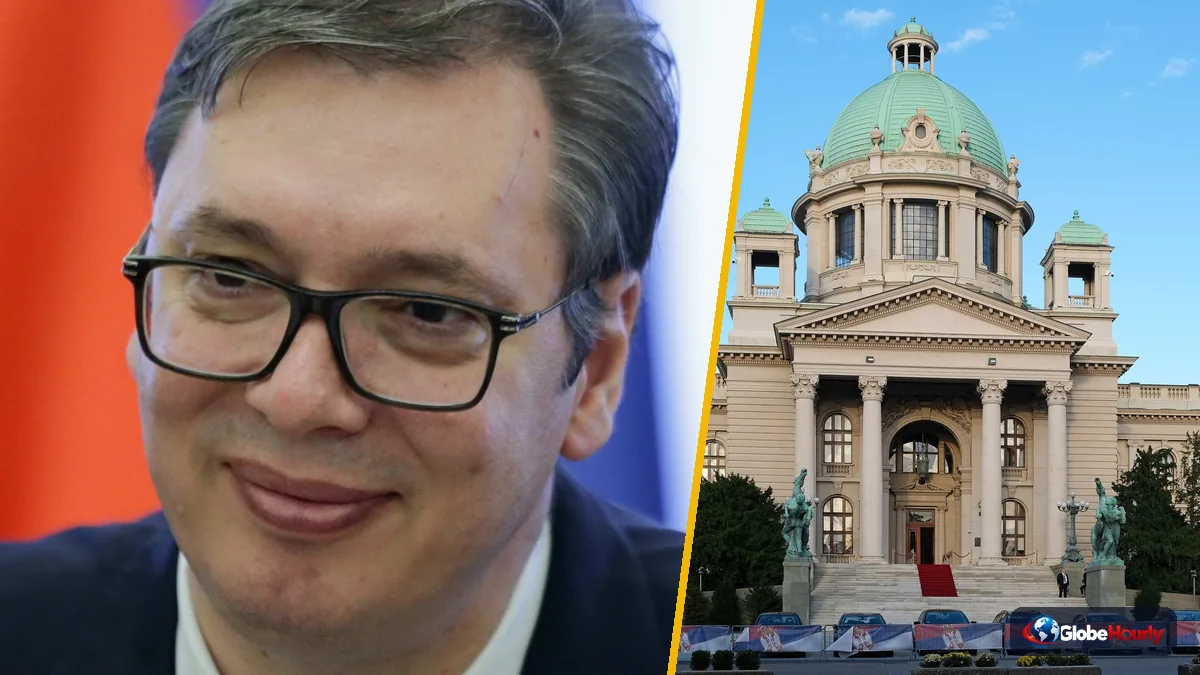
At a glance
- Aleksandar Vučić conceded Serbia's snap parliamentary election on Sunday night, October 25, saying it was clear his side had lost and that the Student List had won.
- Projections give the Student List 135–140 of the 250 seats in parliament, an outright majority, against about 103–105 for Vučić's Serbian Progressive Party (SNS).
- With about 92% of polling stations counted, the Student List had about 51.7% (around 1.99 million votes) to about 39.9% (around 1.53 million) for Vučić's coalition.
- Turnout was the highest since the break-up of Yugoslavia, close to 70% by monitors' estimates, after nearly two years of student-led protests that began with the Novi Sad station disaster in 2024.
- EU enlargement commissioner Marta Kos congratulated the winners; official final results and the formation of a new government are still to come.
Serbia's dominant politician, Aleksandar Vučić, has conceded defeat in Sunday's snap parliamentary election, admitting that the Student List — the electoral arm of nearly two years of youth-led anti-corruption protests — has won. Speaking on television about an hour and a half after polls closed on October 25, Vučić said it was clear his side had lost, as projections gave the Student List an outright majority of 135 to 140 seats in the 250-member National Assembly.
The result ends more than a decade in which Vučić, as prime minister and then president, and his Serbian Progressive Party (SNS) controlled almost every lever of power in the Balkan country of 6.6 million people.
The results so far
Official final results have not yet been published, and counting continued overnight amid reports of delays and irregularities at some polling stations. The figures below are the preliminary count and the projections from independent monitors and Vučić's own party.
| Student List | Vučić's SNS-led coalition | |
|---|---|---|
| Share of vote (about 92% counted) | about 51.7% | about 39.9% |
| Votes (about 92% counted) | about 1.99 million | about 1.53 million |
| Projected seats (of 250) | 135–140 | 103–105 |
| Seats needed for a majority | 126 | 126 |
Vučić said minority parties would take the remaining handful of seats: three for the Alliance of Vojvodina Hungarians, one for an Albanian party and probably one for the Bosniak SDA. It is still unclear whether any other list crossed the 3% threshold, but that would not change the winner.
Turnout was exceptionally high. The State Election Commission reported 64.9% by 6pm, and monitors expected the final figure to be close to 70% — the highest since Yugoslavia broke up in 1992. Voters queued for hours in Belgrade and other cities, and Serbs abroad lined up through the night because voting hours were tied to Serbian time. Vučić himself waited nearly two hours to cast his ballot.
What Vučić said
"It is clear that we have lost these elections, the Student List has won," Vučić said, adding that his assessment was based on a stratified sample of polling stations. Before the vote he had promised to respect the result.
He also blamed the defeat on independent media, on alleged interference by unnamed European countries and on what he called an "American deep state". During the campaign he accused the students of being funded by foreign agents in Croatia and Montenegro, a claim the movement rejected. Russian President Vladimir Putin had publicly backed him.
Vučić resigned as president last month to lead his party's list and seek the office of prime minister.
Who are the Student List?
The list grew out of the protest movement that began in November 2024, when the concrete canopy of the newly renovated railway station in Novi Sad collapsed and killed 16 people. Students blamed corruption in the renovation and demanded accountability; the demonstrations grew into the biggest in a generation.
The movement describes itself as leaderless and no students stood as candidates. Its 250 names — headed by cardiologist Ilija Srdanović — include university professors, doctors, athletes, actors, artists and farmers, most of them unknown to the wider public. They campaigned on fighting corruption, restoring the rule of law and media freedom, improving schools and rebuilding the economy, reaching rural voters by cycling and walking across the country. They said comparatively little about foreign policy.
"Tonight we celebrate victory, tomorrow we build the future," Radomir Sajčić, a Belgrade University professor, told supporters at the list's headquarters.
Reactions
EU enlargement commissioner Marta Kos congratulated the winners and said a new chapter could begin for Serbia, which has been a candidate for EU membership since 2012. European Commission President Ursula von der Leyen pledged support for reforms on the rule of law, media freedom and the fight against corruption.
Independent observers had raised concerns about the campaign, including detentions of activists, government control over much of the media, surveillance and cyber-attacks, and dozens of election-day irregularities such as photographed ballots and attempted vote buying.
Why it matters
The defeat of Vučić is one of the biggest political shifts in the Balkans in two decades, and it follows Hungary's April election in which youth turnout helped oust Viktor Orbán after 16 years. Serbia sits at a crossroads between the EU, which is its biggest trading partner, and Russia and China: Moscow is its traditional ally and main gas supplier, and Beijing a major investor in mines, factories and infrastructure.
A new government will have to decide how fast to align with EU foreign policy, including sanctions on Russia, and how to handle the long-running dispute with Kosovo, energy supplies and public finances. Supporters expect an overhaul of the judiciary, the public broadcaster and anti-corruption bodies.
What happens next
- Official results: the State Election Commission must publish the final count and allocate seats, after any complaints about irregularities are processed.
- New parliament: the new National Assembly will be constituted, and a prime minister must be proposed and win a majority vote.
- Prime minister: the Student List has not yet said who it will put forward to lead the government.
- Presidency: with Vučić having resigned the presidency, the arrangements for that office will also be watched closely in the coming weeks.
Questions people are asking
Who won the Serbian election 2026?
The Student List, which grew out of the student-led protest movement, won Serbia's October 25, 2026 snap parliamentary election. Projections give it 135–140 of 250 seats, and Aleksandar Vučić conceded defeat the same night.
Is Vučić still in power in Serbia?
Vučić resigned as president last month to lead his party's list and seek the post of prime minister, and he has now conceded that his side lost. His Serbian Progressive Party is expected to go into opposition once the new parliament forms a government.
Who will be Serbia's next prime minister?
It is not yet clear. The Student List has no single leader — its list was headed by cardiologist Ilija Srdanović — and it has not named a prime minister. That will be decided after official results are confirmed and the new parliament meets.