Tibet earthquake: magnitude 7.0 quake in Nagqu kills at least 16
A shallow magnitude 7.0 earthquake struck Baqen County in Tibet's Nagqu on Thursday night, killing at least 16 people, injuring dozens and collapsing hundreds of homes in a remote high-altitude area.
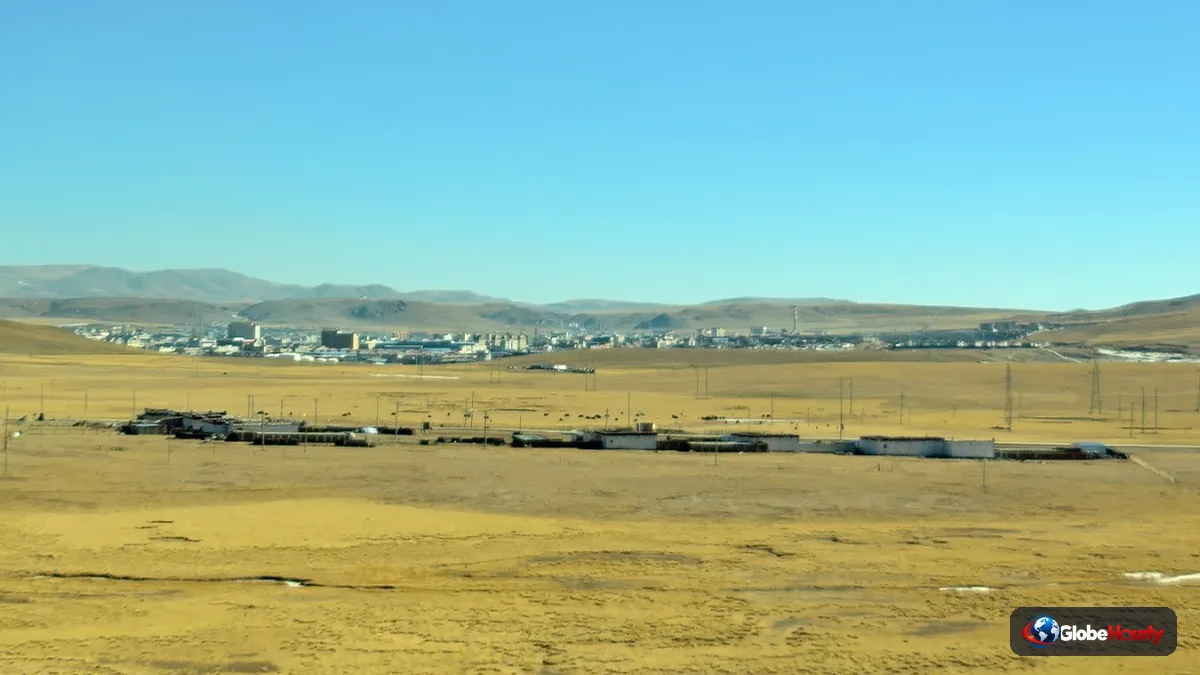
At a glance
- A magnitude 7.0 earthquake struck Baqen County in Nagqu, Tibet (Xizang), at 10:33pm Beijing time (7:33pm Pakistan time) on Thursday, October 22, 2026.
- At least 16 people were killed and at least 32 injured, 11 of them seriously, local officials said; at least 339 homes collapsed.
- The epicentre was in Maru Township, about 70 km from the county seat, at a shallow depth of 10–18 km; a magnitude 5.2 aftershock followed about 45 minutes later.
- Tibet activated a Level-II emergency response; more than 1,600 rescuers were deployed with tents, prefabricated housing and winter clothing.
- State television called it the strongest earthquake in the region in five years.
A magnitude 7.0 earthquake struck Baqen County in Nagqu, northern Tibet, at 10:33pm Beijing time (7:33pm Pakistan time) on Thursday, October 22, 2026, killing at least 16 people and injuring at least 32, local officials said. At least 339 homes collapsed in the remote, high-altitude area, power and phone lines were cut in the county seat, and rescue teams worked through a freezing night to reach scattered villages.
What happened
The quake hit late in the evening, when most families were indoors. The China Earthquake Networks Center (CENC) put the epicentre at Maru Township, about 70 km from the Baqen county seat, at a depth of 10 km. The US Geological Survey (USGS) measured the same magnitude and placed the epicentre about 190 km east-northeast of Nagqu town, at a depth of about 18 km. Both agencies agree it was a shallow quake, which tends to make shaking at the surface stronger.
A magnitude 5.2 aftershock was felt about 45 minutes after the main shock, and a separate magnitude 4.3 tremor cracked some houses across the regional border in Zadoi County, Qinghai province.
| Item | Detail |
|---|---|
| Magnitude | 7.0 (CENC and USGS) |
| Time | 10:33pm Beijing / 7:33pm PKT / 14:33 GMT, Thu Oct 22, 2026 |
| Epicentre | Maru Township, Baqen County, Nagqu, Tibet (32.40°N, 93.79°E) |
| Depth | 10 km (CENC); about 18 km (USGS) |
| Distance | ~190 km ENE of Nagqu town; ~390 km NE of Lhasa |
| Deaths | At least 16 |
| Injured | At least 32 (11 serious, 21 minor), later local updates put the figure higher |
| Damage | At least 339 homes and 20 livestock sheds collapsed |
| Largest aftershock | Magnitude 5.2, about 45 minutes later |
| Emergency level | Level-II (Tibet regional); Level-IV (national) |
Damage and rescue
The deputy head of Maru Township said the shaking was clearly felt at the township office, whose walls cracked. Houses collapsed in the epicentre area, and electricity and telecommunications were knocked out in the Baqen county seat, making it harder for officials to assess the damage overnight. Rockfalls closed some mountain roads.
Tibet's regional government activated a Level-II earthquake emergency response, and China's State Council earthquake relief headquarters and the Ministry of Emergency Management launched a national Level-IV response, sending a work team to guide relief.
According to the Nagqu media office, more than 1,600 people from the county were deployed for search and rescue. Police and fire crews set up tents for families whose homes were destroyed, and relief supplies that reached the area included about 1,000 prefabricated housing units, around 3,000 tents and folding beds, flashlights and winter clothing. Night-time temperatures on the plateau at this time of year fall well below freezing, which makes shelter the most urgent need.
Background: one of the world's most active quake zones
Tibet sits where the Indian plate pushes into the Eurasian plate — the same collision that raised the Himalayas. Strong earthquakes are frequent across the plateau, though the low population density usually limits the number of victims. The USGS said significant casualties and damage were possible but likely limited because the area is sparsely populated, and warned of landslides on the steep terrain.
China's state broadcaster said this was the strongest earthquake in the region in five years. In January 2025, a magnitude 7.1 quake in Tingri (Dingri) County, near Mount Everest and the Nepal border, killed at least 126 people and destroyed thousands of homes. Less than two months ago, a glacier collapse caused deadly flash floods in the Nepal–Tibet border region.
Reactions
Chinese officials said rescuers were checking villages one by one and that the death toll could change as communications are restored. Shaking was also reported in Qamdo and Nyingchi in eastern Tibet. There were no immediate reports of damage outside China.
Why it matters
Nagqu is a vast herding region of grassland at more than 4,500 metres, where many families live in stone or mud-brick homes that can collapse in strong shaking. Damage to roads and power lines can cut off remote communities for days, and the onset of winter raises the risk for people left without shelter. For South Asia, the quake is a reminder that the Himalayan belt — from Tibet and Nepal to northern India and northern Pakistan — remains at high risk of major earthquakes.
What happens next
- Rescue teams will continue searching collapsed houses and reaching outlying villages on Friday, October 23.
- Officials are expected to update the casualty and damage figures through the day.
- More aftershocks are likely in the coming days; residents have been told to stay out of damaged buildings.
- Authorities will move displaced families into tents and prefabricated shelters before winter deepens.
Earthquake safety: what to do during aftershocks
- Drop, cover and hold on under a sturdy table when shaking starts; stay away from windows and heavy furniture.
- If outdoors, move to open ground away from walls, power lines and slopes that could slide.
- Do not re-enter cracked or damaged buildings until engineers have checked them.
- Keep a torch, warm clothing, water and a charged phone ready, and follow instructions from local authorities.
Questions people are asking
How many people died in the Tibet earthquake?
At least 16 people were killed and at least 32 were injured, 11 of them seriously, in the magnitude 7.0 earthquake that hit Nagqu, Tibet, on October 22, 2026, according to local officials. The figures may rise as rescuers reach remote villages.
Where exactly was the Tibet earthquake?
The epicentre was in Maru Township, Baqen County, in Nagqu city in northern Tibet, about 190 km east-northeast of Nagqu town and roughly 390 km northeast of Lhasa. China's quake centre put it at 32.40°N, 93.79°E, at a depth of 10 km.
Was the Tibet earthquake felt in Nepal, India or Pakistan?
Shaking was reported across eastern Tibet, including Qamdo and Nyingchi, and in neighbouring Qinghai. There were no reports of damage in Nepal, India or Pakistan, as the epicentre was deep inside northern Tibet, far from those borders.