Uganda begins pulling troops out of Somalia after nearly 20 years, full exit planned by end of 2027
Uganda, the largest and first troop sender to the African Union force in Somalia, has started a phased withdrawal, raising fears of al-Shabab gains.
At a glance
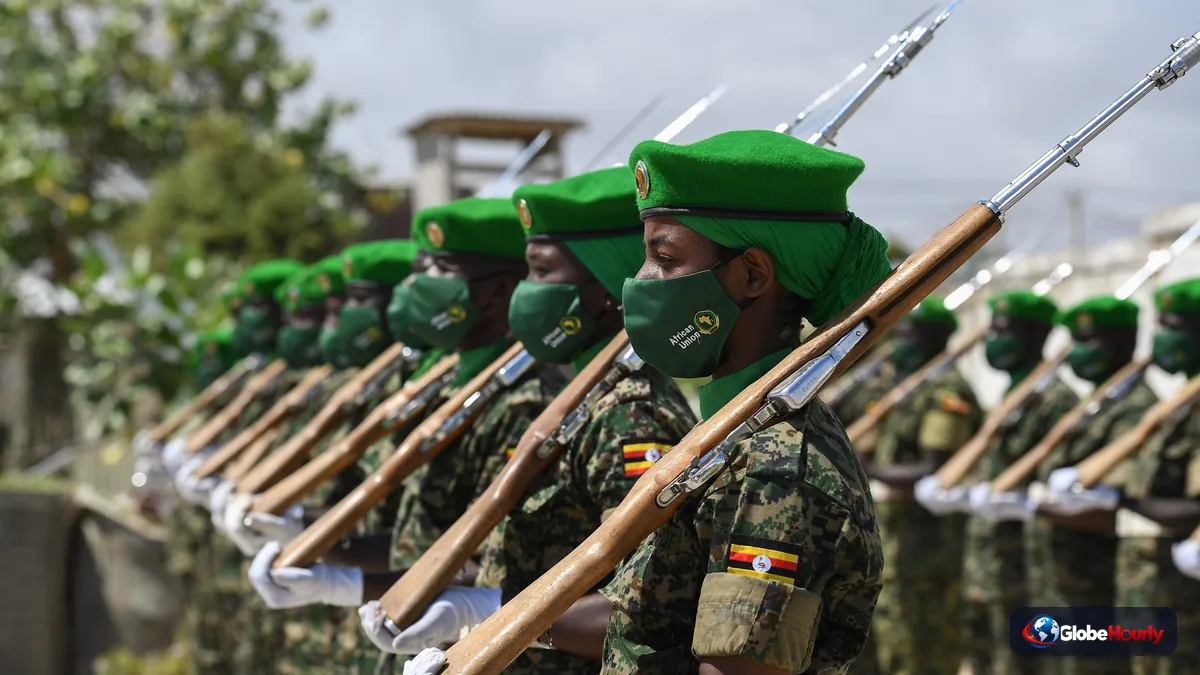
- Uganda's army, the UPDF, said on Monday, November 2, that it has started a phased withdrawal from Somalia, and the first group of soldiers has already returned home.
- Troops serving under a bilateral deal with Mogadishu leave first, within days; those under the African Union's AUSSOM mission are due to go by the end of 2027.
- Uganda has about 4,500 soldiers in AUSSOM, according to state media, plus an undisclosed number under the bilateral arrangement.
- An internal AUSSOM letter warned the pull-out could leave parts of Lower Shabelle exposed to al-Shabab, as US funding for the mission has dried up.
Uganda has started bringing its soldiers home from Somalia, ending almost two decades as the backbone of the international fight against the al-Shabab militant group. The Uganda People's Defence Forces (UPDF) said on Monday, November 2, that the first group of troops in a phased withdrawal had already landed back in Uganda, and that all its forces will leave Somalia by the end of 2027.
The decision removes the largest and longest-serving contingent from the African Union force at a moment when that force is short of money and al-Shabab still controls large parts of the countryside.
Who leaves first, and when the rest go
The army's statement, and comments from its spokesman Chris Magezi, set out the order of the drawdown:
| Phase | Troops | Timing |
|---|---|---|
| First | Soldiers deployed under Uganda's bilateral agreement with Mogadishu | Under way; first group already home, rest "within days" |
| Second | Soldiers serving in the African Union Support and Stabilisation Mission in Somalia (AUSSOM) | Gradually, completed by end of 2027 |
The army said the move follows a new mandate from Uganda's defence ministry. Earlier this year Uganda's defence chief, Gen. Muhoozi Kainerugaba, had named August 1, 2027, as the date for a complete exit; the army's latest statement gives the end of 2027 instead.
How many soldiers are involved is not fully clear. State media put the number in AUSSOM at about 4,500. Uganda has never published how many more serve under the separate bilateral deal, and some estimates put the combined total at 6,500 or more.
Twenty years at the heart of the mission
Uganda was the first country to send troops when the African Union set up its Somalia mission in 2007, when al-Shabab and allied fighters held most of Mogadishu. Ugandan units led the fighting that pushed the militants out of the capital in 2011 and later out of several major towns in the south.
| Year | Milestone |
|---|---|
| 2007 | Uganda deploys first AU peacekeepers to Mogadishu (AMISOM) |
| 2011 | AU forces, led by Ugandan and Burundian troops, drive al-Shabab out of Mogadishu |
| 2022 | AMISOM becomes ATMIS, with a plan to hand security to Somali forces |
| 2025 | ATMIS replaced by the smaller AUSSOM |
| Nov 2026 | Uganda starts phased withdrawal |
Ugandan forces have paid a heavy price. Hundreds of soldiers have been killed in that time, including dozens in a 2023 al-Shabab assault on a base at Buulo Mareer in Lower Shabelle.
Why the timing worries Somalia's partners
AUSSOM is already stretched. The mission was meant to be funded partly through UN-assessed contributions, but major backers, above all the United States, have cut or withheld money in recent months, and Washington has complained about the lack of progress against al-Shabab. A separate UN political mission in Somalia also wound up on Saturday.
In a letter dated October 31 to the UN support office in Somalia, AUSSOM warned that the Ugandan departure could leave parts of Lower Shabelle, the farming region south-west of Mogadishu, open to al-Shabab attacks. Ugandan troops hold several bases there that guard the approaches to the capital.
A Somali official said the situation is not yet serious but could become a problem if Ugandan troops leave suddenly. According to reports, Somalia asked for Uganda's presence to be extended when the two countries' presidents met. Somali authorities have not commented publicly on the timetable.
What happens next
Somalia's own army is supposed to take over the bases Uganda leaves, but its forces have struggled to hold ground without foreign air and ground support.
The bilateral contingent is expected to complete its departure in the coming days. The African Union Peace and Security Council will need to decide whether other troop contributors, such as Ethiopia, Kenya, Egypt and Djibouti, can fill the gap before the larger AUSSOM contingent starts to leave next year.