Russian bombs hit aid centre and shelter in Komyshuvakha, Zaporizhzhia: at least 24 killed, 27 missing
Heavy glide bombs hit a school used for aid handouts in Komyshuvakha, then its shelter. At least 24 died, including rescuers and police; 27 are missing.
At a glance
- Russian aircraft struck Komyshuvakha in Ukraine's Zaporizhzhia region on Monday, November 2, hitting a school used every week to hand out humanitarian aid.
- A second wave of bombs hit the shelter where survivors had gathered. Regional officials said at least nine 3,000kg bombs were dropped.
- Ukraine's emergency service confirmed 24 dead, including two rescuers and four police officers; President Zelensky put the toll at 26. Officials list 27 people as missing.
- Tuesday, November 3, is a day of mourning in the Zaporizhzhia region. Search teams are still digging, slowed by Russian drones overhead.
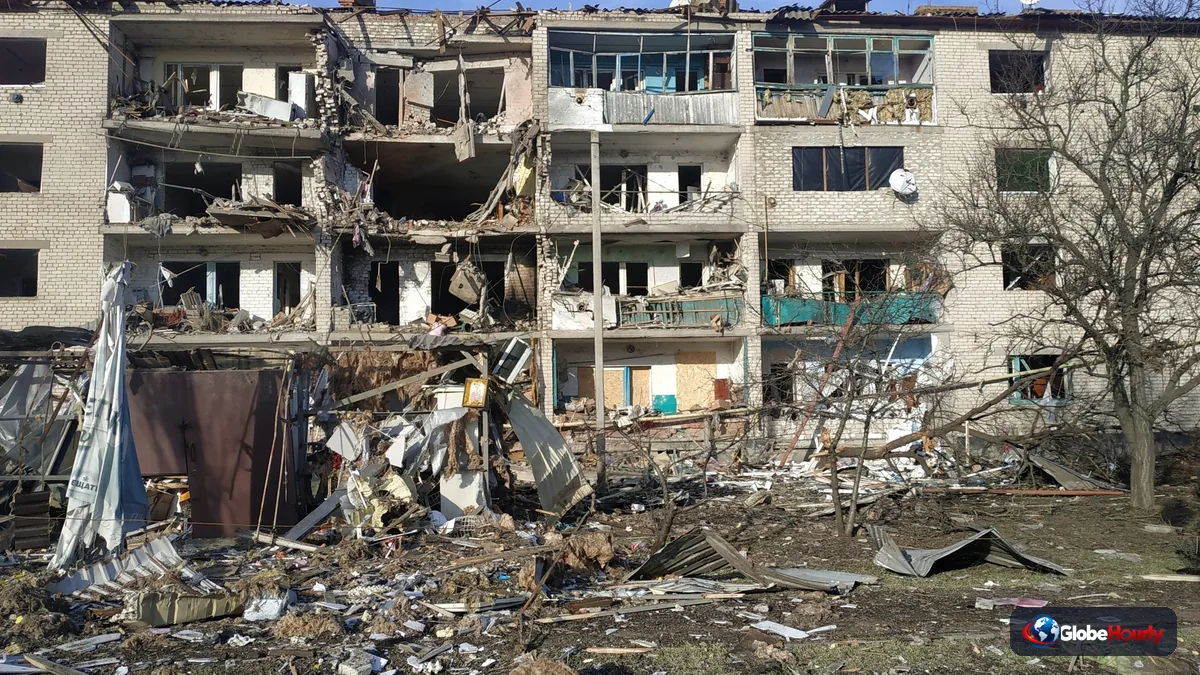
Russian aircraft dropped heavy glide bombs on the village of Komyshuvakha in Ukraine's Zaporizhzhia region on Monday, November 2, first hitting a school where residents collected humanitarian aid and then the shelter where they ran for cover. Ukraine's State Emergency Service confirmed 24 people dead by Monday night, among them two of its own rescuers and four police officers. President Volodymyr Zelensky said the toll had reached 26, and regional officials listed 27 people as missing.
It is one of the deadliest single attacks on civilians in Ukraine this year. The regional administration declared Tuesday, November 3, a day of mourning across Zaporizhzhia.
Two waves, nine bombs
The school in Komyshuvakha had become the village's aid point. Once a week, people came to pick up food parcels and other supplies there, and it was busy when the first bomb landed.
Survivors moved into the building's shelter. According to Zelensky, a second strike then targeted that shelter directly. Regional officials said at least nine bombs of the 3,000kg class were used in the attack. Bombs of that size are dropped from aircraft flying well behind the front line and glide onto their target, and few basements are built to withstand them.
Police and emergency crews who reached the site came under fire as well. Officials said rescuers had to take cover while further strikes hit the same area, and that Russian drones circling overhead kept interrupting the search through the evening. That is how two rescuers and four police officers came to be among the dead.
How the count rose through Monday
The figures changed several times as crews reached the rubble, and they may change again.
| Time of report (Monday, Nov 2) | Dead | Source of figure |
|---|---|---|
| Afternoon | 18 | Regional officials; Zelensky's first statement |
| Evening | 24 | State Emergency Service (incl. 2 rescuers, 4 police) |
| Late evening | 26 | President Zelensky |
| Missing | 27 | Regional officials |
| Injured | at least 5 | State Emergency Service |
The gap between 24 and 26 reflects two counts made at different stages of the recovery, not a dispute over what happened. With 27 people unaccounted for, officials have warned that the final number is likely to be higher.
What Kyiv said
Zelensky called it an "exceptionally horrific strike". He said Russia was sending the opposite of a signal for de-escalation and was counting on more killing, Ukraine has long asked its partners for more air defence and for ways to hit the airfields the bombers fly from, because glide bombs are released too far away to be shot down easily.
No comment from Moscow on the village had been reported by Tuesday morning. Russia says its forces target military sites and denies attacking civilians.
Where Komyshuvakha is, and why it keeps being hit
Komyshuvakha sits in the Zaporizhzhia district, on the government-held side of a front line that has barely moved in the south for more than two years. Villages in this belt are within range of Russian guided bombs every day. The settlement has been shelled and bombed repeatedly in 2026, but earlier attacks there killed or wounded a handful of people at a time. Monday's strike was of a different scale.
Many of the people still living in such villages are elderly or cannot afford to move. Weekly aid handouts are often the only reliable source of food and medicine, which is why a distribution point draws a crowd.
Compared with earlier mass-casualty strikes
| Date | Place | Dead |
|---|---|---|
| Oct 5, 2023 | Hroza, Kharkiv region (a wake in a café) | 59 |
| Sept 3, 2024 | Poltava (military institute and hospital) | more than 50 |
| Apr 4, 2025 | Kryvyi Rih (residential area, playground) | 20, including 9 children |
| Nov 2, 2026 | Komyshuvakha, Zaporizhzhia region (aid point and shelter) | at least 24 |
A bleak backdrop for any talks
The attack came days after the short local truce around Oleshky in the Kherson region ended, with Russia refusing to extend it. Ukraine's power grid is also under steady drone attack as winter approaches, with hundreds of thousands of homes losing electricity in recent weeks.
Kyiv is likely to raise Komyshuvakha with its European partners and at the United Nations this week. Aid groups that run distribution points near the front may now review how and where they gather people, since large crowds at a fixed site and time make an easy target.
What happens next
Search crews are expected to keep digging through Tuesday, the day of mourning, as long as drone activity allows. The names of the dead will be released by local authorities as families are informed. Updated casualty figures will come from the State Emergency Service and the regional administration.