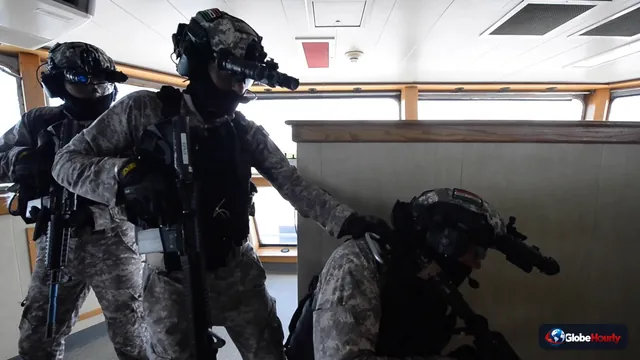
US strikes Iran's Qeshm Island missile launcher in 'defensive' raid as Trump says a deal 'could happen'
US forces struck a missile launcher on Iran's Qeshm Island in the Strait of Hormuz on Monday. Officials call it defensive, not a return to full-scale war.
At a glance
- Update, Tuesday: the IRGC says it brought down two US MQM-170 reconnaissance drones south of Qeshm using electronic warfare. Iranian media also reported blasts at Bandar Lengeh. Foreign Minister Abbas Araghchi said Iran is ready for diplomacy or confrontation and would answer any new attack more forcefully.
- US forces struck targets on Qeshm Island, the largest island in the Strait of Hormuz, on Monday, November 2. US officials said the aim was to destroy a missile launcher after Iran fired at US aircraft.
- Officials called the strike defensive and said it was not a return to major combat. They said it was one of several limited strikes carried out without announcement over recent weeks.
- Iranian state media reported five explosions in quick succession on the island, and residents said they saw two aircraft overhead. No casualties have been reported.
- Hours earlier, President Donald Trump said a deal with Tehran 'could happen'. He has said the US would not strike Iran before Tuesday's midterm elections.
US forces struck Iran's Qeshm Island, the largest island in the Strait of Hormuz, on Monday, November 2. US officials said the target was a missile launcher Iranian forces had used against American aircraft. They described the strike as defensive and said Washington is not resuming full-scale war. It came on the eve of the US midterm elections, on the same day President Donald Trump said a peace deal with Tehran "could happen".
The strike was not announced in advance. Washington has made no public statement about it, and the Pentagon referred questions to US Central Command, which had not commented by Tuesday morning Pakistan time.
What US officials say was hit, and why
Three US officials, speaking without being named, gave broadly the same account. Iranian forces had again fired surface-to-air missiles at US manned and unmanned aircraft flying over the strait, and the strike on Qeshm was meant to destroy the launcher. One official called it "a defensive measure". Another said the US sometimes hits Iranian launchers when the Islamic Revolutionary Guard Corps (IRGC) fires at American planes.
According to reports, Monday's strike was one of several limited US attacks in recent weeks that were deliberately kept quiet so Iran would not read them as a return to major combat. The last strikes the US had acknowledged were in early September. Officials say US forces intercept Iranian drones and missiles aimed at commercial shipping almost every day.
No damage assessment has been published, and there are no reports of casualties.
Five blasts on the island
Iranian state media reported five explosions in rapid succession on Qeshm on Monday, and further blasts early on Tuesday on the island and in Bandar Lengeh, a port on the mainland coast to the west. Residents said they saw two aircraft overhead.
On Tuesday the Islamic Revolutionary Guard Corps said it had brought down two US MQM-170 reconnaissance drones south of Qeshm using electronic warfare systems. US officials have not commented on that claim. Foreign Minister Abbas Araghchi said diplomatic exchanges had intensified but warned that Tehran is ready for both talks and military confrontation, and would respond more forcefully to any renewed attack. He wrote that Iran continues to give diplomacy a chance.
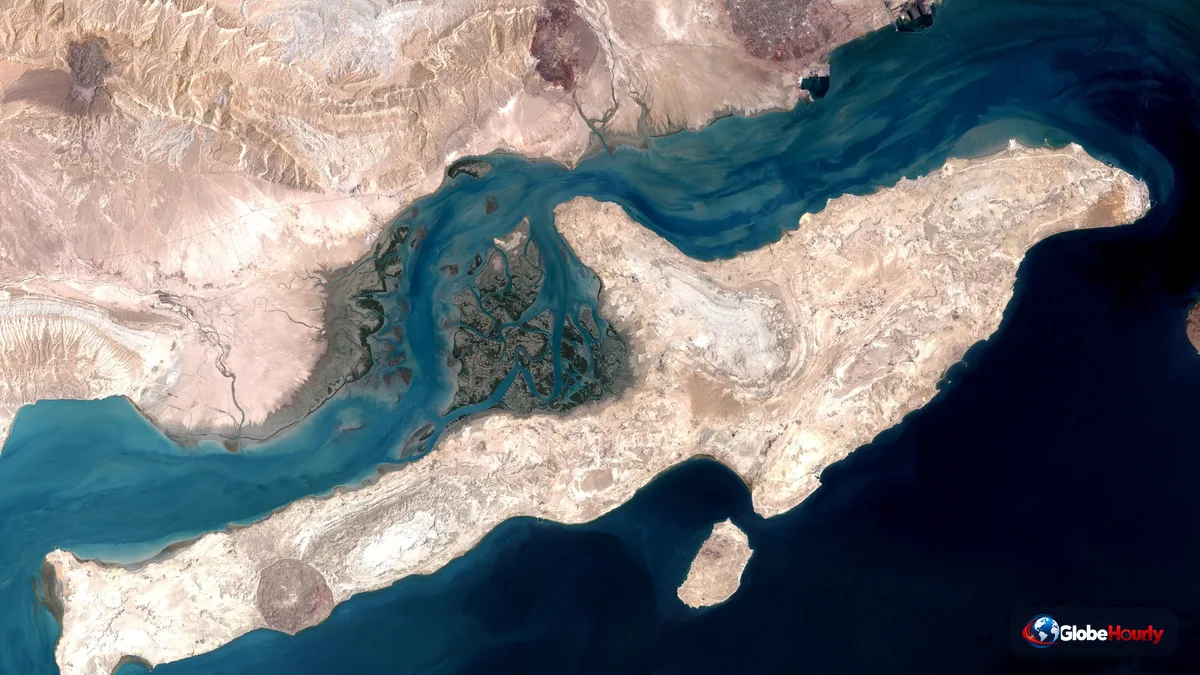
Qeshm sits about 22 km (14 miles) off the port city of Bandar Abbas and runs along the narrowest part of the strait. It holds a naval base and an underground missile site, which is why it matters so much to Iran's control of tanker traffic. US forces have hit the island before in this war.
Strikes and talks on the same day
The timing is awkward for diplomacy. Iranian negotiators left Doha on Sunday after talks through Qatari mediators ended without a breakthrough, though a draft proposal is circulating and a follow-up meeting is possible. Iran says the strait could reopen within two days of a deal, instead of the seven days it first offered, but only once the US naval blockade of Iranian oil ends.
Trump struck an upbeat tone on Monday. Speaking in Washington, he said he was not sure the conflict should still be called a war, because there had been no fighting "for months". He has promised no new attacks on Iran before Tuesday's vote but has not ruled out action afterwards. Vice President JD Vance, who wrote last week to Iran's security chief Mohsen Rezaei, has said there have been a number of good conversations with the Iranians.
Israeli Prime Minister Benjamin Netanyahu has pushed for renewed strikes on Iran, and some regional allies are lobbying Washington on what to do next. Iran's foreign minister, Abbas Araghchi, said last week that Iran's armed forces are ready to defend the country while Tehran keeps giving diplomacy a chance.
Timeline of the past week
| Date | Event |
|---|---|
| Late October | IRGC says two tankers using an "unauthorised" route hit mines in Hormuz |
| Nov 1 (Sun) | Iranian delegation leaves Doha; draft deal circulates |
| Nov 2 (Mon) | Trump says a deal "could happen"; Brent falls more than 7% |
| Nov 2 (Mon) | US strikes a missile launcher on Qeshm Island |
| Nov 3 (Tue) | US midterm elections; Trump has ruled out strikes before the vote |
What it means for oil and fuel prices
Hormuz has been largely shut since late February, and oil prices have tracked every sign of a deal or escalation. On Monday, Brent fell more than 7% on hopes that the war could end. In early Asian trading on Tuesday, prices moved between small gains and further losses as traders weighed the strike against the upbeat comments from Washington.
For importers such as Pakistan and India, every move in Brent feeds through to fuel prices. A deal that reopens the strait would cut costs quickly. A collapse in talks would push them back up.
The war, now in its ninth month, has cost US taxpayers at least $47 billion. A third aircraft carrier and thousands more troops are on their way to the region. The next test comes after Tuesday's vote, when Trump's pledge not to strike before the midterms no longer applies.