Brent oil hits $117, Dow falls 653 as US envoy says Iran strike possible
Brent crude touched $117 a barrel on Friday, its highest of the Iran war, and the Dow fell 653 points after US envoy Tom Barrack said a strike on Iran could come 'this weekend' — despite the White House ruling out attacks before the November 3 midterms.
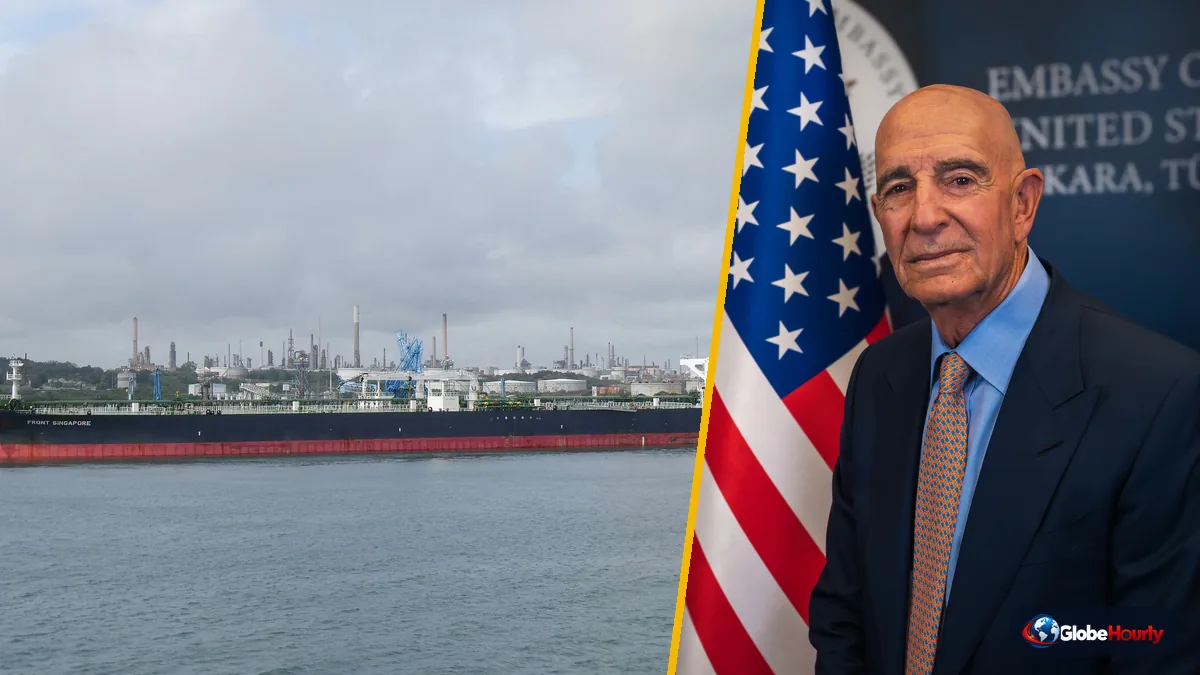
At a glance
- Brent crude touched about $117.45 a barrel on Friday, October 23, 2026, the highest level of the Iran war, and settled up 3.1% at $116.72; US crude (WTI) settled at $103.27.
- The Dow Jones Industrial Average fell 652.82 points (1.23%) to 52,215.16; the S&P 500 lost 0.52% and the Nasdaq 0.21%.
- US ambassador to Turkey Tom Barrack said a US strike on Iran could happen 'this weekend', although the White House said on Thursday there would be no attacks before the November 3 midterm elections.
- Markets were also reacting to Iranian Revolutionary Guards claims, not independently confirmed, that seven more tankers were hit near the Strait of Hormuz.
- Brent has jumped from under $97 at the start of October and is up about 60% since the war began on February 28.
Oil prices hit their highest level of the Iran war on Friday, October 23, 2026, and Wall Street fell sharply, after a senior US envoy said an American strike on Iran could come as soon as this weekend. Brent crude touched about $117.45 a barrel and settled at $116.72, up 3.1%, while the Dow Jones Industrial Average dropped 652.82 points, or 1.23%, to 52,215.16.
Friday's market moves
The rally in crude was the main driver of the sell-off in New York, as investors priced in the risk of new fighting in the Gulf and fresh disruption to shipping through the Strait of Hormuz. US benchmark West Texas Intermediate gained about 3.8% to settle at $103.27 a barrel.
| Market | Friday, Oct 23 close | Change |
|---|---|---|
| Brent crude (settle) | $116.72 a barrel | +3.1% (intraday high about $117.45) |
| WTI crude (settle) | $103.27 a barrel | +3.8% |
| Dow Jones Industrial Average | 52,215.16 | −652.82 (−1.23%) |
| S&P 500 | 7,623.68 | −0.52% |
| Nasdaq Composite | 25,955.34 | −0.21% |
Brent's settlement was the highest since late April, and the intraday peak was the highest level reached since the war began. The global benchmark started October below $97 and was heading for a third straight weekly gain. Since the first US strikes on Iran on February 28, it has risen by about 60%. Traders also said pre-weekend buying by short sellers covering their positions made the late move bigger.
What the US envoy said
Tom Barrack, the US ambassador to Turkey and a special envoy of President Donald Trump, was asked in a podcast interview on Friday whether a strike on Iran could come this weekend. His one-word answer, "Absolutely", spread quickly through trading desks. Barrack added that the president remained open to a deal and that talks had been going on for months. He does not have a direct role in Iran policy, and his comment was not an announcement of any military order.
The remark cut against the White House line. On Thursday, a White House spokesperson said the United States would not resume attacks on Iran before the November 3 midterm elections, although officials said Mr Trump was keeping all military options open. On Friday, Mr Trump said the United States "could, if we wanted to, just take all of the oil", and claimed control of the Strait of Hormuz.
Tankers, mines and Houthi attacks
Iran's Islamic Revolutionary Guard Corps (IRGC) said it struck four tankers carrying oil in the northern Gulf on Thursday and that three more ships hit sea mines in the Strait of Hormuz. None of these claims has been independently confirmed. Iranian state television said the movement of "non-compliant" vessels through the strait had been halted completely. Mr Trump accused Iran on Thursday of inventing attacks on ships to push up oil prices before the US vote.
Supply fears were also fed by Houthi attacks on Saudi Arabia. Saudi Aramco chief executive Amin Nasser said the kingdom had raised the capacity of its East-West pipeline, which bypasses Hormuz, from 2 million to 7 million barrels a day. Britain has committed RAF Typhoon jets to help defend Saudi airspace.
Background
The war began when the United States struck Iran on February 28, 2026. A ceasefire later broke down, and the US Navy has kept up a blockade of Iranian ports. Reports this week said Washington and Israel were preparing plans for a short, intense round of strikes after the midterms. US ambassador to the United Nations Mike Waltz said the war could last another year and that the US would not meet its goals until Iran gives up its highly enriched uranium.
Diplomacy and reactions
Foreign ministers from eight European and Middle Eastern countries met in Istanbul on Friday and called for diplomacy and the reopening of Hormuz. Italy's foreign minister Antonio Tajani said the crisis could not be solved from a purely military standpoint, and France's foreign minister Jean-Noël Barrot warned that further escalation "would leave no winners". Iran's foreign minister Abbas Araghchi said President Masoud Pezeshkian would travel to Moscow next week to meet Russian President Vladimir Putin.
Why it matters
Higher crude prices feed directly into petrol, diesel, jet fuel and electricity costs. For importing countries such as Pakistan, India and Bangladesh, oil at $115–117 widens the import bill, puts pressure on currencies and makes another increase in fuel prices more likely at the next review. Shipping and insurance costs for Gulf cargo are also rising. For global markets, the fear is a return to the spring pattern, when oil spikes hit airline, transport and technology shares and raised worries about inflation and interest rates.
What happens next
Markets reopen on Monday, October 26, and any weekend military action would show first in oil trading when it restarts on Sunday evening. Investors will watch for a US decision on new strikes, Mr Pezeshkian's visit to Moscow next week, and the November 3 US midterm elections. In Pakistan, the next fortnightly fuel price review is due at the end of October.
Questions people are asking
Why did oil prices rise to $117 on October 23, 2026?
Brent rose about 3% to touch $117 a barrel because traders feared new US strikes on Iran after envoy Tom Barrack said an attack could come this weekend, and because Iran's Revolutionary Guards claimed seven more tankers were hit near the Strait of Hormuz. Houthi attacks on Saudi Arabia added to supply fears.
Will the US strike Iran before the midterm elections?
The White House said on Thursday that the United States would not resume attacks on Iran before the November 3 midterms, but Tom Barrack said on Friday a strike this weekend was 'absolutely' possible. No new US military operation has been announced or confirmed.
How did US stocks close on Friday, October 23?
The Dow fell 652.82 points, or 1.23%, to 52,215.16. The S&P 500 slipped 0.52% to 7,623.68 and the Nasdaq Composite lost 0.21% to 25,955.34.