Brent oil hits $112.68, a five-month high, as Gulf attacks spread; Nasdaq falls 2%
Brent crude jumped almost 3% to its highest level since May 18 after attacks on Saudi Arabia and tankers near Hormuz, while a tech sell-off pulled the Nasdaq down about 2% on Thursday.
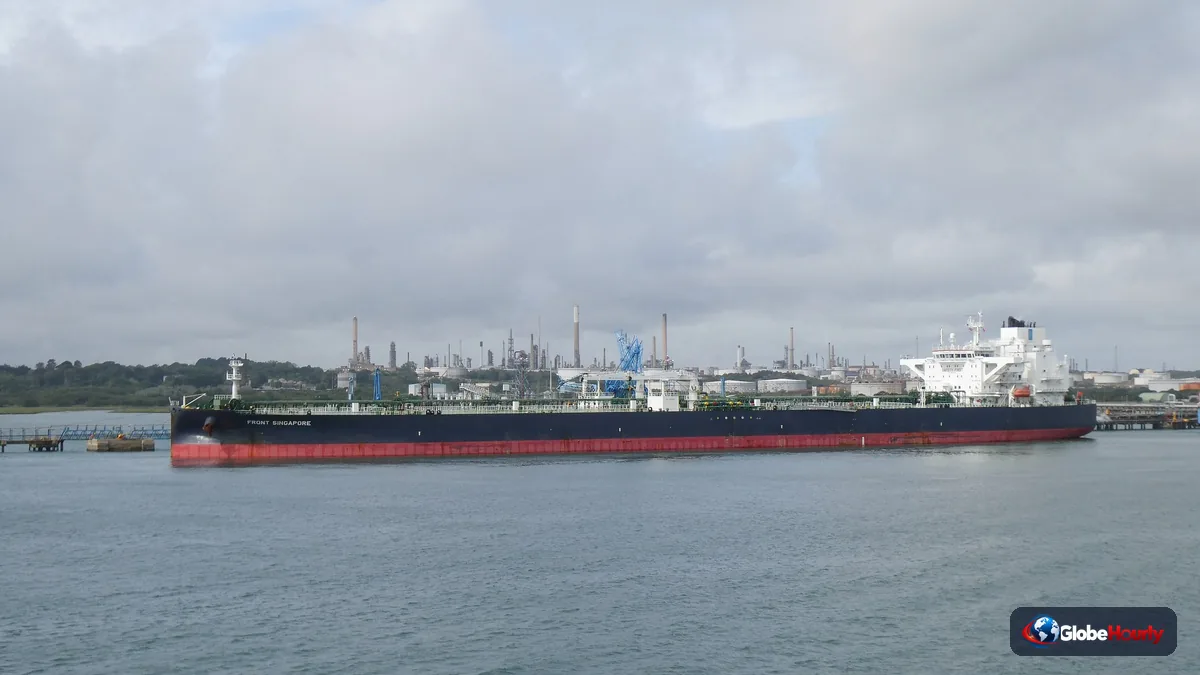
At a glance
- Brent crude rose $3.19, or 2.9%, to about $112 a barrel on Thursday, October 22, 2026, after touching $112.68, its highest level since May 18.
- US benchmark WTI climbed about 2.5% to around $99.5 and briefly went above $100 a barrel.
- The rise followed Houthi drone attacks on Saudi Arabia's Dammam airport and an oil field, Iran's claim that seven tankers were hit near the Strait of Hormuz, and a pipeline shutdown in Libya.
- On Wall Street the Nasdaq fell about 2% and the S&P 500 about 1% by midday as Meta dropped about 6% and chip stocks sold off; the 10-year Treasury yield fell to 5.00%.
- Higher crude prices feed directly into Pakistan's daily fuel prices, where petrol is Rs379.31 a litre.
Brent crude, the global oil benchmark, rose to $112.68 a barrel on Thursday, October 22, 2026 — its highest level since May 18 — after a new wave of attacks on Saudi Arabia and on tankers near the Strait of Hormuz raised fears for Gulf supplies. By the European afternoon Brent was trading around $112, up $3.19 or 2.9% on the day, while a sell-off in technology shares pulled the Nasdaq down about 2% in New York.
What happened
Oil climbed from the start of Asian trading and kept rising through the day as news of attacks across the Gulf piled up. US crude also rose sharply and briefly traded above $100 a barrel.
| Market (Thursday, Oct 22) | Level | Change |
|---|---|---|
| Brent crude | ~$112.01 | +$3.19 (+2.9%) |
| Brent intraday high | $112.68 | Highest since May 18 |
| WTI crude | ~$99.56 | +$2.41 (+2.5%) |
| WTI intraday high | $100.09 | — |
| Nasdaq Composite (midday) | ~26,166 | about -2.0% |
| S&P 500 (midday) | ~7,677 | about -1.0% |
| 10-year US Treasury yield | 5.00% | down about 0.15 points |
| Gold | ~$4,062 an ounce | about -2.1% |
Oil prices as of early afternoon in Europe; US stock figures are intraday and will change by the close.
Several events pushed prices up at the same time:
- Attacks on Saudi Arabia: Yemen's Houthis struck several targets in the kingdom on Wednesday. One person was killed and eight wounded at the civilian airport in Dammam, and two people were killed in a drone attack on an oil field. Saudi Aramco told staff at its Dhahran headquarters to leave the building and work remotely.
- Tankers near Hormuz: Iran's Revolutionary Guards navy said four vessels it accused of illegal oil transfers in the northern Gulf were hit and caught fire, and three more struck mines west of the strait. The claims have not been independently verified.
- Libya: A valve was shut on a pipeline carrying crude from the Hamada and Tahara fields to Zawiya port, cutting output at both fields.
- Iran war planning: Reports that the United States and Israel are preparing possible new strikes on Iran after the November 3 US midterm elections added to the risk premium.
Background
Oil has been volatile since the Gulf war began on February 28, 2026, and the Strait of Hormuz — normally the route for around a fifth of the world's oil — has been largely closed to ordinary commercial traffic. Brent touched $111.99 on Tuesday before slipping back to settle at $108.79 on reports of possible talks with Iran. Thursday's rise took it through that level.
Gulf producers have found other ways to move crude. Morgan Stanley estimated that Middle East crude exports were around 17 million barrels a day last week, close to pre-war levels. But traders say the attacks on ships and Saudi facilities outweigh that.
Reactions
"No de-escalation is anticipated until the US midterm elections, which should keep oil prices elevated," said Tamas Varga of oil broker PVM, adding that higher Gulf exports were being cancelled out by attacks on shipping.
In Washington, the State Department ordered some diplomats and their families to leave Saudi Arabia. The administration also offered to lend up to nearly a third of its one-million-barrel emergency heating oil reserve to limit rising diesel prices.
Stocks, bonds and gold
Wall Street fell for a different reason: investors were not reassured by results from Meta and Tesla about their huge spending on artificial intelligence. Meta shares fell about 6% after its quarterly results and a 2-for-1 stock split announcement. Chip stocks reversed Wednesday's gains — Lam Research fell nearly 10%, Intel almost 6% and Nvidia close to 4% at midday. Lockheed Martin and Procter & Gamble rose more than 5%.
Investors moved into government bonds, pushing the 10-year Treasury yield down to 5.00%. Gold fell about 2% to around $4,062 an ounce and bitcoin dropped about 3.5%. US weekly jobless claims fell to 194,000, the lowest in three months.
Why it matters
Higher crude prices quickly reach petrol pumps, airline fares and transport costs around the world. Importing countries in South Asia are especially exposed. In Pakistan, where fuel prices are now set daily, petrol was Rs379.31 a litre and high-speed diesel Rs390.11 on Thursday; a sustained move above $110 for Brent would put pressure on the next daily prices and on the import bill. India, Bangladesh and Sri Lanka also face higher costs for fuel and fertiliser.
For central banks, expensive oil makes it harder to cut interest rates, because it keeps inflation high.
What happens next
Traders will watch for any official confirmation of the tanker attacks, more Houthi strikes on Saudi Arabia, and any sign of talks with Iran. US markets close at 1am Pakistan time, and final index levels may differ from the midday figures above. The US midterm elections on November 3 are seen by analysts as the next major turning point for the conflict and for oil prices.
Questions people are asking
What is the Brent oil price today, October 22, 2026?
Brent crude traded at about $112 a barrel on Thursday, October 22, 2026, up nearly 3% on the day, after hitting $112.68 — its highest level since May 18. WTI was around $99.5 after briefly crossing $100.
Why are oil prices going up?
Prices rose because of attacks on Saudi Arabia by Yemen's Houthis, Iran's claim that seven tankers were damaged in and near the Strait of Hormuz, a pipeline shutdown in Libya and reports of possible new US and Israeli strikes on Iran after the US midterm elections.
Why did the Nasdaq fall on October 22?
The Nasdaq fell about 2% by midday because technology and chip stocks sold off after Meta's and Tesla's results failed to ease investors' worries about heavy spending on artificial intelligence; Meta shares dropped about 6%.