Spain train crash near Toledo: death toll rises to 64 as Renfe AVE hits stopped Iryo train
A Renfe high-speed train ran into the back of a stationary Iryo train near Urda in Toledo province on Wednesday, killing at least 64 people and injuring about 80 — Spain's second deadly high-speed crash this year.
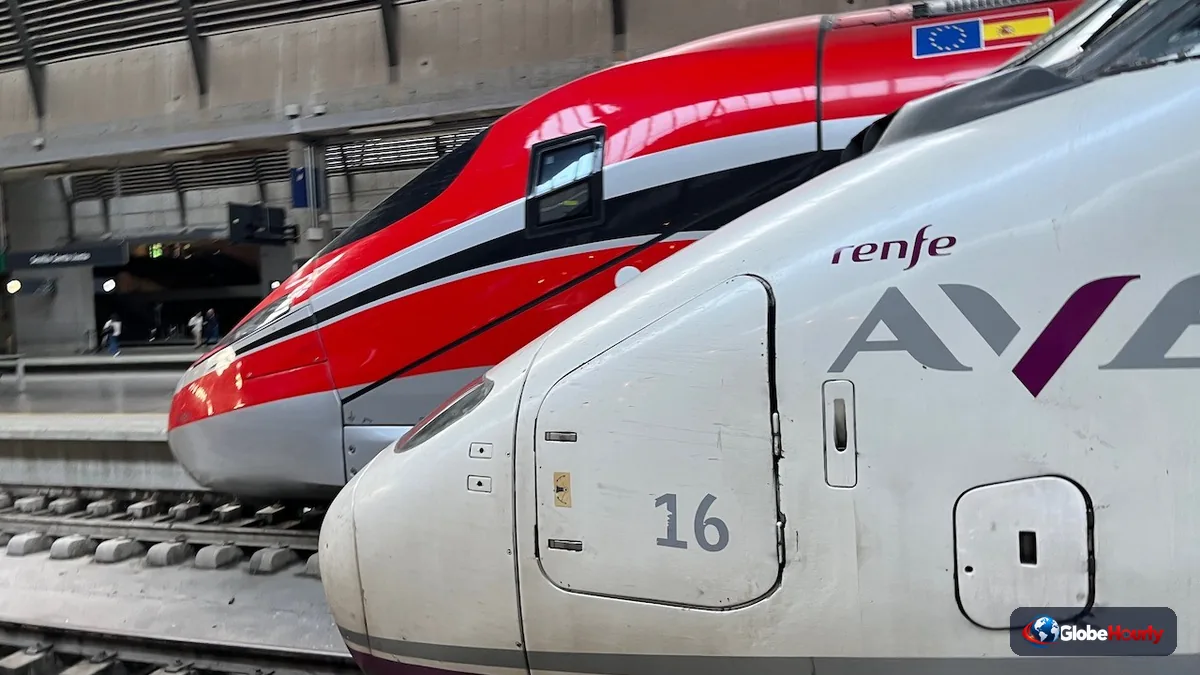
At a glance
- UPDATE, 7:40 p.m. PKT: Castilla-La Mancha's regional government says the death toll has risen to at least 64, with about 80 injured, 50 of them seriously. Officials expect it to rise further.
- Dozens of people were killed when a Renfe AVE train crashed into the back of a stationary Iryo train near Urda, Toledo province, at about 8:54 a.m. local time on Wednesday, October 28, 2026.
- About 80 people were injured, 50 of them seriously, according to Castilla-La Mancha regional president Emiliano García-Page; officials fear the toll will rise.
- The two trains, both travelling from Madrid towards Seville, carried about 544 people: 397 on the Renfe train and around 147 on the Iryo train.
- Government sources say human error in traffic control is being examined, but no official cause has been confirmed.
- The Madrid–Andalusia high-speed line is closed, with more than 100 services affected; it is Spain's second deadly high-speed crash since January.
At least 64 people were killed on Wednesday morning, October 28, 2026, when a Renfe AVE high-speed train crashed into the back of a stationary Iryo train near the village of Urda in Toledo province, central Spain. Both trains were travelling south on the Madrid–Seville high-speed line, and the Castilla-La Mancha regional government said about 80 people were injured, 50 of them seriously. The toll has risen steadily through the day — from 10 in the first official count to 30 by midday and 64 by the afternoon — and officials expect it to rise further.
What happened
The collision happened at about 8:54 a.m. local time (12:54 p.m. Pakistan time) on the stretch between Los Yébenes and Urda, around kilometre 118 of the line. According to the initial investigation, the Iryo train had come to a stop on the track when the Renfe AVE, which had left Madrid at 8 a.m. for Seville, struck it from behind at more than 100 km/h.
Esther Padilla, spokeswoman for the Castilla-La Mancha regional government, said one train ran into the tail of the other while it was stopped on the line. Three carriages — two from the Iryo train and one from the Renfe train — left the track and fell down an embankment. Witnesses described carriages lying on their sides, twisted metal and a fire in one coach.
| Detail | Information |
|---|---|
| Date and time | Wednesday, October 28, 2026, about 8:54 a.m. local time |
| Location | Near Urda, between Los Yébenes and Urda, Toledo province (Castilla-La Mancha) |
| Line | Madrid–Seville / Andalusia high-speed line |
| Trains | Renfe AVE (397 passengers) and Iryo service 6076 (about 147 passengers) |
| What happened | Renfe train hit the stationary Iryo train from behind at over 100 km/h |
| Deaths | At least 64 (Castilla-La Mancha government; toll expected to rise) |
| Injured | About 80, including 50 seriously |
| Derailed | Three carriages (two Iryo, one Renfe) |
| Rail service | Madrid–Andalusia line closed; more than 100 trains affected |
Around 100 firefighters and emergency workers, a helicopter, police and ambulances reached the site. One passenger said help arrived within about 20 minutes. Urda's mayor, Manuel Galán, opened the town's sports hall as a reception point for the injured, and a crisis centre was set up at Madrid's Atocha station with an ambulance team and psychologists. Madrid's blood transfusion centre issued an urgent appeal for donors.
What caused the crash
No official cause has been given. Government sources said the crash may have been the result of human error in traffic control, with reports that the Renfe train was allowed to continue on a section where the Iryo train had stopped. This has not been confirmed, and an official investigation is expected to examine signalling and traffic-management records.
Background
This is the second major deadly accident on Spain's high-speed network this year, and on the same corridor. In January 2026, a collision near Adamuz in Córdoba province between Renfe and Iryo trains killed more than 40 people. With at least 64 dead, Wednesday's crash is now Spain's deadliest rail disaster since the 2013 Santiago de Compostela derailment, which killed 80.
Spain has Europe's largest high-speed rail network, with more than 3,000 km of track. Since the market opened to competition, state-owned Renfe shares the Madrid–Andalusia line with private operators Iryo and Ouigo, and the line is one of the busiest in the country. The January crash had already led to questions about maintenance and safety on the network.
Reactions
Prime Minister Pedro Sánchez cleared his schedule for the day and said he was deeply shocked by the serious train accident in Toledo and sent his condolences to the victims' families. The royal family said it shared the grief of the families. Health Minister Mónica García said the government was mobilising all available resources and coordinating with the Castilla-La Mancha regional government.
Iryo said it had activated all its emergency protocols and was working closely with the authorities. The opposition People's Party cancelled its campaign events, Portugal offered help from its rail agencies, and the Spanish football federation postponed some Copa del Rey matches.
Why it matters
A second deadly crash on the same flagship line in less than a year is likely to put strong pressure on the government, rail infrastructure manager Adif and the train operators over safety, signalling and staffing. The closure of the Madrid–Andalusia line also cuts one of Spain's main transport arteries, affecting thousands of travellers between Madrid, Ciudad Real, Córdoba, Seville and Málaga.
What happens next
Rescue teams are still working at the site, and authorities have said the number of dead may rise. The government's rail accident investigation commission and the courts are expected to open inquiries. No date has been given for reopening the line.
Help lines for families and passengers
| Service | Phone |
|---|---|
| Castilla-La Mancha 112 (families) | 900 122 112 |
| Iryo | 900 001 403 |
| Renfe | 900 101 020 |
Renfe said passengers can change or cancel tickets on affected routes free of charge.
Questions people are asking
What happened in the Spain train crash on October 28, 2026?
A Renfe AVE high-speed train heading from Madrid to Seville hit the back of an Iryo train that had stopped on the same track near Urda, in Toledo province. Several carriages derailed and at least 64 people were killed, according to the regional government.
How many people died in the Toledo train crash?
By Wednesday afternoon the Castilla-La Mancha regional government had confirmed at least 64 deaths and about 80 injured, 50 of them seriously. The first official count was 10; officials say the toll may rise further as rescue work continues.
Is the Madrid–Seville high-speed line closed?
Yes. Rail infrastructure manager Adif suspended traffic on the Madrid–Andalusia high-speed line, and Renfe and Iryo cancelled services between Madrid, Ciudad Real and Andalusia. Renfe said passengers can change or cancel tickets free of charge.