Finland's Stubb and Norway's Støre hold rare 90-minute call with Putin
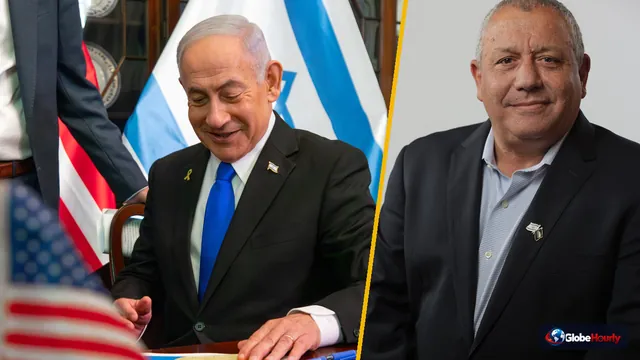
Finnish President Alexander Stubb and Norwegian Prime Minister Jonas Gahr Støre spoke to Vladimir Putin for 90 minutes about ending the Ukraine war, the first such call by Western European leaders in a long time, but the Kremlin signalled no change in its demands.

At a glance
- Finnish President Alexander Stubb and Norwegian Prime Minister Jonas Gahr Støre held a 90-minute phone call with Russian President Vladimir Putin on Tuesday, October 27, 2026.
- Stubb called the talk "frank and substantive"; Støre said it showed big differences in views on Ukraine.
- The Kremlin said Putin blamed the 'confrontational policy' of EU and NATO countries for prolonging the war; the three leaders agreed to stay in direct contact.
- The call grew out of an October 20 meeting in Oslo with Ukraine's Volodymyr Zelensky and US envoy Steve Witkoff; the Nordic leaders briefed Zelensky afterwards.
- Denmark's Prime Minister Mette Frederiksen criticised the move as uncoordinated with the rest of Europe.
Finnish President Alexander Stubb and Norwegian Prime Minister Jonas Gahr Støre spoke with Russian President Vladimir Putin by telephone for about 90 minutes on Tuesday, October 27, 2026, urging him to end the war in Ukraine. The call, made from Helsinki where Nordic leaders were meeting, broke with the practice of most Western European governments, which have avoided direct contact with the Kremlin since Russia's full-scale invasion in February 2022. Both sides described the talks as frank, but the Kremlin's account gave no sign that Moscow had softened its demands.
What happened on the call
The two Nordic leaders initiated the conversation and said they had prepared it in consultation with Ukraine. Afterwards Stubb described the discussion as "frank and substantive" and said that ending the war requires direct talks. Støre told reporters in Helsinki that the 90 minutes had exposed big differences in views on Ukraine, and that the leaders had stressed the need for de-escalation and the huge human and material cost of the war.
The Kremlin's readout said Putin blamed the "confrontational policy" of EU and NATO countries for dragging out the hostilities, and repeated that a lasting settlement must fully take Russia's "legitimate interests" into account. The three leaders agreed to stay in direct contact by phone.
| Detail | What we know |
|---|---|
| Date | Tuesday, October 27, 2026 |
| Length | About 90 minutes |
| Participants | Alexander Stubb (Finland), Jonas Gahr Støre (Norway), Vladimir Putin (Russia) |
| Tone | "Frank and substantive" (Stubb); "big differences" (Støre) |
| Kremlin message | EU and NATO policy prolonging the war; Russia's interests must be met |
| Agreed | To keep a direct line of contact |
| Follow-up | Both leaders then briefed Ukraine's President Volodymyr Zelensky |
How the call came about
The idea grew out of a meeting in Oslo on October 20 between Støre, Stubb, Zelensky and US envoy Steve Witkoff, with Jared Kushner joining remotely. Witkoff then travelled to St Petersburg to meet Putin. Stubb said Ukraine had asked the Nordic countries to help open a channel of communication, and that both the Americans and the Ukrainians backed the outreach.
Stubb said strained relations between Washington and Kyiv had tipped the balance. Ties between the United States and Ukraine have been at their lowest point in about 18 months, after Washington announced a deal for Russian diesel supplies, waived some sanctions on Russia and disrupted intelligence sharing and satellite internet services used by Ukraine's military. Many European capitals see the US approach as unpredictable.
Finland and Norway are both NATO members and both share a land border with Russia. Finland joined the alliance in 2023, ending decades of military non-alignment, and has since fortified its 1,340-kilometre eastern border.
Reactions
Kyiv said Zelensky was briefed on the conversation, and a presidential aide said both Nordic leaders reaffirmed their support for Ukraine when they spoke to him afterwards.
Not every neighbour welcomed the move. Denmark's Prime Minister Mette Frederiksen said she was very sceptical, saw no sign that Russia wants peace, and pointed out that the call had not been coordinated with other European governments. Stubb and Støre stressed that they spoke only for their own countries, not for Europe as a whole. Støre rejected the criticism, arguing that Europe should have its own channel to Moscow rather than leaving all contact to the United States.
Why it matters
For nearly five years Europe has relied on sanctions and isolation of the Kremlin, while peace contacts have run mostly through Washington. Two respected NATO leaders opening a direct line could give Europe a voice in any eventual settlement, which would shape the continent's security for decades. It also tests European unity: if more leaders follow, the common EU line on isolating Moscow could weaken; if the channel produces nothing, critics such as Frederiksen will feel vindicated.
For the wider world, including energy importers in South Asia, any progress towards ending the war would ease pressure on fuel and grain prices, already strained by tensions in the Gulf. For now, the Kremlin's readout suggests the gap between the sides remains wide.
What happens next
The leaders have agreed to keep talking by phone, but no date has been set for another call. Witkoff's contacts with Moscow continue, and fighting goes on: Russia launched one of its largest drone and missile attacks on Kyiv this week even as a local ceasefire began around Oleshky. European Union leaders are expected to discuss further support for Ukraine and the next sanctions package in the coming weeks, where the Nordic outreach is likely to be debated.
Questions people are asking
Why did Finland and Norway call Putin?
Stubb and Støre said they wanted to open a direct European channel to Moscow to help end the war in Ukraine. The idea came from an October 20 meeting in Oslo with Zelensky and US envoy Steve Witkoff, and both Kyiv and Washington supported it.
What did Putin say to Stubb and Støre?
According to the Kremlin, Putin blamed the confrontational policy of EU and NATO countries for prolonging the fighting and said lasting peace requires Russia's interests to be taken fully into account. He signalled no change from his earlier positions.
When did a European leader last speak to Putin?
Most Western European leaders have avoided direct contact with Putin since Russia's full-scale invasion of Ukraine in February 2022, which is why the October 27, 2026 call was seen as a break with that practice.