US Supreme Court refuses Trump request to end care for transgender federal inmates
The court left in place a judge's order blocking a Bureau of Prisons policy that would stop hormone therapy for transgender prisoners, with Justices Thomas and Alito dissenting.
At a glance
- On Wednesday, October 21, 2026, the US Supreme Court denied the Trump administration's emergency request to enforce a policy ending gender-affirming care for transgender federal inmates.
- The unsigned order gave no reasons; Justices Clarence Thomas and Samuel Alito said they would have granted the request.
- A June injunction by District Judge Royce Lamberth stays in force while the class-action case, Kingdom v. Trump, continues.
- More than 2,000 people in federal custody identify as transgender; the class covers about 1,000 inmates diagnosed with gender dysphoria.
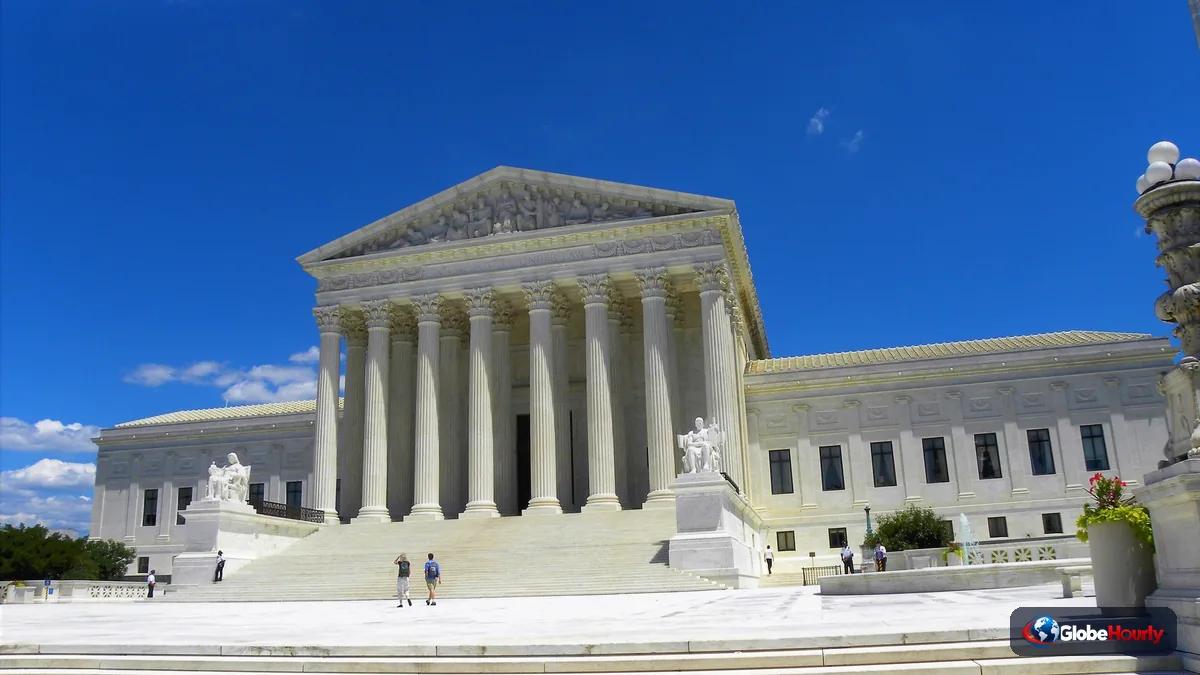
The US Supreme Court on Wednesday, October 21, 2026 refused a request from President Donald Trump's administration to immediately enforce a federal prison policy that would end hormone therapy and other gender-affirming care for transgender inmates. The order leaves in place a lower-court injunction that blocks the Federal Bureau of Prisons (BOP) policy while a class-action lawsuit continues.
What the court decided
The brief, unsigned order simply denied the administration's emergency application for a stay and gave no reasons, as is common with emergency requests. Justices Clarence Thomas and Samuel Alito noted that they would have granted it. The request had been filed by Solicitor General D. John Sauer after the US Court of Appeals for the D.C. Circuit refused to lift the injunction on September 18.
| Step | Date | Outcome |
|---|---|---|
| Trump executive order recognising two sexes | January 2025 | Basis for the prison policy |
| BOP policy restricting gender-affirming care | February 2026 | Challenged in court |
| Judge Royce Lamberth's injunction | June 2026 | Policy blocked |
| D.C. Circuit refuses to lift injunction | September 18, 2026 | Block stays |
| Supreme Court denies emergency stay | October 21, 2026 | Block stays; 2 justices dissent |
The policy and the case
The BOP policy would have ended hormone treatment and surgery for gender dysphoria, and barred "social accommodations" such as clothing and hair-removal devices, while still allowing psychiatric care. Three transgender inmates held in New Jersey, Florida and Minnesota brought the class action, known as Kingdom v. Trump. The class covers about 1,000 inmates with a gender dysphoria diagnosis, around 800 of whom have been prescribed hormones, according to the plaintiffs' lawyers. Government figures from 2025 put the number of transgender people in federal custody at more than 2,000.
In June, US District Judge Royce Lamberth in Washington found the policy was likely "arbitrary and capricious" under the federal law governing agency decisions. He said the bureau had disregarded its own evidence and shaped the policy to fit the president's executive order. The plaintiffs say the BOP has treated gender dysphoria with hormones since at least 1992.
Arguments on both sides
The Justice Department argued that the bureau should be allowed to prioritise mental-health treatment over what it called medically disputed interventions, and cited security and prison-management concerns, including that inmates receiving such care could become targets for attacks and that it could cause resentment among other prisoners. It also questioned the standards of care issued by the World Professional Association for Transgender Health.
The American Civil Liberties Union, which represents the inmates, said ending treatment would cause "immediate and catastrophic" harm. Its lawyer Aditi Shah said the order would prevent serious and irreparable harm to the class and that the group would keep challenging the policy. The BOP declined to comment.
Background
The decision stands out because the Supreme Court has sided with the administration or with states in several recent transgender cases. In 2025 it upheld state bans on gender-affirming care for minors, and in June 2026 it ruled that states may bar transgender girls from girls' sports at publicly funded schools. It has also allowed restrictions on transgender military service and passport sex markers to take effect.
Why it matters
The order means hundreds of federal prisoners will keep receiving treatment for now. Medical groups regard gender-affirming care as necessary for gender dysphoria, and say stopping it abruptly can lead to severe anxiety, depression and self-harm. The ruling is also a signal that the court will not automatically grant the government emergency relief in every case linked to the president's executive orders, even with a 6–3 conservative majority.
What happens next
The lawsuit returns to Judge Lamberth's court to be decided on its merits, and any final ruling can be appealed to the D.C. Circuit and again to the Supreme Court. Separately, the justices are due to consider whether parents can challenge a state law allowing runaway teenagers to receive gender-affirming care without parental consent.
Questions people are asking
What did the Supreme Court decide about transgender inmates?
On October 21, 2026 the Supreme Court refused the Trump administration's emergency request to let the Bureau of Prisons stop hormone therapy and related care for transgender inmates. A lower court's order blocking the policy remains in effect while the lawsuit continues.
Which justices dissented in the transgender prison case?
Justices Clarence Thomas and Samuel Alito said they would have granted the administration's request. The order itself was unsigned and gave no explanation, which is common for emergency applications.
Is the Supreme Court ruling final?
No. It only keeps Judge Royce Lamberth's injunction in place while the case, Kingdom v. Trump, is decided on its merits in the lower courts, and the issue could return to the Supreme Court later.