Vance writes to Iran security chief Rezaei in bid to revive peace talks
US Vice President JD Vance has sent a letter to Mohsen Rezaei, head of Iran's Supreme National Security Council, seeking a framework for talks days before a feared renewal of US strikes after the November 3 midterms.
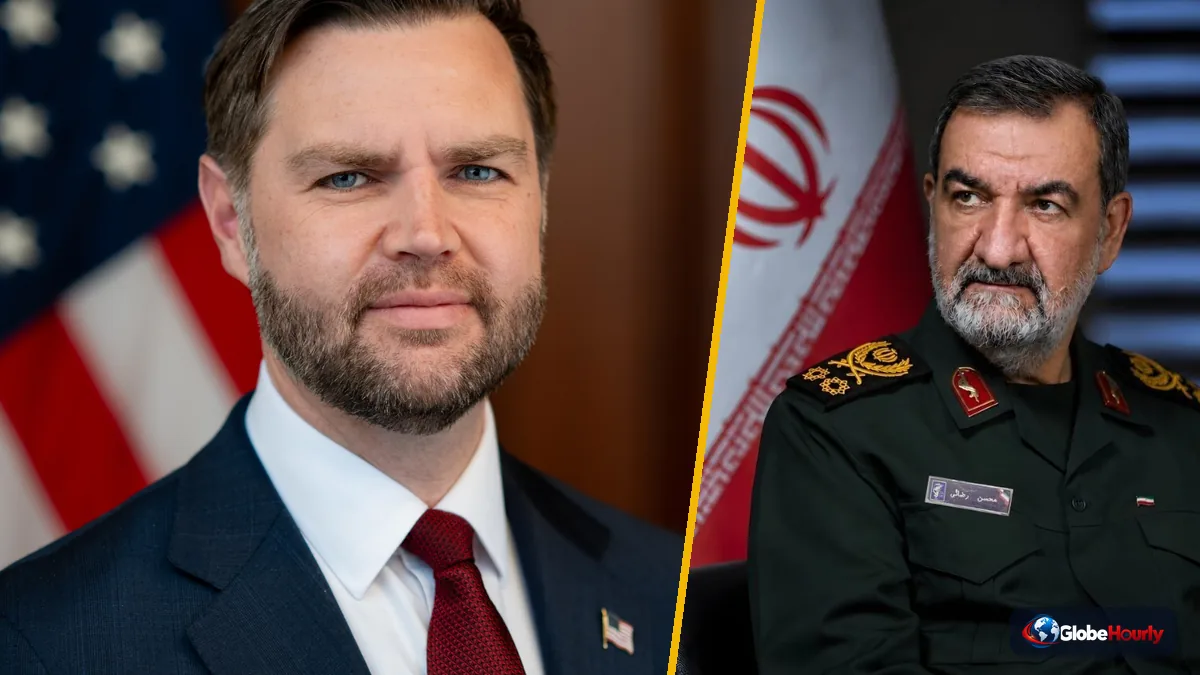
At a glance
- US Vice President JD Vance sent a letter to Mohsen Rezaei, secretary of Iran's Supreme National Security Council, to try to restart peace negotiations, according to reports confirmed on Wednesday, October 28.
- A US official said any talks aimed at heading off new strikes must include the nuclear issue; the outreach focused on a framework for negotiations rather than a detailed proposal.
- Reports said President Trump directed the move, but Trump told reporters the letter was about helping Iran obtain medical supplies.
- Washington has reportedly told Gulf states to prepare for a possible short, intense military campaign against Iran after the November 3 midterm elections; no final decision has been made.
- Iran's foreign minister Abbas Araghchi said Tehran is discussing a seven-day plan with mediators to end the war and reopen the Strait of Hormuz.
US Vice President JD Vance has written to Mohsen Rezaei, the secretary of Iran's Supreme National Security Council, in an attempt to revive peace negotiations between Washington and Tehran, according to reports confirmed by US officials on Wednesday, October 28, 2026. The letter comes less than a week before the US midterm elections on November 3, after which the United States has reportedly told Gulf allies to prepare for a possible new military campaign against Iran.
What the letter says
The full text has not been released. According to people familiar with it, the letter and the contacts that followed focused on a possible framework for negotiations rather than the details of a peace deal. A US official said Vance made clear that any talks aimed at avoiding new strikes must include discussions on Iran's nuclear programme.
Accounts differ on who was behind the move. Reports said President Donald Trump directed Vance to make contact. Trump himself, speaking to reporters on Wednesday, played down the outreach and said the letter was about helping Iran obtain medical supplies it needs.
| Key facts | Detail |
|---|---|
| Sender | JD Vance, US Vice President |
| Recipient | Mohsen Rezaei, secretary of Iran's Supreme National Security Council |
| Aim | Framework for restarting talks |
| US condition | Talks must cover the nuclear issue |
| Iran's main demands | End of US naval blockade, release of frozen funds, freedom to sell oil |
| Key date | US midterm elections, November 3 |
Who is Mohsen Rezaei
Rezaei is one of Iran's most senior security figures. A former commander of the Islamic Revolutionary Guard Corps during the Iran-Iraq war and a several-time presidential candidate, he now runs the Supreme National Security Council, the body that sets Iran's defence and nuclear policy, and has direct access to Supreme Leader Mojtaba Khamenei. Writing to him, rather than to the foreign ministry, signals that Washington wants to reach the people who make the final security decisions in Tehran.
Background
The United States and Israel went to war with Iran in late February. Since then Iran has restricted shipping through the Strait of Hormuz and attacked vessels that cross without its permission, while the US Navy blockades Iranian ports. Oil prices have stayed above $100 a barrel for much of the autumn.
Earlier diplomacy has stalled. Trump rejected an Iranian plan put forward in September. Iran says it will only negotiate seriously once the United States lifts the blockade, unfreezes Iranian assets overseas and allows oil sales. Qatar is leading the current mediation, and a Qatari delegation visited Tehran on Sunday; Pakistan's army chief and other regional leaders have also carried messages between the sides in recent weeks.
According to reports this week, Washington has told several Gulf Arab states to prepare for a possible "short, intense" military campaign against Iran after the midterms, though Trump has not made a final decision.
Reactions
Iran's Foreign Minister Abbas Araghchi said Tehran is discussing a seven-day plan with mediators to end the war and reopen the strait, and that Iran continues to give diplomacy a chance. He added that a renewed war would not change Iran's position. Rezaei himself has warned in recent days that Iran could strike US-linked infrastructure in the region, including data centres, if attacked again.
In Israel, where Tuesday's election left no clear winner, Prime Minister Benjamin Netanyahu has repeatedly called Iran an existential threat.
Why it matters
A breakthrough — or a breakdown — would be felt far beyond the region. The Strait of Hormuz normally carries about a fifth of the world's oil, and the closure has pushed up fuel prices from Europe to South Asia. For Pakistan, which buys most of its oil and gas from the Gulf and shares a long border with Iran, a new round of strikes would mean higher petrol prices, pressure on the rupee and risks along the border. A negotiated reopening of Hormuz would bring relief to importers across Asia.
What happens next
The coming days are critical: the US votes on November 3, and any decision on strikes is expected after that. Watch for Iran's formal reply to Vance, further Qatari shuttle diplomacy, and whether the seven-day plan Araghchi described is put on the table.
Questions people are asking
Who did JD Vance send a letter to in Iran?
Vance wrote to Mohsen Rezaei, the secretary of Iran's Supreme National Security Council and a veteran former Revolutionary Guards commander who has a direct line to Supreme Leader Mojtaba Khamenei.
What did Vance's letter to Iran say?
Its full text has not been published. US officials say it set out a possible framework for negotiations and stressed that any talks to avoid new strikes must cover Iran's nuclear programme.
Will the US strike Iran after the midterms?
No decision has been announced. Reports say Washington told Gulf states to prepare for a possible short military campaign after the November 3 elections, but President Trump has not made a final decision and diplomacy is continuing through mediators.