Iliana Yotova wins Bulgaria's presidential runoff with 57.6%, becoming the first woman elected to the office
Final count gives acting president Iliana Yotova 57.6% to Andrey Gyurov's 39.5%, a 343,601-vote margin. Her five-year term begins in January.
At a glance
- Iliana Yotova won Sunday's runoff with 1,093,852 votes (57.57%) against 750,251 (39.48%) for former caretaker prime minister Andrey Gyurov, according to final Central Election Commission figures.
- She is the first woman elected president of Bulgaria; she has held the post in an acting capacity since Rumen Radev resigned in January to enter party politics.
- Gyurov conceded on election night. Prime Minister Radev, whose Progressive Bulgaria backed Yotova, said she would be 'a worthy president'.
- Turnout was low, about 29% according to parallel counts, though higher than the record-low 23% of the first round.
- Gyurov won the vote cast abroad, 56% to 41%; Yotova's new five-year mandate begins in January.
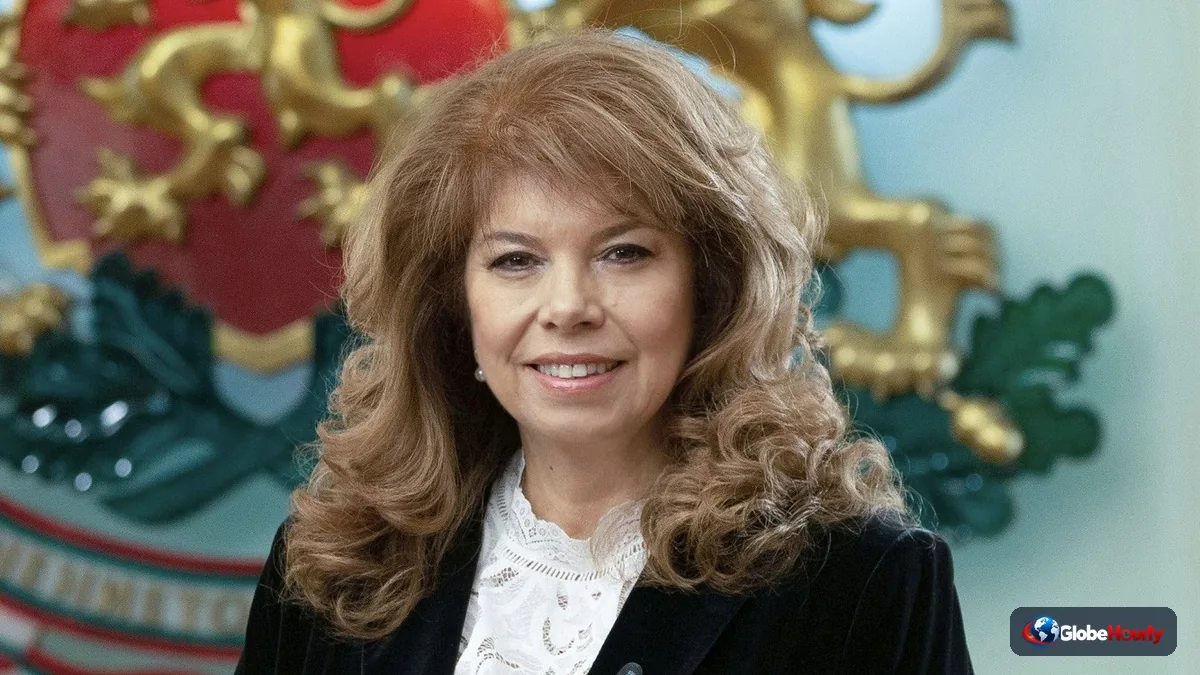
Iliana Yotova has won Bulgaria's presidential runoff, taking 57.57% of the vote against 39.48% for Andrey Gyurov, the Central Election Commission's final count showed on Monday morning. The result makes her the first woman ever elected head of state in Bulgaria, and it hands Prime Minister Rumen Radev, her long-time partner in the presidency, an ally in the country's top office for the next five years.
The margin was wide: 1,093,852 votes for Yotova and her running mate Kiril Valchev, against 750,251 for Gyurov and Georgi Kandev. That is a gap of 343,601. Another 56,080 voters, just under 3%, chose the ballot option "I do not support anyone".
From acting president to elected one
Yotova, a former journalist and socialist MEP, is not new to the building on Sofia's Dondukov Boulevard. She served as vice president under Radev from 2017. When Radev resigned in January to build his own party and run in a snap parliamentary election, she became the first Bulgarian vice president to take over the presidency mid-term. Radev's Progressive Bulgaria went on to form a government, and Radev became prime minister.
Sunday's vote turns that inherited job into her own mandate. Bulgaria's presidency is largely ceremonial, but the president names caretaker governments when parliament fails to form one, can return laws to parliament, is commander-in-chief and represents the country abroad. In a country that held seven parliamentary elections between 2021 and 2024, the power to appoint caretaker cabinets has mattered more than the constitution suggests.
The numbers, round by round
| First round, Oct 25 | Runoff, Nov 1 | |
|---|---|---|
| Iliana Yotova | 34.76% | 57.57% (1,093,852 votes) |
| Andrey Gyurov | 31.95% | 39.48% (750,251 votes) |
| "I do not support anyone" | 4.43% | 2.95% (56,080 votes) |
| Turnout | 22.98% (record low) | about 29% (parallel counts) |
Kostadin Kostadinov of the nationalist Revival party finished third in the first round with 12.55%, ahead of Radostin Vasilev of MECh on 4.61% and Ivelin Mihaylov of Velichie on 3.79%. Yotova appears to have picked up most of the extra runoff voters: her total rose by more than 560,000 votes from the first round, Gyurov's by about 264,000.
Turnout stayed low by European standards. Parallel counts by polling agencies Market Links and Alpha Research put it at 29.1%, with Trend at 27.5%. That is still several points higher than the first round, which was the lowest in Bulgaria's history.
Where Gyurov did better: the diaspora
Gyurov, a former deputy governor of the Bulgarian National Bank and caretaker prime minister, was backed by the reformist We Continue the Change – Democratic Bulgaria alliance and, late in the race, by GERB. He won comfortably among Bulgarians voting abroad, by 56.4% to 41.4%. In the United States he took 67.5%. Among voters in Russia, Yotova won 84%.
He conceded on election night and said Bulgarian society needed to look for unity rather than division, adding that his political work would continue beyond the campaign.
What Radev and Yotova's camp said
Radev kept his comments short on Sunday night. "We have known each other for 10 years and I know that Iliana Yotova will be a worthy president," he said. He also presented the result as backing for his government's reform programme and said Bulgaria would not go back to backroom political deals.
Valchev, Yotova's running mate and the incoming vice president, said before the results were in that he was certain Bulgaria would have a woman president. Interior Minister Ivan Demerdzhiev said police had stopped attempts at vote buying during the day.
Why Brussels and Kyiv are watching
During the campaign Yotova was seen as the more Russia-friendly of the two candidates, and Gyurov as the more pro-Ukrainian. She has opposed sending Bulgarian weapons to Ukraine and has spoken in favour of dialogue with Moscow, positions she shares with Radev. Her win means the president and prime minister of an EU and NATO member on the Black Sea now pull in the same direction on the war, at a time when the EU is trying to hold its own line on sanctions and military aid.
For Bulgarians at home, the more immediate effect is political stability. With the presidency and the government in friendly hands, the long cycle of collapsed coalitions and caretaker cabinets that ran from 2021 is less likely to return soon.
What comes next
Yotova continues as acting president until her new five-year term formally begins in January 2027, when she and Valchev will take the oath before parliament. The vice presidency, vacant since she moved up in January, will then be filled by Valchev.