G20 foreign ministers end Atlanta talks with no joint statement as Ukraine splits the table; Rubio issues his own summary
Two days of G20 talks in Atlanta ended with no communique. Ukraine was the main split, and Rubio issued a chair's statement ahead of December's summit.
At a glance
- The G20 foreign ministers' meeting in Atlanta ended on Saturday, October 31, with no joint communique.
- Marco Rubio issued a chair's statement listing energy and food security, freedom of navigation, supply chains and critical minerals as priorities, with no specific agreements.
- Russia's war in Ukraine was the main obstacle; the group photo had already been scrapped after European objections to Sergey Lavrov.
- Other disputes included South Africa's exclusion, US tariffs, the South China Sea and the US-Israeli war on Iran.
- Leaders are due to meet in Florida in December, and it is unclear whether Vladimir Putin will attend.
The G20's foreign ministers left Atlanta on Saturday without agreeing a joint statement. After two days of talks hosted by US Secretary of State Marco Rubio, the group could not settle on common language, with Russia's war in Ukraine the biggest barrier.
Rubio instead put out a chair's statement, a summary issued under the host's name that does not need every member's approval. It named energy and food security, freedom of navigation, secure supply chains and access to critical minerals as priorities. It announced no specific agreements.
Rubio played down the gap, saying the world's problems do not have "universally accepted solutions". He said countries were still working together, particularly on supply chains and critical minerals.
The fights that blocked a common text
Ukraine was the largest dispute, but it was not the only one. Diplomats who spoke without being named listed several, and the list covers most of the group's fault lines.
| Dispute | Who was on each side |
|---|---|
| War in Ukraine | Russia, described by diplomats as unyielding, against European members |
| Lavrov at the group photo | European diplomats objected; Rubio cancelled the photo |
| Poland's place at the G20 | Russia opposes Poland joining; Warsaw attended as a guest |
| South Africa's absence | The US chose not to invite the country, which is a G20 member |
| Tariffs | US trade measures against partners in the group |
| South China Sea | China's moves there against other claimants' concerns |
| Iran war | The US-Israeli campaign against Iran |
Polish Foreign Minister Radoslaw Sikorski, at a G20 gathering for the first time, called it "very difficult to agree on a common line". Russian Foreign Minister Sergey Lavrov said Moscow would not allow Ukraine to be a "military threat" to Russia's security.
The tension was sharpened on Friday, when the State Department approved a proposed $2.1 billion sale of Patriot interceptors to Ukraine while the talks were under way.
Hormuz and the sea lanes in the closing session
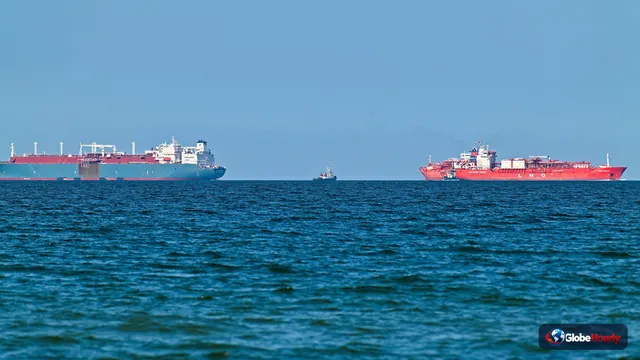
The closing session dealt with supply chains and shipping routes: the Strait of Hormuz and the Red, Black and South China seas. Rubio said critical routes "must remain secure and open to commerce".
That matters well beyond the room. Ship attacks around Hormuz reached a wartime high in October, with more than 30 incidents, and fuel, fertiliser and food prices across South Asia and Africa move with every disruption. India's External Affairs Minister S. Jaishankar used the meeting to raise concern about attacks on civilian ships and crews. He said the Global South is paying for the conflict through threats to the supply and cost of fuel, food and fertiliser.
Pakistan is not a G20 member, but its economy is exposed to the same routes. Oil, gas and remittances from the Gulf are all tied to what happens in those waters, and Islamabad has been among the governments trying to bring Washington and Tehran closer together.
Who Rubio saw on the sidelines
On Friday, Rubio met Saudi Foreign Minister Prince Faisal bin Farhan and Turkish Foreign Minister Hakan Fidan, whose country has been a mediator. On Saturday, he held talks with his counterparts from Australia, India and Japan.
Iran hung over those meetings. US officials have told Middle Eastern governments to prepare for possible renewed strikes after Tuesday's American elections, according to reports, while Qatari mediators continue to shuttle between the two sides.
Next stop: a leaders' summit in Florida
The failure in Atlanta leaves work unfinished for President Donald Trump's December summit of G20 leaders, to be held at his golf club in Miami. Whether Russian President Vladimir Putin will attend is still unclear, and the row over South Africa has not gone away.
Before that, many of the same leaders could meet at the APEC summit in Shenzhen, China, on November 18 and 19, which Trump has said he will attend.