Indian cargo dhow Al Jusufi hit by aerial object off Oman; Gujarat sailor killed, 13 crew rescued
An Indian-flagged dhow was struck by an unidentified aerial object off Oman on November 2. One Gujarat sailor died; Oman's coast guard rescued the other 13.
At a glance
- The Indian-flagged cargo vessel MSV Al Jusufi was struck by an unidentified aerial object near the coast of Oman on the evening of Monday, November 2.
- One of its 14 Indian crew, Gandhar Nahim Ajij from Gujarat, died of his injuries; the other 13 were rescued by the Omani Coast Guard.
- India's foreign ministry condemned the attack and called the continuing strikes on commercial shipping in the region deeply concerning.
- No group has said it carried out the attack, and Indian officials have not said what kind of weapon hit the vessel.
- It is the latest of more than 120 attacks on merchant ships in and around the Strait of Hormuz since the conflict in the region began; October was the worst month, with 29 ships hit.
An Indian sailor has been killed after the Indian-flagged cargo vessel MSV Al Jusufi was struck by an unidentified aerial object off the coast of Oman on Monday evening, November 2. The other 13 Indian crew members survived and were rescued by the Omani Coast Guard.
The dead seafarer was named by India's shipping minister, Sarbananda Sonowal, as Gandhar Nahim Ajij from Gujarat. Sonowal said on Tuesday that Ajij "succumbed to his injuries" and that the ministry and the Indian embassy in Muscat were working with Omani authorities to help the survivors and bring the crew and his body home.
A wooden trader on a familiar route
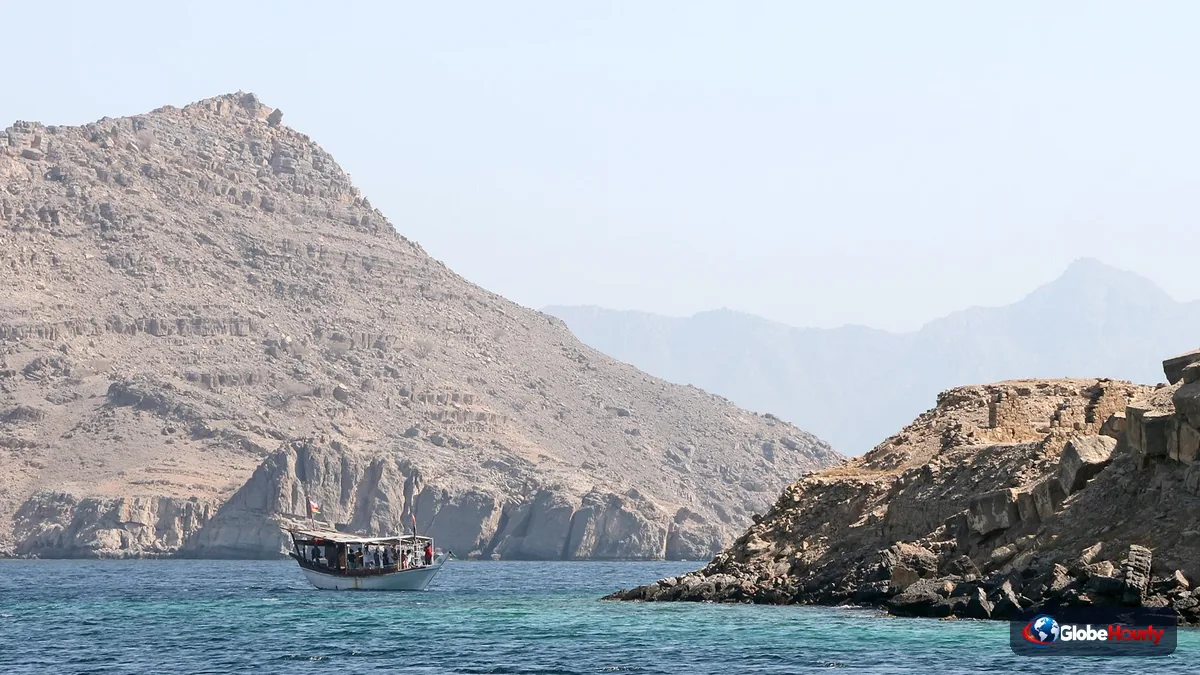
The Al Jusufi is a mechanised sailing vessel, the kind of large wooden dhow that has carried goods between Gujarat and the Gulf for generations. All 14 people on board were Indian.
According to reports, it left Hamriyah port in the United Arab Emirates on October 31 with about 950 tonnes of dates and was heading for Porbandar on the Gujarat coast. India's foreign ministry placed the attack near Limah, a small coastal settlement on Oman's Musandam peninsula, close to the Strait of Hormuz.
What hit the boat is still unknown. Officials have described it only as an "aerial object", and no country or armed group has said it was responsible. Indian authorities have not said whether it was a drone or a missile, or whether the dhow was a deliberate target.
What New Delhi said
The Ministry of External Affairs condemned the attack and said the continuing strikes on commercial shipping in the region were "deeply concerning". It called for an immediate easing of tensions, for current negotiations to reach a diplomatic settlement, and for attacks on merchant ships and civilian infrastructure to stop.
Prime Minister Narendra Modi had already raised the safety of Indian seafarers in the Strait of Hormuz in a recent address to G7 leaders, urging that shipping lanes be kept open and safe.
A month of attacks near the Omani coast
The Al Jusufi is the latest in a run of vessels hit around Hormuz, one of the world's busiest oil routes, since fighting involving Iran escalated earlier this year. Figures from the International Maritime Organization and the UK Maritime Trade Operations centre put the total at more than 120 attacks on commercial ships, and October was the worst month so far.
| Date | Vessel | Flag | Where | Outcome |
|---|---|---|---|---|
| October 29 | Tanker RITI | Panama | Off Musandam, Oman | Fire on board; Oman's navy evacuated all 25 crew |
| October 30 | Tanker Louise 1 | Panama | Off Khasab, Oman | Two limpet mines, engine-room fire; crew unhurt |
| November 2 | Dhow Al Jusufi | India | Near Limah, Oman | One Indian sailor killed, 13 rescued |
Monthly totals show how fast the risk has grown: about 20 ships were attacked in March and 29 in October.
Why this matters for South Asia's seafarers
India is one of the world's largest suppliers of merchant sailors, and thousands of Indians, along with many Pakistanis and Bangladeshis, crew tankers, cargo ships and dhows in the Gulf. The dhow trade between the UAE and the ports of Gujarat, including Porbandar, Mandvi and Jamnagar, carries food, building materials and household goods and employs whole coastal communities.
Small wooden vessels have little protection. Unlike large tankers, they rarely carry armed guards, and a single hit can sink them or start a fire that spreads fast. In the same days, the Indian Navy freed 20 crew of an Iranian dhow seized by Somali pirates in the Arabian Sea, a reminder of how exposed this traditional trade has become on several fronts.
What comes next
The 13 survivors are being looked after in Oman while the embassy arranges their return to India along with Ajij's body. Indian officials have not said whether they will investigate the source of the attack with Oman, or issue new guidance for Indian vessels crossing the strait. Talks aimed at ending the wider conflict are continuing, and shipping companies are watching for any agreement that would reopen the route safely.