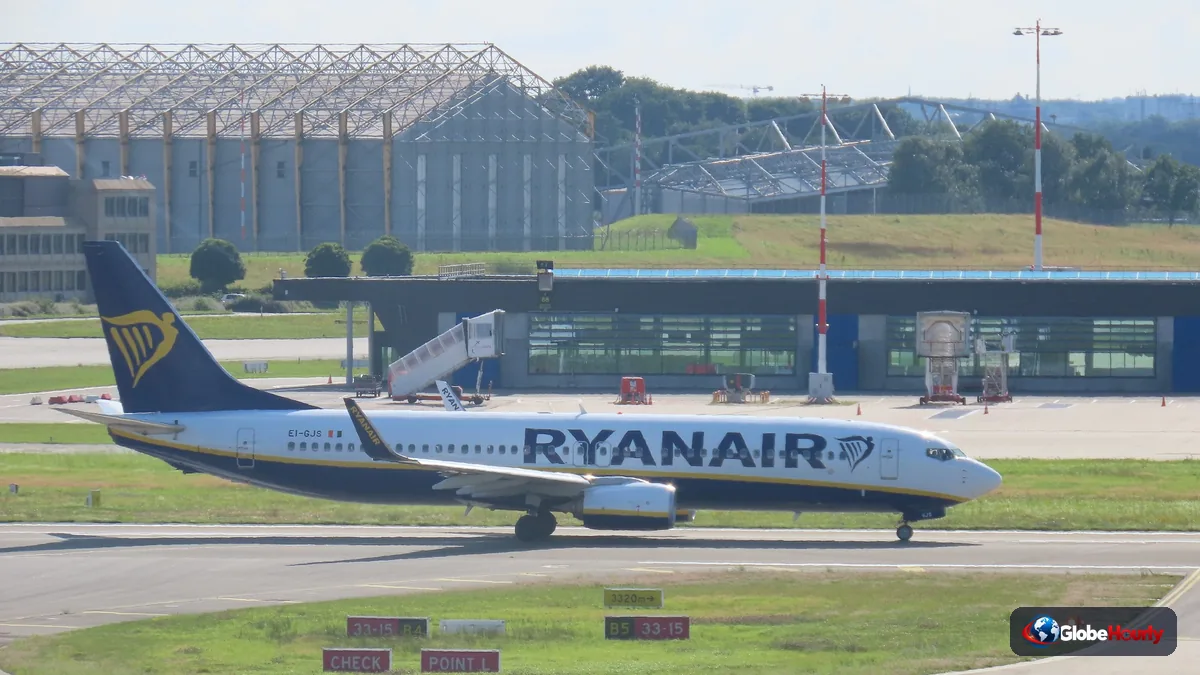
Ryanair half-year profit falls 15% to €2.15 billion on fuel costs; O'Leary warns European fares could rise up to 20%
Ryanair's profit fell 15% to €2.15bn as fuel costs jumped. It warns its fuel bill could rise €2bn next year and European fares by up to 20%.
At a glance
- Ryanair's profit after tax for April–September 2026 fell 15% to €2.15 billion from €2.54 billion, it said on Monday, November 2.
- Fuel and oil costs rose 15% to €3.40 billion as the unhedged fifth of its fuel doubled in price; average fares fell 4% to €55.70 while passengers rose 6% to 125.8 million.
- Only 25% of next year's fuel is hedged, at about $95 a barrel; Ryanair estimates its fuel bill will rise by about €2 billion and Michael O'Leary warned fares in Europe could rise by up to 20%.
- The airline cut its full-year traffic target to 214 million passengers, raised its interim dividend to €0.273 and announced an €800 million buyback from February 2027.
Ryanair's profit fell 15% in the first half of its financial year as the price of jet fuel jumped, and Europe's biggest low-cost airline warned that the real squeeze is still to come. Profit after tax for the six months to September 30 came to €2.15 billion, down from €2.54 billion a year earlier, the Irish carrier said on Monday, November 2.
Chief executive Michael O'Leary said fuel prices are likely to stay high "well into 2027" unless the conflict in the Middle East is resolved quickly. With most of its cheap fuel contracts running out next year, he said, fares across Europe could rise by up to 20%.
The numbers behind the fall
More people flew with Ryanair than ever, but each of them paid less, and the planes cost more to fuel.
| Six months to September 30 | 2026 | 2025 | Change |
|---|---|---|---|
| Profit after tax | €2.15bn | €2.54bn | −15% |
| Revenue | €10.08bn | about €9.8bn | +3% |
| Fuel and oil costs | €3.40bn | about €2.96bn | +15% |
| Passengers | 125.8m | about 119m | +6% |
| Average fare | €55.70 | about €58 | −4% |
| Interim dividend per share | €0.273 | €0.193 | +41% |
Ryanair had locked in about 80% of this year's fuel at around $67 a barrel. The problem was the other 20%. That unhedged share was bought at market prices, which roughly doubled after fighting in the Gulf and the attacks on shipping around the Strait of Hormuz pushed oil sharply higher. Even a fifth of the fuel bill at double the price was enough to wipe out the gains from carrying 7 million more passengers.
The "cost cliff" in 2027
The bigger worry is the next financial year, which runs from April 2027 to March 2028. Ryanair has hedged only 25% of the fuel it will need, at about $95 a barrel — far above the $67 it is paying for most of its fuel now. At current forward prices, the airline estimates its fuel bill will rise by about €2 billion. That is close to the entire profit it made in this half-year.
O'Leary described it as a significant cost cliff. The company said it is reviewing costs across the business and that it is too early to give a profit forecast for the full year. It has also trimmed its traffic target for the year to March 2027 to 214 million passengers, from 216 million.
Oil prices have been volatile even in the past day. Brent crude fell about 6% on Monday to around $105 a barrel as hopes of a deal between the United States and Iran rose, but it remains far above where it was a year ago, when Ryanair signed many of its current contracts.
What it means for travellers
For people booking flights in Europe, the message is that the era of very cheap fares may pause next year.
- Fares this winter: Ryanair's prices fell 4% in the summer half. The airline has not said fares will jump straight away; the warning is about 2027.
- Next summer: O'Leary's estimate of rises of up to 20% applies across European short-haul flying, not just Ryanair, because rivals face the same fuel prices.
- Fewer seats than planned: cutting the traffic target by 2 million passengers means slightly fewer seats, which also tends to support prices.
For travellers from Pakistan, India and the Gulf, Ryanair does not fly to South Asia, but its fares set the price level for many connecting trips inside Europe, and higher jet fuel costs are hitting every airline that flies through the Gulf hubs.
Money back to shareholders, and new Boeing jets
Despite the warning, Ryanair is still returning cash. The board declared an interim dividend of €0.273 per share, payable in late February 2027, up from €0.193 last year. A new €800 million share buyback will start in February 2027 and run for about ten months; an earlier €750 million programme finished in September.
The airline expects its first 16 Boeing 737 MAX 10 jets in spring 2027, if Europe's aviation regulator EASA certifies the type before the end of 2026 as expected. The larger aircraft would let Ryanair carry more than 220 million passengers a year and spread its fuel costs over more seats.
Ryanair is due to give a fuller outlook for the year to March 2027 with its third-quarter results in late January.
Questions people are asking
Why did Ryanair's profit fall?
Fuel costs rose 15% to €3.40 billion in the six months to September because the part of its fuel that was not hedged doubled in price, while average fares fell 4%. Revenue rose only 3%.
Will Ryanair fares go up in 2027?
Chief executive Michael O'Leary said fares across Europe could rise by up to 20% next year as cheap fuel hedges run out. Ryanair has hedged only a quarter of its 2027–28 fuel, at about $95 a barrel.