South Korea's exports nearly double to a record $115.3 billion in October as chip sales jump 259%
Korea's October exports rose 93.7% to $115.3 billion, with chips now almost half the total. A first $1 trillion export year could arrive this month.
At a glance
- South Korea exported $115.3 billion of goods in October, up 93.7% from a year earlier and a record for any October, the trade ministry said on Sunday, November 1.
- Semiconductor exports rose 259.4% to $56.4 billion, a record 48.9% of all exports, as tech companies kept buying chips for AI data centres.
- Shipments to the United States rose about 186% to $24.9 billion and to China about 134% to $27.0 billion; imports rose 36% to $72.8 billion, leaving a surplus of about $42.5 billion.
- Exports for January to October passed $900 billion. The ministry says the country could pass $1 trillion in a single year for the first time as early as this month.
- Shipbuilding exports fell 43.6% against a one-off platform delivery last year, and price, not volume, drove the jump in oil-product sales.
South Korea sold $115.3 billion of goods abroad in October, almost twice as much as a year earlier, as the global rush to build artificial-intelligence data centres kept its chip factories running flat out. The Ministry of Trade, Industry and Energy said on Sunday that exports rose 93.7% from October 2025, the highest total ever recorded for the month and the second month in a row above $110 billion.
Chips did most of the work. Semiconductor exports climbed 259.4% to $56.4 billion. That is 48.9% of everything the country exported, the largest share on record for an October. A year ago, the same category earned less than a third of that.
The products behind the record
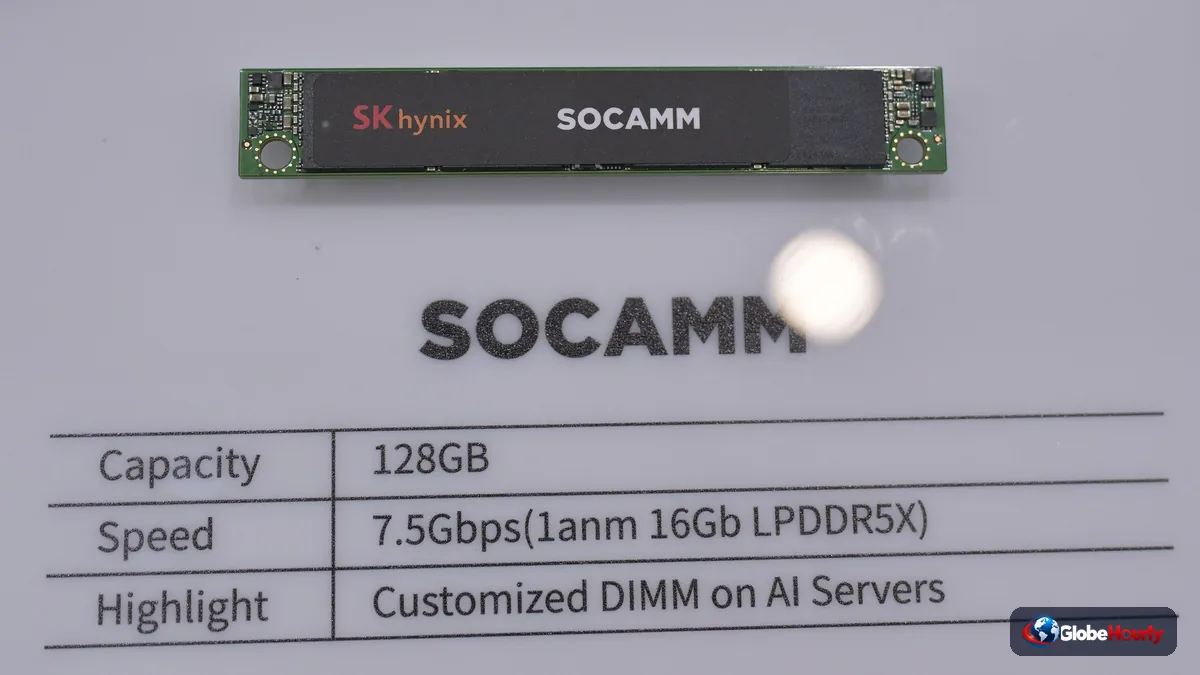
Memory makers Samsung Electronics and SK Hynix supply most of the high-bandwidth and server memory that AI systems need, and that demand now shows up across the trade data. Exports of computers rose almost sixfold, driven by solid-state drives for servers, which went from $820 million to $5.64 billion in a year.
| Product | October 2026 | Change on a year |
|---|---|---|
| All exports | $115.3bn | +93.7% |
| Semiconductors | $56.4bn | +259.4% |
| Petroleum products | $6.92bn | +80.0% |
| Cars | $6.55bn (October record) | +18.1% |
| Computers (incl. server SSDs) | $5.85bn | +496.6% |
| Petrochemicals | $4.0bn | +27.5% |
| Ships | $2.64bn | −43.6% |
| Cosmetics | $1.44bn | +57.5% |
| Imports | $72.8bn | +36% |
| Trade surplus | about $42.5bn | — |
Eighteen of the ministry's 20 main product groups grew. Car exports reached an October record on hybrid demand: hybrids rose 53.1% to $2.06 billion and electric cars 41.6% to $1.04 billion, while petrol and diesel models were flat. The two that fell were household goods, down 13.4%, and ships. The shipbuilding drop says little about the industry: October 2025 included a single offshore platform worth about $2.47 billion.
Not every number is as strong as it looks
Two things flatter the headline. The Chuseok harvest holiday fell in September this year instead of October, so October 2026 had two more working days than a year earlier. And the gains in fuel and plastics came from prices, not volume. Oil-product exports rose 80% in value while the quantity shipped fell 7.5%, a direct result of crude prices driven above $100 a barrel by the Iran war and the near-closure of the Strait of Hormuz. Petrochemical volumes also fell, by 6.8%.
That means the real picture is narrower than the total suggests. Remove chips and computers, and Korea's export growth is solid but ordinary.
Where the goods went
Sales to Korea's two biggest customers both more than doubled.
| Market | October 2026 | Change on a year |
|---|---|---|
| China | $26.98bn | +133.6% |
| United States | $24.9bn | +185.8% |
| South-East Asia (ASEAN) | $21.33bn | +128% |
| European Union | $8.1bn | +56.4% |
The US jump came from chips, computers and electrical equipment for AI infrastructure. China has now bought more than $20 billion of Korean goods for five months running, mostly chips and wireless equipment.
A first $1 trillion year
Korea's previous best year was 2025, at $709.3 billion. It passed that total by early September this year. Exports for January to October were above $900 billion; one calculation from the monthly figures puts the total near $930 billion. The ministry said the country could pass $1 trillion in a calendar year as early as November if the current trend holds.
Trade Minister Kim Jung-kwan was more cautious in tone. He said global trade remained uncertain because of protectionism in major economies, shifting supply chains and tension in the Middle East, and that many small and medium-sized exporters were struggling. The government plans to step up trade co-operation with major partners and remove export barriers.
The risk of leaning on one product
With chips close to half of all exports, Korea's growth now depends heavily on how much the world's largest tech companies keep spending on AI. The Bank of Korea has raised its 2026 growth forecast to 3.3%, but the central bank has also modelled a scenario in which a slowdown in US AI investment and a 10% fall in chip prices would cut chip exports by tens of billions of dollars in 2027. Washington is also reviewing possible new limits on sales of high-bandwidth memory to China, Korea's single largest market; no rule had been issued as of November 1.
The next reading comes around November 11, when customs publishes exports for the first 10 days of November; full November figures, which will show whether the $1 trillion line has been crossed, are due on December 1.
Questions people are asking
Why did South Korea's exports nearly double in October 2026?
Mainly because of memory chips. Demand for AI servers sent semiconductor exports up 259% to $56.4 billion, and October also had two more working days than a year earlier because the Chuseok holiday fell in September.
Will South Korea reach $1 trillion in exports in 2026?
Very likely. Exports for January to October were above $900 billion, and the trade ministry says the $1 trillion mark could be passed as early as November if the current pace holds.