Shehbaz, Asim Munir chair Peshawar apex committee: KP operation to go on, 10,000 police to be hired
On his first visit to Khyber Pakhtunkhwa since governor's rule, PM Shehbaz Sharif said the emergency was imposed under 'extreme compulsion' as the civil-military leadership vowed to wipe out terrorism.
At a glance
- PM Shehbaz Sharif chaired the Khyber Pakhtunkhwa apex committee in Peshawar on Thursday, October 22, his first visit to the province since governor's rule and an emergency were imposed on October 11.
- Field Marshal Asim Munir, the Chief of Defence Forces and army chief, attended with Governor Faisal Karim Kundi, federal ministers and the province's new advisers.
- The meeting agreed that the counter-terrorism operation will continue until terrorism is eliminated; reported decisions include 10,000 new police recruits and a special security plan for 12 districts.
- Shehbaz said governor's rule was imposed 'under extreme compulsion' and blamed the previous PTI-led provincial government for the rise in militancy.
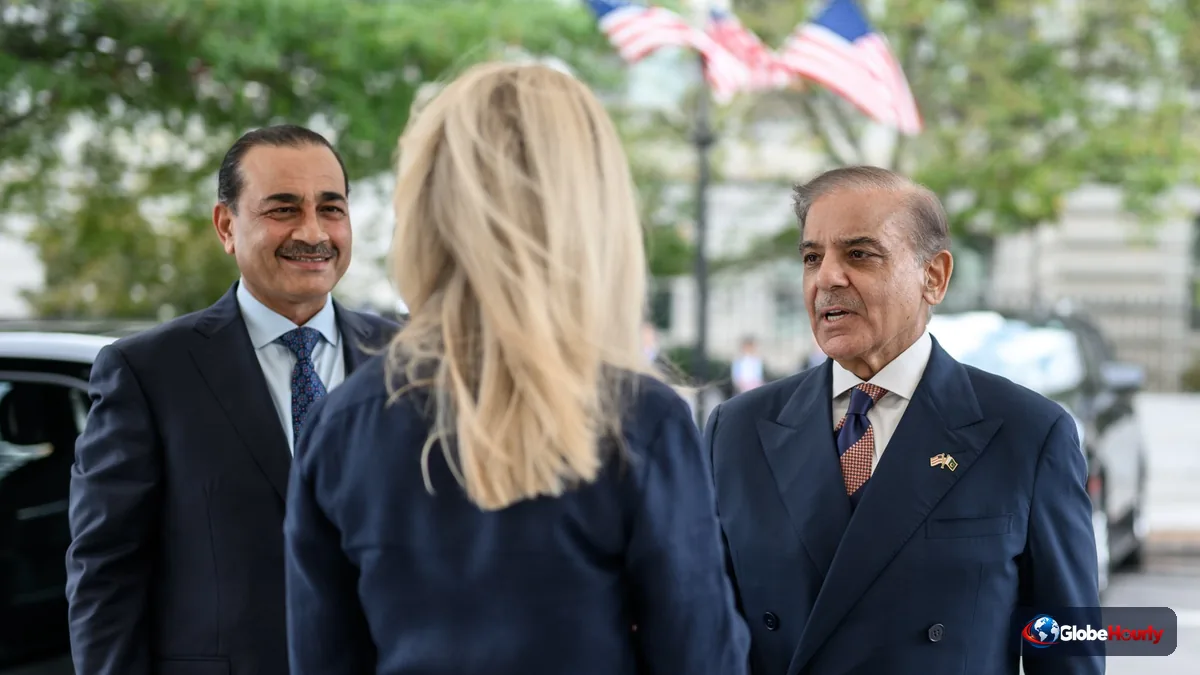
Prime Minister Shehbaz Sharif chaired a meeting of Khyber Pakhtunkhwa's apex committee in Peshawar on Thursday, October 22, with Field Marshal Asim Munir at his side, and the civil-military leadership vowed to keep up the operation against militants until terrorism is eliminated from the province. It was the prime minister's first visit to KP since the federal government imposed an emergency and governor's rule on October 11, and he used it to defend that decision as one taken "under extreme compulsion".
What was decided
The meeting reviewed the security situation across the province, which has seen a sharp rise in militant attacks. Participants agreed on the need to eliminate terrorism completely and paid tribute to soldiers, police officers and civilians killed in the fight.
According to reports from the meeting, the committee unanimously approved a list of decisions. The main ones:
| Area | Reported decision |
|---|---|
| Operation | Continue until terrorism is fully eliminated |
| Affected districts | Special security framework for 12 districts: Bajaur, Khyber, Mohmand, Orakzai, Kurram, North and South Waziristan, Bannu, Tank, Lakki Marwat and D.I. Khan |
| Police | Recruit 10,000 new police; operational budget raised to Rs30.2 billion |
| Peshawar Safe City | Make it operational within six months |
| Counter-Terrorism Department | Modernise equipment and training |
| Financing of militancy | Intelligence-based operations against facilitators and financiers |
| Merged districts | New development package; three rupees for affected areas for every rupee spent elsewhere |
| Families of martyrs | Shuhada package to be increased |
| Narrative | Involve religious scholars and elders; enforce the National Action Plan strictly |
The prime minister also announced an advisory council of experts to help the governor's administration tackle the province's problems, and said the federal government would provide "all possible resources".
Who attended
Besides Shehbaz Sharif and Field Marshal Munir, who is the Chief of Defence Forces and Chief of Army Staff, the meeting was attended by Governor Faisal Karim Kundi, Interior Minister Mohsin Naqvi, Law Minister Azam Nazeer Tarar, Information Minister Attaullah Tarar, Amir Muqam, Rana Sanaullah, the chief secretary, the inspector general of police, the Peshawar corps commander and the province's newly appointed advisers.
What the leaders said
Shehbaz said Khyber Pakhtunkhwa had been "a cradle of peace" six years ago after the military operations that restored order across Pakistan by 2017–18, and accused the previous PTI-led provincial government of allowing militants to return. He said about 80,000 Pakistanis had been killed in the war on terror and that KP had received more than Rs800 billion under the NFC Award for counter-terrorism, while 5,000 police posts were left vacant.
He also listed alleged corruption cases from the previous provincial government, including the Kohistan scandal, and expressed grief over the recent Peshawar school roof collapse. He thanked President Asif Ali Zardari and PML-N president Nawaz Sharif for backing the emergency.
Field Marshal Munir described the fight against terrorism as a war for Pakistan's survival, saying there would be no concessions. Governor Kundi told the meeting a security cell had been set up at Governor House, district officials must now report daily, and counter-terrorism policy would "come from Islamabad, not Kabul".
Background
The federal government declared an emergency in KP and imposed governor's rule on October 11, citing deteriorating security and what it called the provincial government's deliberate disengagement from counter-terrorism. Parliament endorsed the move last week. Troops have been deployed in aid of the civil power, and Chief Minister Sohail Afridi of PTI remains in detention while the Peshawar High Court hears petitions over his case. PTI has rejected governor's rule as unconstitutional and an attack on its mandate in the province.
Why it matters
Khyber Pakhtunkhwa, which borders Afghanistan, has borne the brunt of militant violence in Pakistan, and the tribal districts named in the new framework have seen repeated attacks on police and security forces. The decisions signal a long-term security push with direct federal and military control. For residents, the promised police recruitment and development spending could bring jobs and services, but the political fight over governor's rule is likely to intensify.
What happens next
The apex committee will review progress at its next meeting. The Peshawar High Court is still hearing the petitions over Sohail Afridi's detention, and PTI is expected to keep challenging the emergency in the courts and on the streets.
Questions people are asking
What was decided in the KP apex committee meeting on October 22, 2026?
The civil-military leadership agreed to continue the operation until terrorism is wiped out in Khyber Pakhtunkhwa. Reported decisions include recruiting 10,000 police, a special security framework for 12 affected districts, making Peshawar Safe City work within six months and modernising the Counter-Terrorism Department.
Why was governor's rule imposed in Khyber Pakhtunkhwa?
The federal government imposed an emergency and governor's rule in KP on October 11, 2026, citing worsening security and what it called the provincial government's disengagement from counter-terrorism. Parliament endorsed the move, and PM Shehbaz Sharif said it was done 'under extreme compulsion'.
Who is running Khyber Pakhtunkhwa now?
Governor Faisal Karim Kundi is running the province under governor's rule, assisted by newly appointed advisers, while Chief Minister Sohail Afridi remains in detention and his case is before the Peshawar High Court.