Syria shuts main Jordan border crossing after Jordanian airstrikes kill civilians
Jordan struck what it called terrorist groups in southern Syria in response to the deadly attack on a church funeral in Karak; Damascus says seven civilians including three children were killed and has closed the Nassib-Jaber crossing to all traffic.
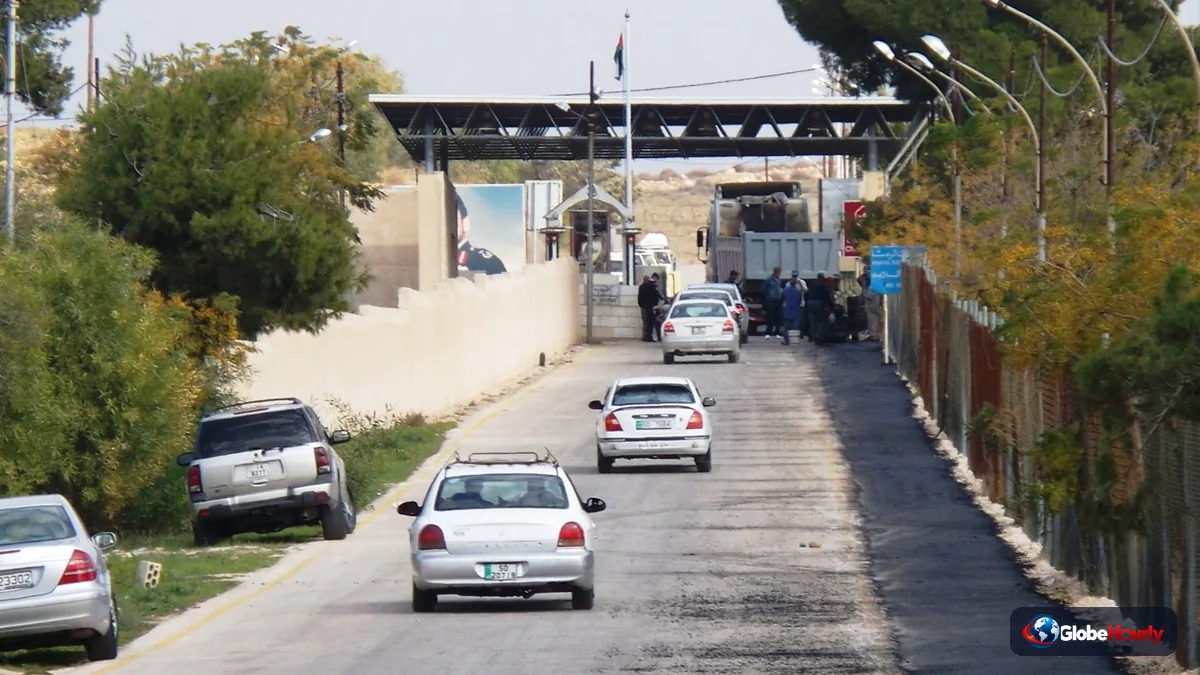
At a glance
- Jordan's air force struck sites in Syria's Daraa and Sweida provinces on Monday, October 26, 2026, saying it targeted groups linked to Friday's attack on a church funeral in Karak that killed nine people.
- Syria's civil defence says seven people were killed, including three children and a woman, and three wounded; earlier official counts ranged from five to eight.
- Jordan says the strikes killed more than 20 Islamic State members and destroyed a weapons depot, and expressed regret over civilian casualties.
- Damascus says the operation was not coordinated with it, expressed its 'complete reservation' and suspended all passenger and commercial traffic at the Nassib-Jaber crossing from Tuesday.
- Nassib-Jaber is the only working crossing between the two countries and a key route for trade between the Gulf, Jordan, Syria, Lebanon and Turkey.
Syria closed its main border crossing with Jordan to all traffic on Tuesday, October 27, 2026, a day after Jordanian warplanes struck targets in southern Syria in response to the deadly attack on a church funeral in Jordan's Karak governorate. Damascus says the strikes killed seven civilians, including three children, and were carried out without its agreement; Amman says it hit Islamic State members linked to the church attack.
What happened
Jordan's armed forces said on Monday, October 26, that the air force had struck "terrorist organisations" in neighbouring Syria that were connected to Friday's shooting at St George's Greek Orthodox Church in the village of Hammoud. Government spokesman Mohammad al-Momani said the strikes killed more than 20 Islamic State members and destroyed a major weapons depot. Jordan said it had avoided sites where intelligence showed civilians were present, and expressed regret over civilian casualties.
The strikes hit locations in the countryside of Daraa and Sweida provinces. Syrian casualty figures changed through Monday and Tuesday:
| Source | Killed | Wounded |
|---|---|---|
| Syrian civil defence (latest) | 7 — three children and a woman among them; six in Daraa, one in Sweida | 3 |
| Daraa health authorities (updated) | 6, including three children and a woman | — |
| Earlier Syrian official count | 8, including three children and an elderly man | 4 |
Jordan has not published its own casualty figures.
The border closure
Syria's border authority said it was suspending all passenger and commercial traffic in both directions at the Nassib crossing — known as Jaber on the Jordanian side — to protect travellers and workers. Damascus said it had informed Amman of its "complete reservation" over the strikes, said there had been no prior coordination, and opened its own investigation. Jordan's military had said the operation was coordinated with Damascus; the two governments' accounts directly contradict each other.
Background
The church attack took place on Friday, October 23, when gunmen opened fire during a funeral service in Hammoud, in Karak governorate south of Amman. Jordan's health ministry put the toll at nine dead and 34 injured. Police have detained three suspects and launched a manhunt for others. It was a rare assault on Jordan's Christian minority.
Jordan has repeatedly struck smugglers and armed groups in southern Syria over drug and weapons trafficking across its northern border, but strikes in direct retaliation for an attack on Jordanian soil are unusual. Relations between Amman and Syria's post-Assad government had been improving, with trade through Nassib-Jaber recovering after years of disruption.
Reactions
Damascus said the operation had not been coordinated with it, registered its "complete reservation" with Amman and said civilians, including children, were among the dead. Jordan's government said the strikes targeted the groups responsible for the church attack and expressed regret for any civilian casualties, saying it had deliberately avoided sites where civilians were known to be. Neither side has announced further military action.
Why it matters
Nassib-Jaber is the only working crossing between the two countries and a major land corridor for trucks carrying goods between the Gulf, Jordan, Syria, Lebanon and Turkey. A long closure would hurt traders, farmers and Syrian refugees and workers who cross regularly, and would add to pressure on regional supply routes already disrupted by tensions around the Strait of Hormuz and the Red Sea. The row is also a test for the new relationship between Amman and Damascus, both of which say they are fighting Islamic State remnants.
What happens next
Syria has given no date for reopening the crossing. Jordan's investigation into the church attack and the search for remaining suspects continue, and further diplomatic contacts between the two governments are expected. GlobeHourly will update this story as casualty figures are confirmed and if the border reopens.
Questions people are asking
Why did Jordan carry out airstrikes in Syria?
Jordan says it struck groups in southern Syria that were linked to the October 23 attack on a funeral at St George's Church in Hammoud, Karak, which killed nine people. It says the targets were Islamic State members and a weapons depot.
Is the Jordan-Syria border closed?
Yes. Syria suspended all passenger and commercial traffic in both directions at the Nassib-Jaber crossing on Tuesday, October 27, 2026, citing the safety of travellers and workers. No reopening date has been given.
How many people were killed in Jordan's strikes on Syria?
Syria's civil defence says seven people were killed, including three children and a woman, six of them in Daraa province and one in Sweida. Jordan says more than 20 militants were killed.