Lahore smog: AQI hits 535 as air turns hazardous, Gujranwala worse at 675 and Iqbal Town tops 900
Lahore's air quality index reached 535 on Monday morning, with PM2.5 about 23 times the WHO limit. Here are the readings and how to protect your family.
At a glance
- Lahore's air quality index (AQI) reached 535 at 8am on Monday, November 2, with fine-particle (PM2.5) pollution measured at 343 micrograms per cubic metre — about 23 times the World Health Organization's 24-hour guideline.
- Punjab's Environment Protection Department confirmed a city-wide reading above 530; individual monitors in Iqbal Town showed readings above 900.
- Gujranwala was worse than Lahore, with readings climbing to about 675 later in the day.
- Readings have risen every day since the start of November: the city average was about 475 on Sunday.
- Authorities have told residents to stay indoors unless necessary, wear masks outside and avoid early-morning and late-evening travel, when smog is thickest.
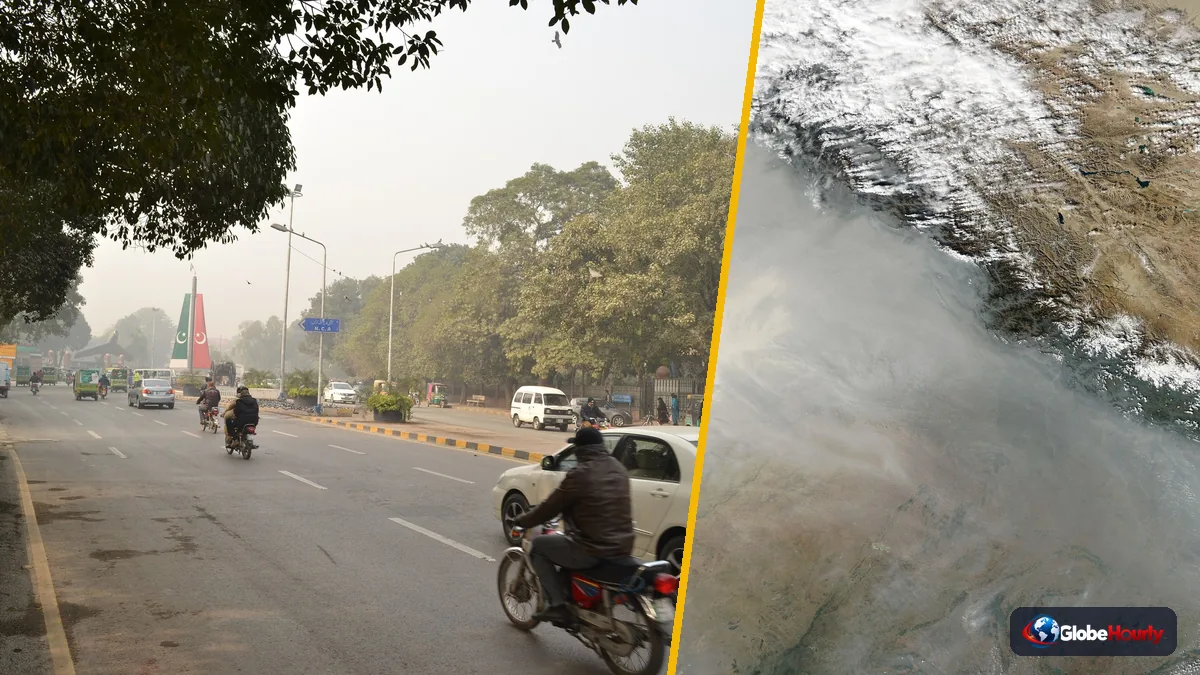
Lahore woke up to some of the worst air of the season on Monday. The city's air quality index (AQI) reached 535 at 8am on November 2, deep in the "hazardous" band, and Punjab's Environment Protection Department (EPD) confirmed a city-wide reading above 530. Fine particles known as PM2.5, the ones small enough to pass from the lungs into the blood, were measured at 343 micrograms per cubic metre. The World Health Organization's guideline for a 24-hour average is 15. Lahore's air on Monday morning was roughly 23 times over that line.
Lahore was not the worst place in Punjab. Gujranwala, about 70 kilometres to the north, climbed to around 675 as the day went on.
The readings, monitor by monitor
Different monitors report different numbers, because they sit in different neighbourhoods and are read at different hours. Taken together, they show a city where no district had healthy air on Monday.
| Location / reading | AQI | When |
|---|---|---|
| Lahore, city-wide (independent monitor) | 535 | Mon Nov 2, 8am |
| Lahore, city-wide (EPD) | above 530 | Mon Nov 2 |
| Lahore, city-wide (meteorological office figures) | 448 | Mon Nov 2, earlier reading |
| Iqbal Town, Lahore | about 902 (highest local reading) | Mon Nov 2 |
| Iqbal Town, Lahore | 617 | Mon Nov 2, earlier reading |
| Gujranwala | about 675 | Mon Nov 2, later in the day |
| Lahore, city average | about 475 | Sun Nov 1 |
| Allama Iqbal Town, Lahore | 704 | Sun Nov 1 |
For scale: an AQI up to 50 is "good", 151–200 is "unhealthy" for everyone, and anything above 300 is "hazardous", the top band, where the whole population is at risk, not just children, older people and those with asthma or heart disease. Several neighbourhood monitors in Lahore went past 500, the highest value on the standard US scale, which is why some readings are reported as "beyond index".
Three days, rising every day
The trend is the worry. On Sunday, November 1, Lahore's reading crossed 400 and the city again topped international lists of the world's most polluted major cities; by the end of the day its average was about 475. On Monday morning it crossed 530.
The pattern is familiar. Every year from late October to January, cooler nights trap a layer of cold air close to the ground over the plains of Punjab, on both sides of the border. Smoke from vehicles, factories and brick kilns, dust from construction, and smoke from burning crop stubble and rubbish collect under that lid with nowhere to go. Wind and rain clear it; still, dry days make it worse. Monday was still and dry.
What Punjab is doing about it
The provincial government has moved from its usual autumn campaign to round-the-clock monitoring, with drone teams and night squads looking for illegal burning, and anti-smog guns spraying water mist in the most polluted parts of Lahore. In one 24-hour sweep in late October, inspectors checked 221 industrial units and 354 brick kilns and sealed seven factories and four kilns for breaking environmental rules.
The EPD has told the city's sanitation company to stop dry sweeping, banned the open burning of solid waste, and asked schools to encourage car-pooling. These measures can trim the peaks, but they have not prevented hazardous days: the main sources, traffic and regional crop burning, take years to change.
No new closure of schools or offices had been announced for Lahore by Monday afternoon. In previous seasons, Punjab has shut schools, moved classes online and ordered markets to close early once readings stayed in the hazardous range for several days. Parents should watch for notices from the School Education Department this week.
How to protect yourself and your family
Officials and doctors have given the same advice:
- Stay indoors when you can, with windows and doors shut, especially in the early morning and late evening, when the smog is thickest.
- Wear a proper mask outside. An N95 or KN95 that fits closely filters most fine particles; a cloth or loose surgical mask does little against PM2.5.
- Avoid outdoor exercise, including morning walks and school sports, until readings fall.
- Watch the vulnerable. Children, older relatives, pregnant women and anyone with asthma, COPD or heart disease should keep any prescribed inhalers and medicines close and see a doctor if they have chest tightness, breathlessness or a persistent cough.
- Drive carefully. Visibility on motorways and city roads can drop sharply at night and before dawn; use low-beam headlights and keep your distance.
- Don't burn anything — leaves, rubbish or wood — and report burning to the EPD helpline.
An air purifier with a HEPA filter helps in a closed room. Wet-mopping floors instead of sweeping keeps settled dust from rising again.
When it could ease
The season's peak usually runs from November into early January. Relief tends to come only with a change in the weather: a westerly system bringing wind or rain. Until then, readings are likely to swing between "very unhealthy" and "hazardous" from day to day. Punjab's smog alert season runs until the end of January.
Questions people are asking
What is Lahore's AQI today?
On Monday, November 2, 2026, Lahore's AQI reached about 535 in the morning, in the "hazardous" band, with some neighbourhood monitors above 900. Readings change through the day, so check a live monitor before going out.
What AQI is dangerous?
Any AQI above 300 is classed as hazardous, meaning everyone, not only children, older people and those with heart or lung disease, is at risk of health effects. Lahore has been above 400 since Sunday.