China's Communist Party opens fifth plenum as Xi pushes party discipline
Xi Jinping opened a four-day closed-door meeting of the Communist Party's Central Committee in Beijing on Monday, focused on tightening party discipline a year before the 2027 congress expected to give him a fourth term.
At a glance
- The fifth plenary session of the Communist Party's 20th Central Committee opened in Beijing on Monday, October 26, and runs behind closed doors until Thursday, October 29.
- Xi Jinping delivered the Politburo's work report and explained a draft decision on 'full and rigorous party self-governance' — a drive to make officials more disciplined, effective and less corrupt.
- Analysts say attendance could be the lowest at any plenum since 1976 after sweeping purges: 42 of the 44 military-linked full members elected in 2022 have been removed or have disappeared from view.
- It is likely the last major party meeting before the 21st Party Congress in 2027, where Xi is widely expected to secure a fourth term.
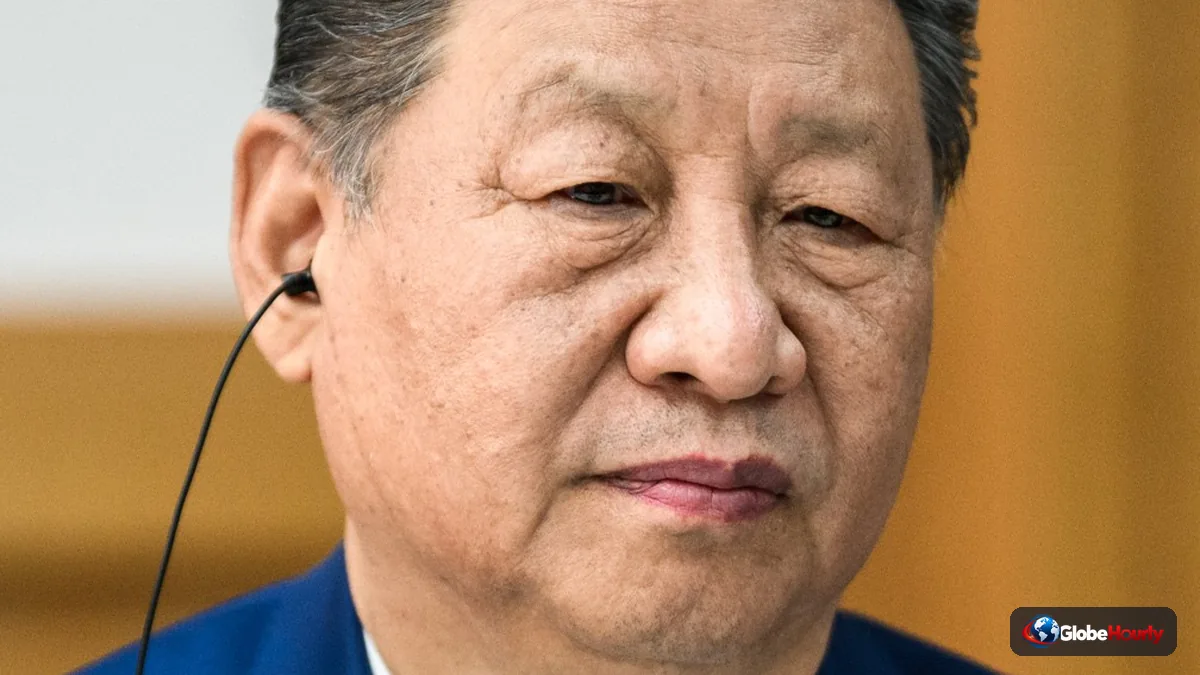
China's ruling Communist Party opened the fifth plenary session of its 20th Central Committee in Beijing on Monday, October 26, a four-day closed-door meeting that President Xi Jinping wants to use to tighten discipline across the party. Xi opened the session with the Politburo's work report and a draft decision on "full and rigorous party self-governance", state media said. The plenum runs until Thursday, October 29, and is likely the last major party gathering before the 2027 Party Congress, where Xi is expected to win a fourth term as leader.
What is on the agenda
| Item | Detail |
|---|---|
| Meeting | Fifth plenary session, 20th Central Committee |
| Dates | Monday, October 26 – Thursday, October 29, 2026 |
| Place | Beijing (closed to the public) |
| Main document | Draft decision on "sustained advancement of full and rigorous party self-governance" |
| Other business | Politburo work report to the Central Committee |
| Members | More than 370 full and alternate members at the start of the term in 2022 |
The draft decision aims to build what Xi calls a permanent system of oversight for the party's roughly 100 million members — covering organisation, education, supervision, rules and accountability — rather than relying on one-off campaigns. It also targets officials seen as ineffective. Last year, about 118,000 officials were disciplined for "formalism and bureaucratism" — empty box-ticking and red tape — roughly three times the previous year's number.
Unusually, the meeting is not mainly about the economy. Fifth plenums normally approve the next five-year economic plan, but China dealt with its 15th Five-Year Plan (2026–2030) at last year's fourth plenum.
Background: the purges behind the meeting
Anti-corruption has defined Xi's rule since he took power in 2012, and the campaign has reached a scale critics say also strengthens his personal control. Analysts at the Asia Society Policy Institute count that 42 of the 44 military-affiliated officials elected as full Central Committee members in 2022 have been purged or have disappeared from public view. Earlier this year Xi removed two members of the Central Military Commission, including first vice-chairman Zhang Youxia. The same analysts estimate attendance at this plenum could fall below 80% — possibly the lowest for any plenum since Mao Zedong's death in 1976.
The campaign has also reached retired senior figures, including former Chongqing mayor Huang Qifan. On October 22, while marking the 90th anniversary of the Long March, Xi called for a sustained push on party self-governance.
What analysts are saying
China specialists broadly agree that the anti-graft drive is not slowing down. Some describe it as shifting from removing rivals towards building lasting institutions, with officials tested for loyalty and results. Others expect closer checks on public spending and big projects, more use of technology to spot corruption, and tougher punishment for officials who fail to deliver Xi's priorities.
There is speculation that the meeting could introduce new language raising Xi's status — for example a "people's leader" title — and that the Mao-era post of party chairman, abolished in 1982, could one day return. Similar predictions in 2017 and 2021 did not come true, and many observers are sceptical.
Why it matters
Decisions in Beijing shape the world's second-largest economy and China's dealings with its neighbours, including Pakistan, its close partner through the China-Pakistan Economic Corridor (CPEC). Many of Xi's senior colleagues — including Wang Huning, Cai Qi and Foreign Minister Wang Yi — are past the party's informal retirement age, so up to two-thirds of the Central Committee could change at next year's congress. The plenum is being watched for early signs of who will rise, and how much power remains concentrated in Xi.
What happens next
The meeting ends on Thursday, October 29, when a communique is normally published through state media, possibly with personnel changes to fill seats left empty by the purges. The bigger leadership reshuffle is expected at the 21st Party Congress in late 2027.
Questions people are asking
What is China's fifth plenum about?
The fifth plenum of the 20th Central Committee, held in Beijing from October 26 to 29, 2026, focuses on a draft decision on 'full and rigorous party self-governance' — stricter discipline, anti-corruption and performance rules for Communist Party officials. The Politburo also reports on its work.
When will the results of China's plenum be announced?
The meeting is closed-door; the party usually releases a communique through state media on the final day, which would be Thursday, October 29, 2026, along with any personnel decisions.
Will Xi Jinping get a fourth term?
Xi is widely expected to be confirmed as party leader for a fourth five-year term at the 21st Party Congress in 2027. He removed the presidential term limit in 2018.