Makkah pact chiefs meet Iran in Tehran: Munir, Saudi, Turkish officials
Pakistan's army chief Asim Munir, Saudi defence minister Khalid bin Salman and Turkish intelligence chief Ibrahim Kalin are due in Tehran on Monday for security talks with Iran — the first such joint contact since Houthi attacks on Saudi Arabia escalated.
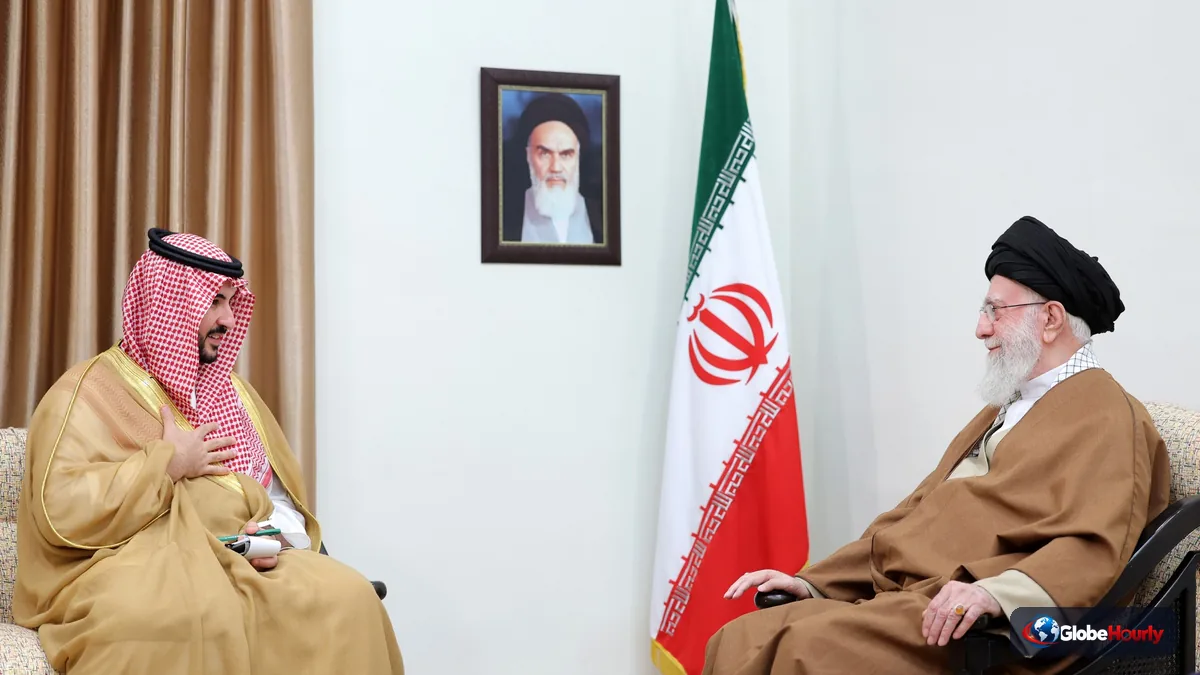
At a glance
- Senior officials of Saudi Arabia, Pakistan and Turkiye — the three members of the Makkah Joint Defence Agreement — are due to hold joint talks with Iran in Tehran on Monday, October 26.
- Iran's deputy national security chief Ali Bagheri Kani named the visitors as Saudi Defence Minister Prince Khalid bin Salman, Pakistan's Field Marshal Asim Munir and Turkish intelligence chief Ibrahim Kalin.
- They will meet Mohsen Rezaei, the new secretary of Iran's Supreme National Security Council; Iran says the aim is regional security run by regional states, without outside powers.
- It is the first high-level joint contact between Iran and all three pact members since Yemen's Houthis stepped up missile and drone attacks on Saudi Arabia.
- Saudi and Pakistani officials have not yet commented publicly on the meeting.
Top security officials from Saudi Arabia, Pakistan and Turkiye are due in Tehran on Monday, October 26, for joint talks with Iran on regional security, Iranian officials said. Pakistan's army chief Field Marshal Asim Munir, Saudi Defence Minister Prince Khalid bin Salman and Turkish intelligence chief Ibrahim Kalin are to meet Mohsen Rezaei, the new secretary of Iran's Supreme National Security Council — the first time all three members of the Makkah defence pact have sat down together with Tehran since Yemen's Houthis escalated their attacks on Saudi Arabia.
What we know about the meeting
Ali Bagheri Kani, deputy secretary of Iran's Supreme National Security Council (SNSC), confirmed the visit and named the three visitors. People familiar with the plans gave the same line-up and said the talks were set for Monday. Saudi Arabia's government media office and Pakistan's military media wing had not commented publicly by Monday morning.
| Country | Official attending | Role |
|---|---|---|
| Pakistan | Field Marshal Asim Munir | Army chief and Chief of Defence Forces |
| Saudi Arabia | Prince Khalid bin Salman | Defence minister |
| Turkiye | Ibrahim Kalin | Head of the National Intelligence Organisation (MIT) |
| Iran (host) | Mohsen Rezaei | Secretary, Supreme National Security Council |
According to Bagheri Kani, the idea came from Munir himself: during a meeting with Rezaei in Tehran last week, the Pakistani army chief said senior officials of the three countries had decided to travel to Iran together for a joint session with the SNSC secretary. Iran says the meeting has two stated purposes — to congratulate Rezaei on his appointment and to consult on regional security.
Bagheri Kani said Iran and the three visiting countries could take a practical step towards what he called "endogenous" regional security — security managed by the countries of the region themselves, without foreign involvement. Iranian officials regularly describe the US and Israeli military presence in the region as the main source of instability.
Background: a new defence bloc and a widening crisis
Saudi Arabia, Pakistan and Turkiye signed the Makkah Joint Defence Agreement in August 2026. Under the pact, an armed attack on one member is treated as an attack on all, and the parties commit to use all necessary means to remove threats to each other's territory and sovereignty. Pakistan approved the agreement last week, while Turkiye's parliament has begun but not finished ratification.
Earlier in October, the pact's ministers held an emergency meeting in Riyadh and agreed on the rapid deployment of military forces and capabilities in Saudi Arabia, as the kingdom faced a growing wave of missile and drone attacks from the Iran-aligned Houthis in Yemen. On Sunday, Saudi air defences intercepted yet another wave of missiles and drones. Earlier attacks were aimed at areas including Mecca and Medina, and debris fell near Jeddah and Taif.
The Houthi campaign has become one of the most dangerous parts of the wider confrontation between Iran on one side and the United States and Israel on the other. The US has kept a naval blockade on Iranian ports since April, the Strait of Hormuz remains largely closed to normal traffic, and US President Donald Trump said over the weekend that Washington could strike Iran again or reach a deal.
Pakistan sits at the centre of the diplomacy. Together with Qatar, it brokered the June interim arrangement between Iran and the US, and Munir has travelled to Tehran several times this year, carrying messages between the two sides. Iran's ambassador in Islamabad said on Saturday that Tehran had told Pakistani mediators it would reopen Hormuz if the US lifted its blockade.
Reactions
Iranian officials have presented the visit as a sign that regional powers prefer dialogue with Tehran over confrontation. Saudi, Pakistani and Turkish officials have not yet set out their own aims in public. Riyadh's main concern is stopping the Houthi attacks on its cities and oil facilities; Ankara and Islamabad have been weighing how to help Saudi air defences under the pact while avoiding a direct war with Iran.
Why it matters
The meeting brings together the three Muslim-majority states that have just bound themselves to defend each other and the country they most need to talk to about the Houthis. If the talks produce any Iranian pressure on the Houthis to scale back attacks, it could ease the threat to Saudi Arabia and lower the risk of the pact being pulled into a wider war.
For Pakistan, the stakes are high. Millions of Pakistanis work in Saudi Arabia and the Gulf, their remittances support the economy, and the country depends on imported oil and LNG that pass through the region. Business leaders in Lahore warned this week that a long Middle East crisis could hurt Pakistan's fragile recovery. Islamabad's role as a channel between Tehran, Riyadh and Washington also raises its diplomatic weight — but means it must balance its new defence commitment to Saudi Arabia with its long border and ties with Iran.
What happens next
Any statements after the session — from the SNSC, Pakistan's military media wing, the Saudi defence ministry or Turkish officials — will show whether the sides agreed on concrete steps, such as a mechanism to reduce Houthi attacks or a follow-up meeting. GlobeHourly will update this story when the outcome of the Tehran talks is announced.
Questions people are asking
Why are Saudi, Pakistani and Turkish officials meeting Iran in Tehran?
Iran says the three countries' senior security officials are coming to consult on regional security and to congratulate Mohsen Rezaei on becoming secretary of Iran's Supreme National Security Council. The talks come as Houthi attacks on Saudi Arabia escalate and US-Iran tensions remain high.
What is the Makkah Joint Defence Agreement?
It is a mutual defence pact signed in August 2026 by Saudi Arabia, Pakistan and Turkiye, under which an armed attack on one member is treated as an attack on all. Pakistan has approved it and Turkiye's parliament is still working on ratification.
Who represents Pakistan at the Tehran talks?
Pakistan is represented by Field Marshal Asim Munir, the army chief and Chief of Defence Forces, who proposed the joint visit during his own trip to Tehran the previous week.